Universidade Federal de Pernambuco, Recife, Pernambuco, Brazil.
Instituto Aggeu Magalhães, Fundação Oswaldo Cruz (Fiocruz-Pernambuco), Recife, Pernambuco, Brazil.
BMC Genomics. 2019 Feb 7;20(1):118. doi: 10.1186/s12864-019-5465-z.
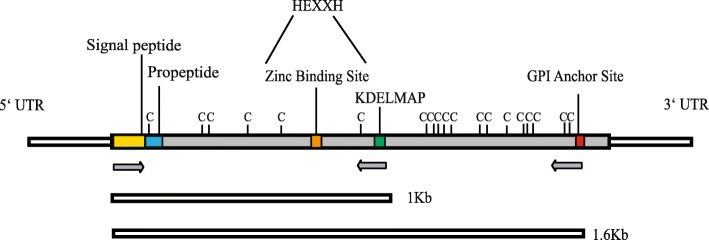
The leishmaniasis are parasitic diseases caused by protozoans of the genus Leishmania, highly divergent eukaryotes, characterized by unique biological features. To survive in both the mammalian hosts and insect vectors, these pathogens make use of a number of mechanisms, many of which are associated with parasite specific proteases. The metalloprotease GP63, the major Leishmania surface antigen, has been found to have multiple functions required for the parasite's survival. GP63 is encoded by multiple genes and their copy numbers vary considerably between different species and are increased in those from the subgenus Viannia, including L. braziliensis.
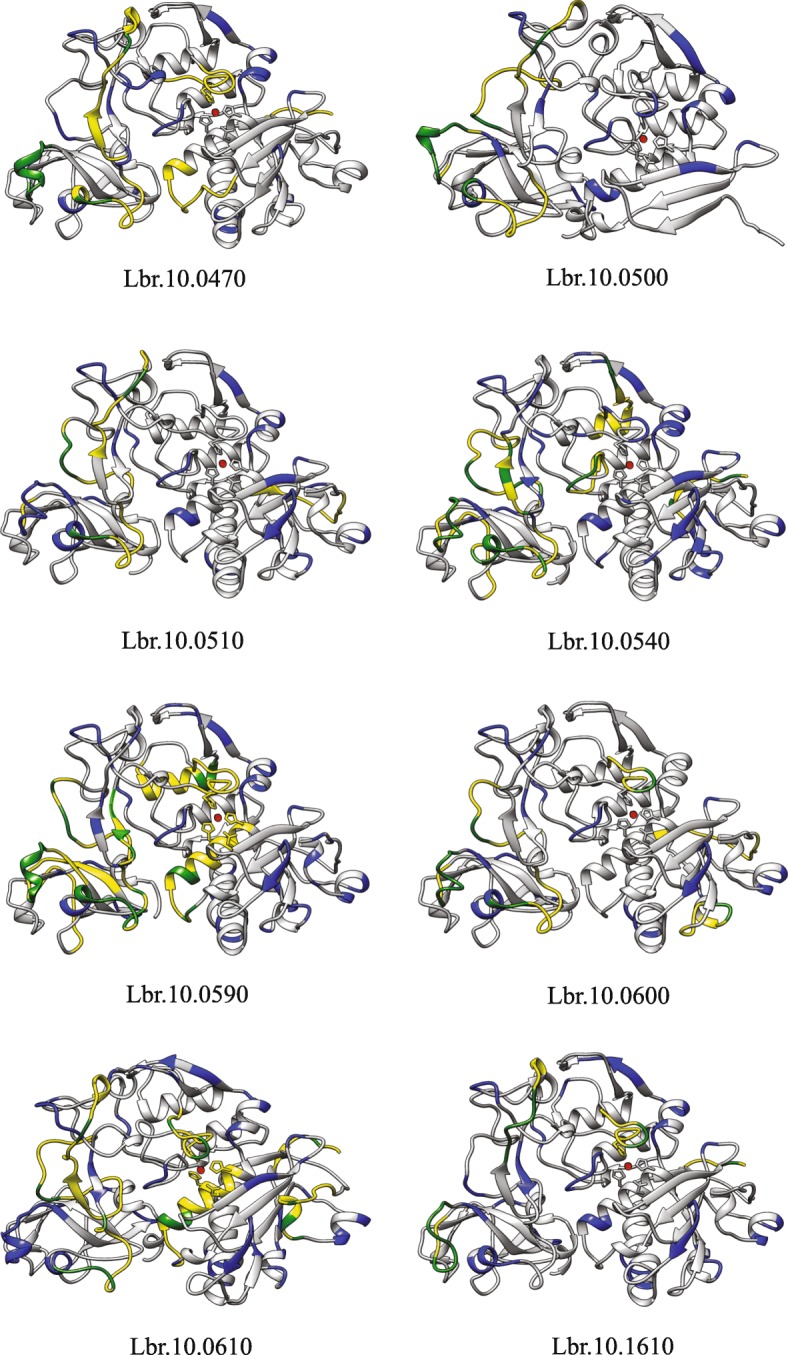
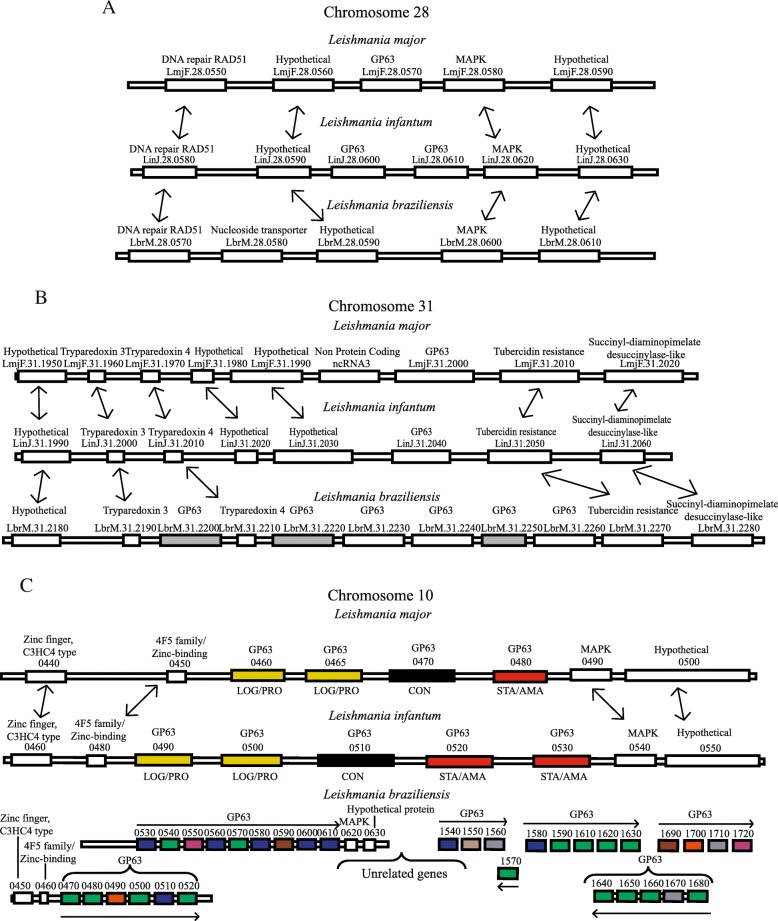
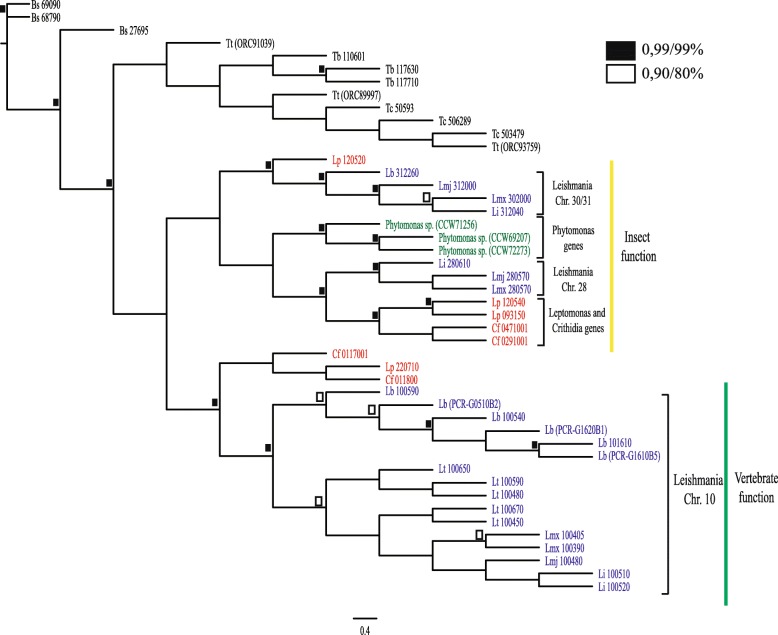
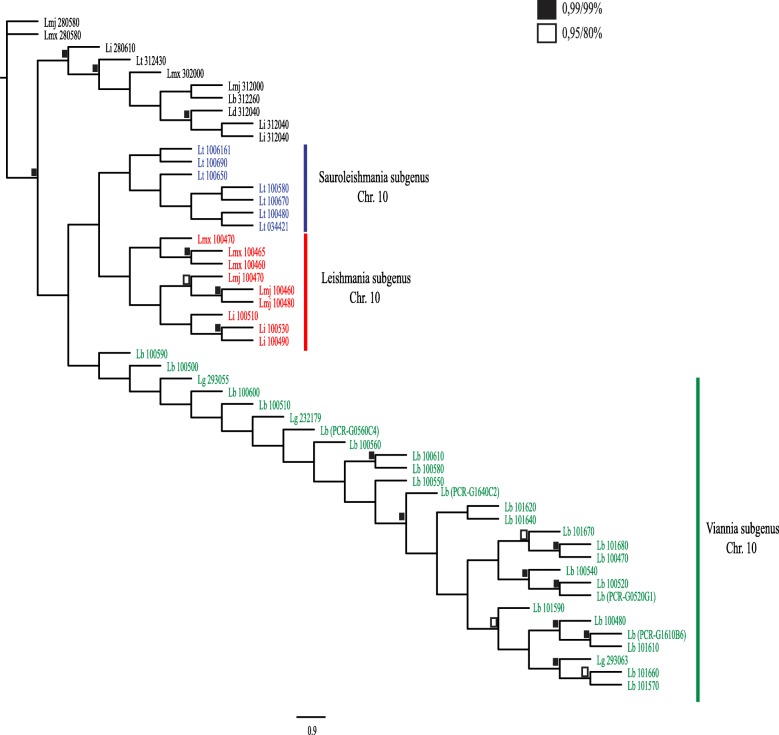
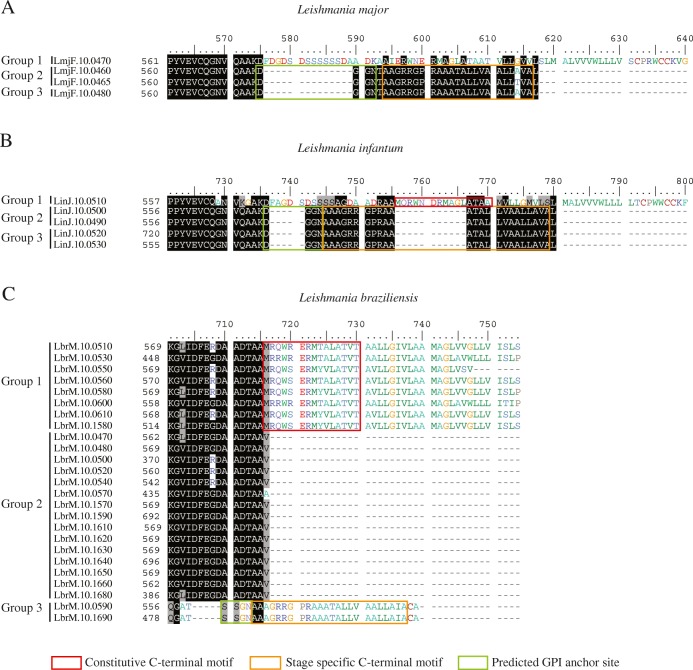
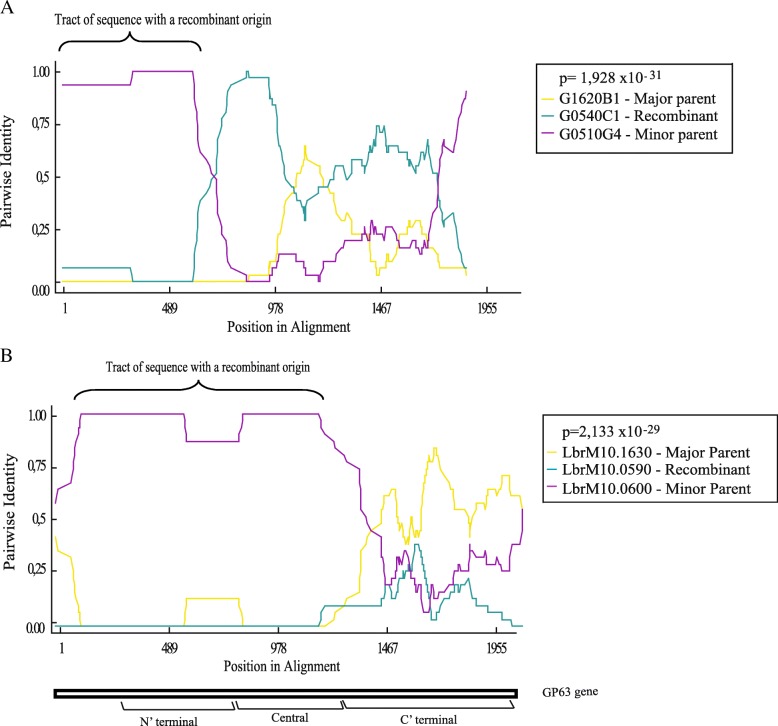
By comparing multiple sequences from Leishmania and related organisms this study sought to characterize paralogs in silico, evaluating their differences and similarities and the implications for the GP63 function. The Leishmania GP63 genes are encoded on chromosomes 10, 28 and 31, with the genes from the latter two chromosomes more related to genes found in insect or plant parasites. Those from chromosome 10 have experienced independent expansions in numbers in Leishmania, especially in L. braziliensis. These could be clustered in three groups associated with different mRNA 3' untranslated regions as well as distinct C-terminal ends for the encoded proteins, with presumably distinct expression patterns and subcellular localizations. Sequence variations between the chromosome 10 genes were linked to intragenic recombination events, mapped to the external surface of the proteins and predicted to be immunogenic, implying a role against the host immune response.
Our results suggest a greater role for the sequence variation found among the chromosome 10 GP63 genes, possibly related to the pathogenesis of L. braziliensis and closely related species within the mammalian host. They also indicate different functions associated to genes mapped to different chromosomes. For the chromosome 10 genes, variable subcellular localizations were found to be most likely associated with multiple functions and target substrates for this versatile protease.
利什曼病是由原生动物利什曼原虫引起的寄生虫病,是高度分化的真核生物,具有独特的生物学特征。为了在哺乳动物宿主和昆虫媒介中生存,这些病原体利用了许多机制,其中许多与寄生虫特异性蛋白酶有关。金属蛋白酶 GP63 是主要的利什曼表面抗原,已被发现具有多种生存所需的功能。GP63 由多个基因编码,其拷贝数在不同物种之间差异很大,在包括 L. braziliensis 在内的 Viannia 亚属中增加。
通过比较来自利什曼原虫和相关生物的多个序列,本研究试图在计算机上对旁系同源物进行特征描述,评估它们的差异和相似性,以及对 GP63 功能的影响。利什曼原虫的 GP63 基因位于染色体 10、28 和 31 上,后两者的基因与昆虫或植物寄生虫中的基因更为相关。来自染色体 10 的基因在利什曼原虫中经历了数量上的独立扩张,尤其是在 L. braziliensis 中。这些基因可以聚类为三个与不同的 mRNA 3'非翻译区相关的组,以及编码蛋白的不同 C 末端,推测具有不同的表达模式和亚细胞定位。染色体 10 基因之间的序列变异与基因内重组事件相关,映射到蛋白质的外表面,并预测具有免疫原性,暗示其在宿主免疫反应中发挥作用。
我们的结果表明,染色体 10 GP63 基因之间发现的序列变异可能与 L. braziliensis 和在哺乳动物宿主中密切相关的物种的发病机制有关。它们还表明,与不同染色体上的基因相关的不同功能。对于染色体 10 基因,发现可变的亚细胞定位最有可能与多种功能相关,并成为这种多功能蛋白酶的靶标底物。