State Key Laboratory for Diagnosis and Treatment of Infectious Diseases, Collaborative Innovation Center for Diagnosis and Treatment of Infectious Diseases, The First Affiliated Hospital, College of Medicine, Zhejiang University, Hangzhou City, Zhejiang Province, China.
Department of Neurosurgery, Second Affiliated Hospital School of Medicine, Zhejiang University, Hangzhou City, Zhejiang Province, China.
J Cell Mol Med. 2019 Apr;23(4):2324-2332. doi: 10.1111/jcmm.14170. Epub 2019 Feb 7.
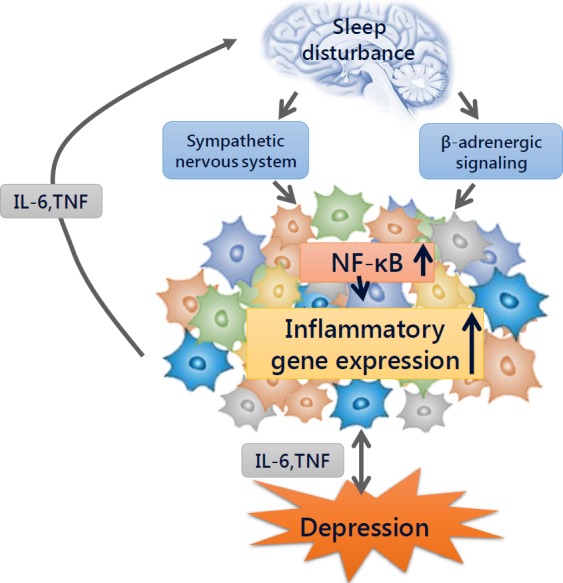
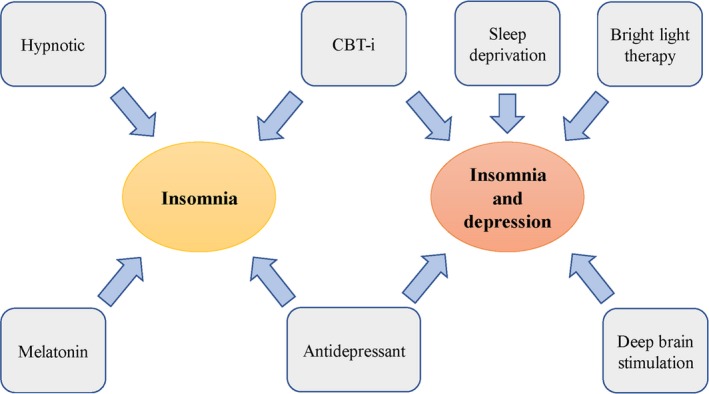
Sleep disturbance is the most prominent symptom in depressive patients and was formerly regarded as a main secondary manifestation of depression. However, many longitudinal studies have identified insomnia as an independent risk factor for the development of emerging or recurrent depression among young, middle-aged and older adults. This bidirectional association between sleep disturbance and depression has created a new perspective that sleep problems are no longer an epiphenomenon of depression but a predictive prodromal symptom. In this review, we highlight the treatment of sleep disturbance before, during and after depression, which probably plays an important role in improving outcomes and preventing the recurrence of depression. In clinical practice, pharmacological therapies, including hypnotics and antidepressants, and non-pharmacological therapies are typically applied. A better understanding of the pathophysiological mechanisms between sleep disturbance and depression can help psychiatrists better manage this comorbidity.
睡眠障碍是抑郁患者最突出的症状,以前被认为是抑郁症的主要次要表现之一。然而,许多纵向研究已经确定失眠是年轻人、中年人和老年人新发或复发性抑郁的独立危险因素。睡眠障碍和抑郁症之间的这种双向关联提出了一个新的观点,即睡眠问题不再是抑郁的继发表现,而是一种预测性前驱症状。在这篇综述中,我们强调了在抑郁发生前、发生期间和发生后治疗睡眠障碍的重要性,这可能对改善预后和预防抑郁复发起着重要作用。在临床实践中,通常应用包括催眠药和抗抑郁药在内的药物治疗和非药物治疗。更好地了解睡眠障碍和抑郁症之间的病理生理机制,可以帮助精神科医生更好地管理这种共病。