Gutierrez-Mecinas Maria, Bell Andrew M, Shepherd Fraser, Polgár Erika, Watanabe Masahiko, Furuta Takahiro, Todd Andrew J
Institute of Neuroscience and Psychology, College of Medical, Veterinary & Life Sciences, University of Glasgow, Glasgow, United Kingdom.
Department of Anatomy, Hokkaido University School of Medicine, Sapporo, Japan.
J Comp Neurol. 2019 Aug 1;527(11):1857-1871. doi: 10.1002/cne.24657. Epub 2019 Feb 20.
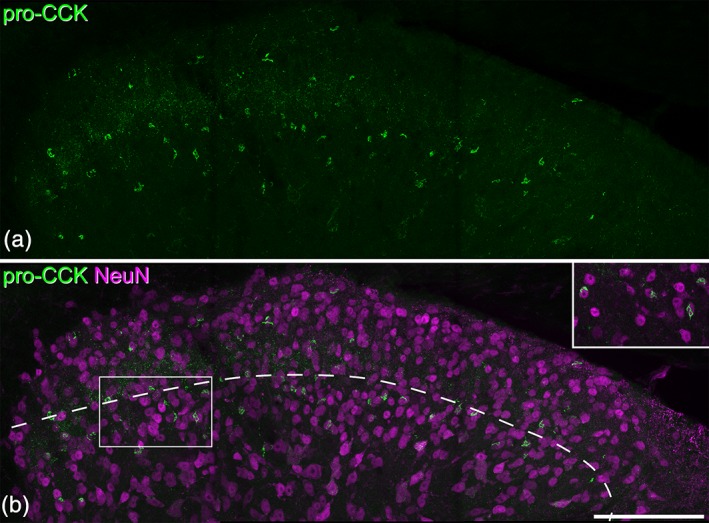
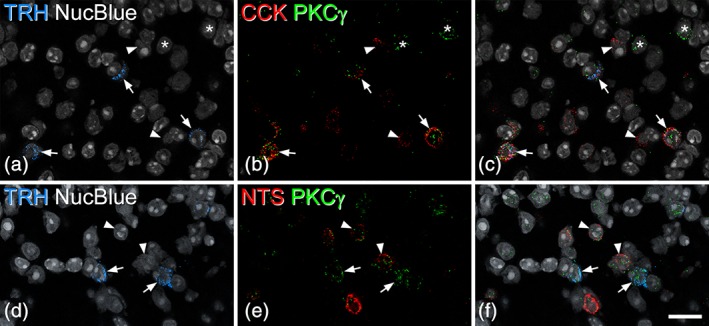
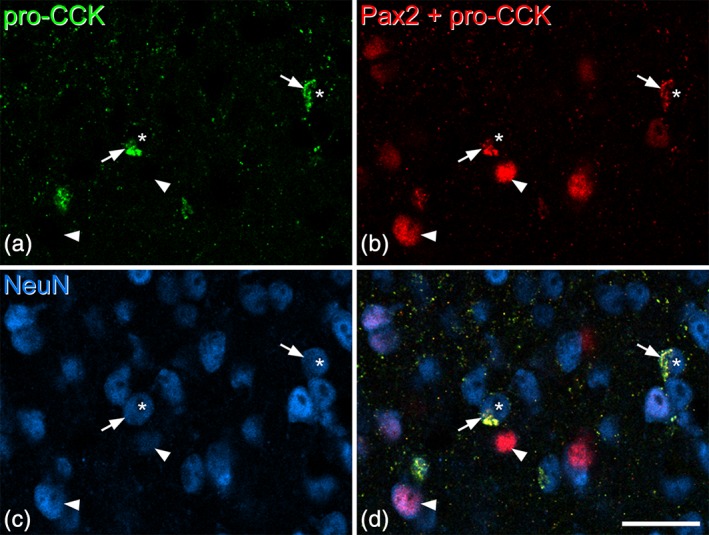
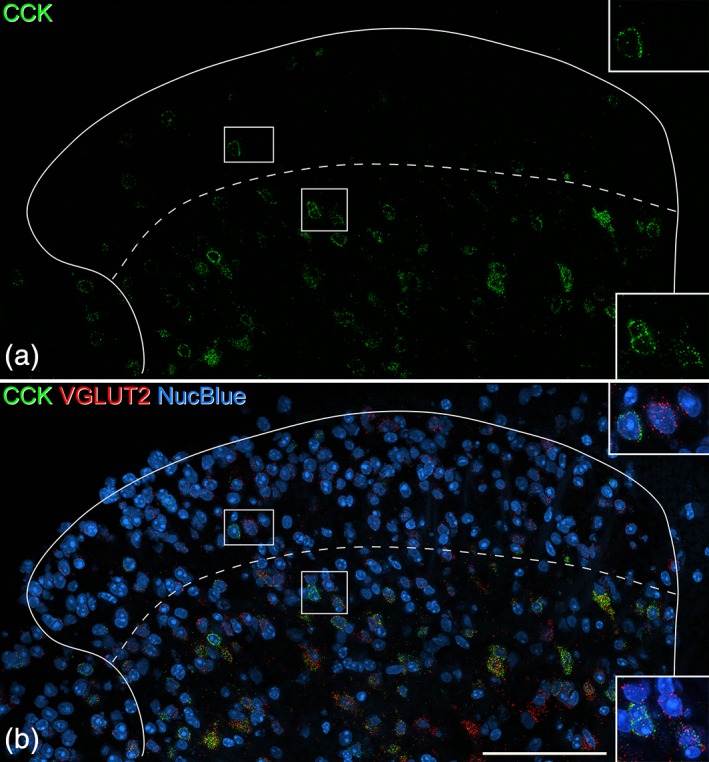
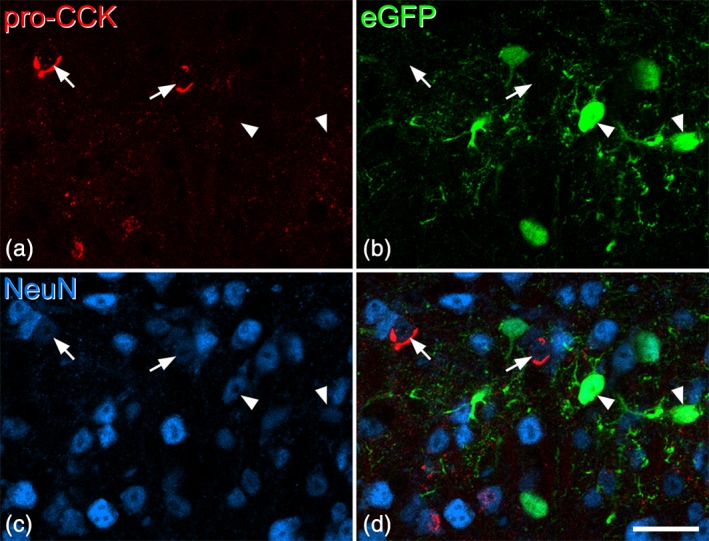
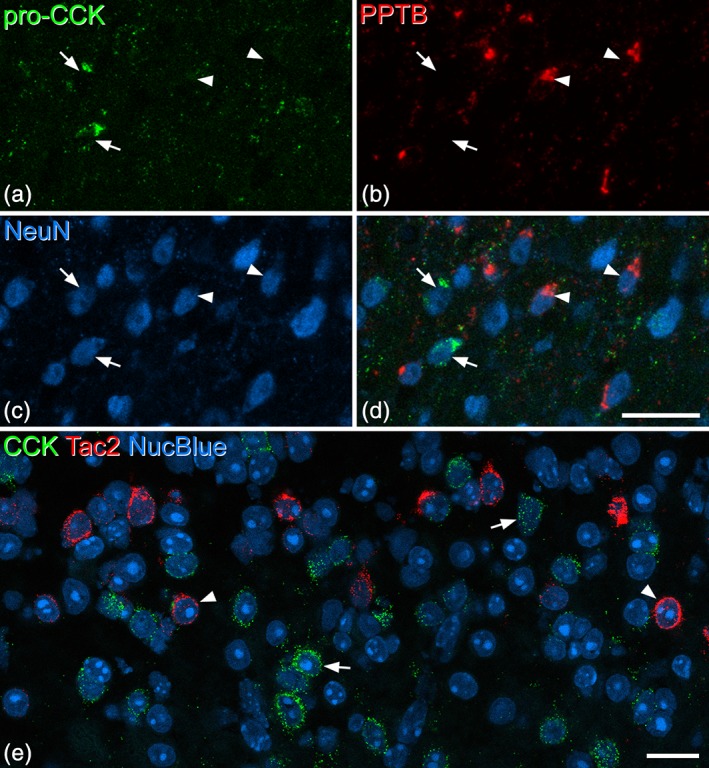
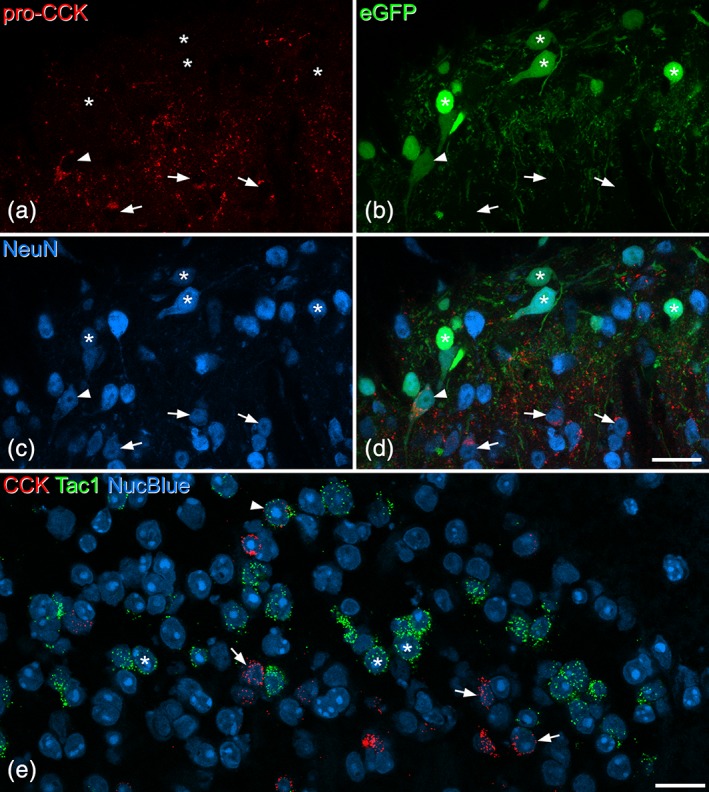
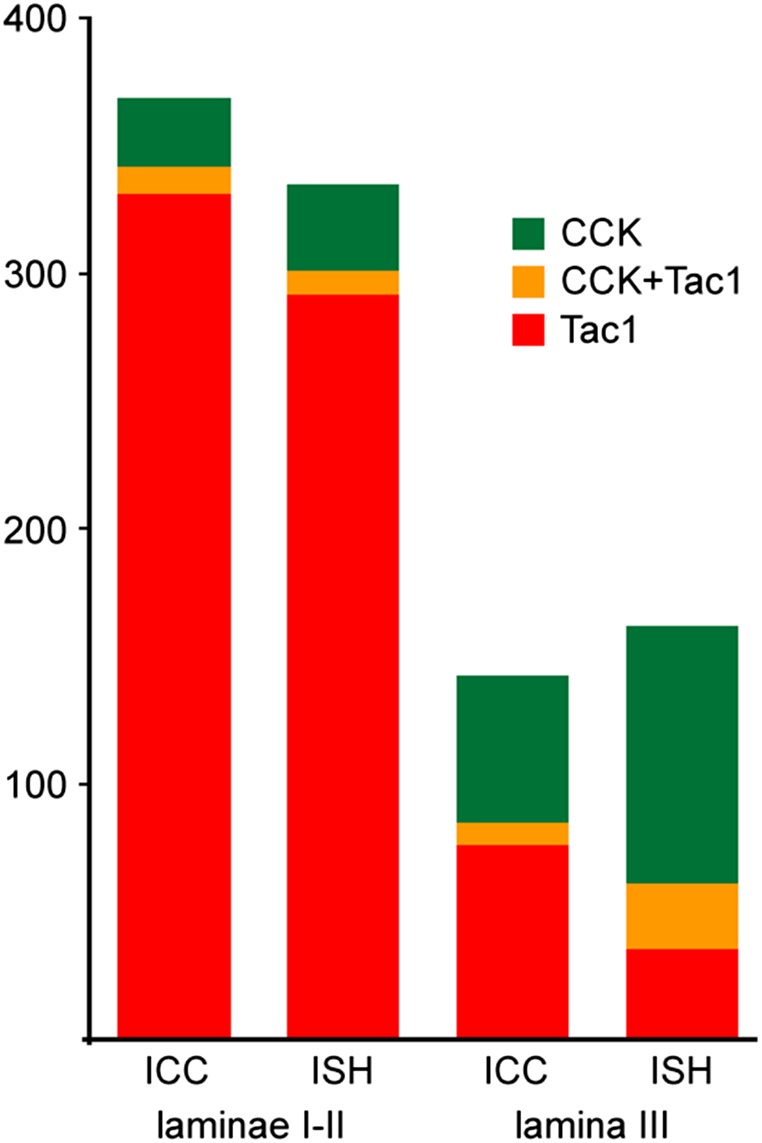
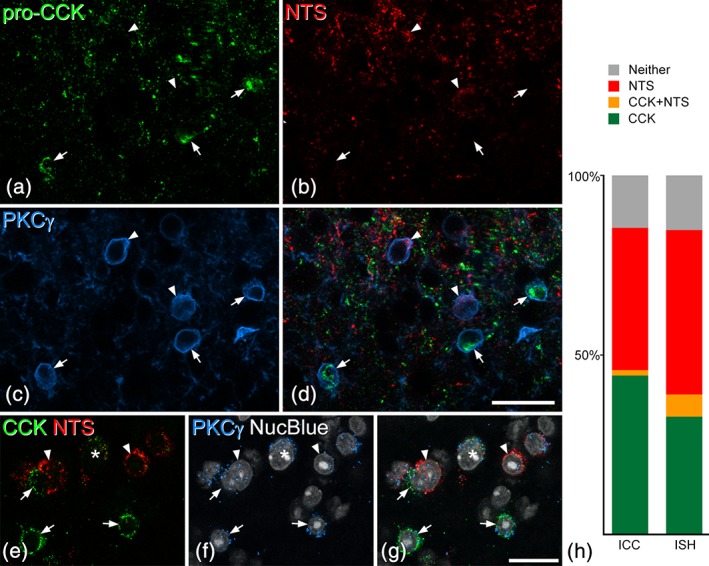
Excitatory interneurons account for the majority of dorsal horn neurons, and are required for perception of normal and pathological pain. We have identified largely non-overlapping populations in laminae I-III, based on expression of substance P, gastrin-releasing peptide, neurokinin B, and neurotensin. Cholecystokinin (CCK) is expressed by many dorsal horn neurons, particularly in the deeper laminae. Here, we have used immunocytochemistry and in situ hybridization to characterize the CCK cells. We show that they account for ~7% of excitatory neurons in laminae I-II, but between a third and a quarter of those in lamina III. They are largely separate from the neurokinin B, neurotensin, and gastrin-releasing peptide populations, but show limited overlap with the substance P cells. Laminae II-III neurons with protein kinase Cγ (PKCγ) have been implicated in mechanical allodynia following nerve injury, and we found that around 50% of CCK cells were PKCγ-immunoreactive. Neurotensin is also expressed by PKCγ cells, and among neurons with moderate to high levels of PKCγ, ~85% expressed CCK or neurotensin. A recent transcriptomic study identified mRNA for thyrotropin-releasing hormone in a specific subpopulation of CCK neurons, and we show that these account for half of the CCK/PKCγ cells. These findings indicate that the CCK cells are distinct from other excitatory interneuron populations that we have defined. They also show that PKCγ cells can be assigned to different classes based on neuropeptide expression, and it will be important to determine the differential contribution of these classes to neuropathic allodynia.
兴奋性中间神经元占背角神经元的大多数,是正常和病理性疼痛感知所必需的。基于P物质、胃泌素释放肽、神经激肽B和神经降压素的表达,我们在I-III层中鉴定出了基本不重叠的细胞群。许多背角神经元表达胆囊收缩素(CCK),尤其是在较深的层中。在这里,我们使用免疫细胞化学和原位杂交来表征CCK细胞。我们发现它们占I-II层兴奋性神经元的约7%,但在III层中占三分之一到四分之一。它们在很大程度上与神经激肽B、神经降压素和胃泌素释放肽细胞群分开,但与P物质细胞有有限的重叠。蛋白激酶Cγ(PKCγ)的II-III层神经元与神经损伤后的机械性异常性疼痛有关,我们发现约50%的CCK细胞具有PKCγ免疫反应性。神经降压素也由PKCγ细胞表达,在PKCγ水平中等至高的神经元中,约85%表达CCK或神经降压素。最近的一项转录组学研究在CCK神经元的一个特定亚群中鉴定出促甲状腺激素释放激素的mRNA,我们发现这些细胞占CCK/PKCγ细胞的一半。这些发现表明CCK细胞与我们定义的其他兴奋性中间神经元群不同。它们还表明,可以根据神经肽表达将PKCγ细胞分为不同类别,确定这些类别对神经性异常性疼痛的不同贡献将很重要。