Laboratory of Molecular Basis of Behavior, the Nencki Institute of Experimental Biology of Polish Academy of Sciences, ul. L. Pasteura 3, Warsaw, 02-093, Poland.
Laboratory of Imaging Tissue Structure and Function, the Nencki Institute of Experimental Biology of Polish Academy of Sciences, ul. L. Pasteura 3, Warsaw, 02-093, Poland.
Sci Rep. 2019 Feb 8;9(1):1693. doi: 10.1038/s41598-018-38412-7.
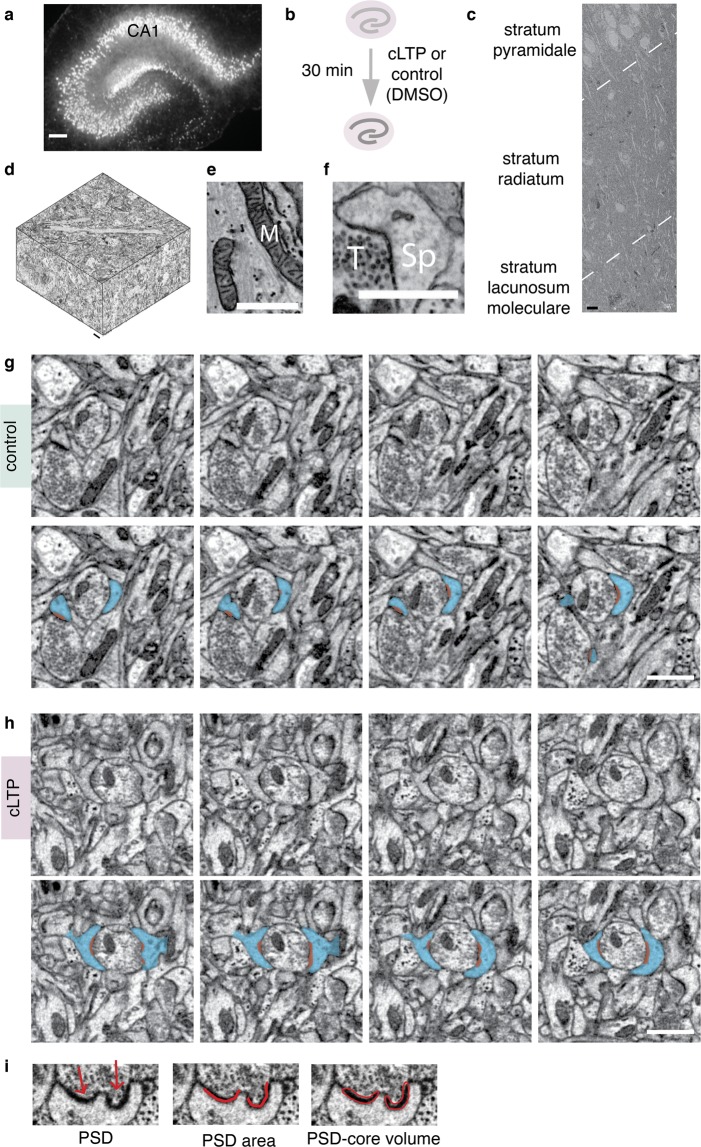
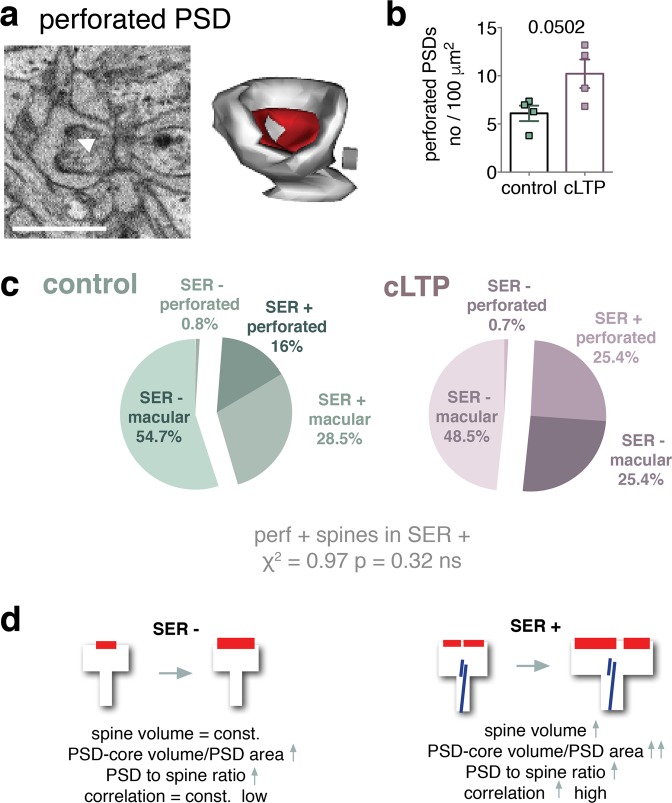
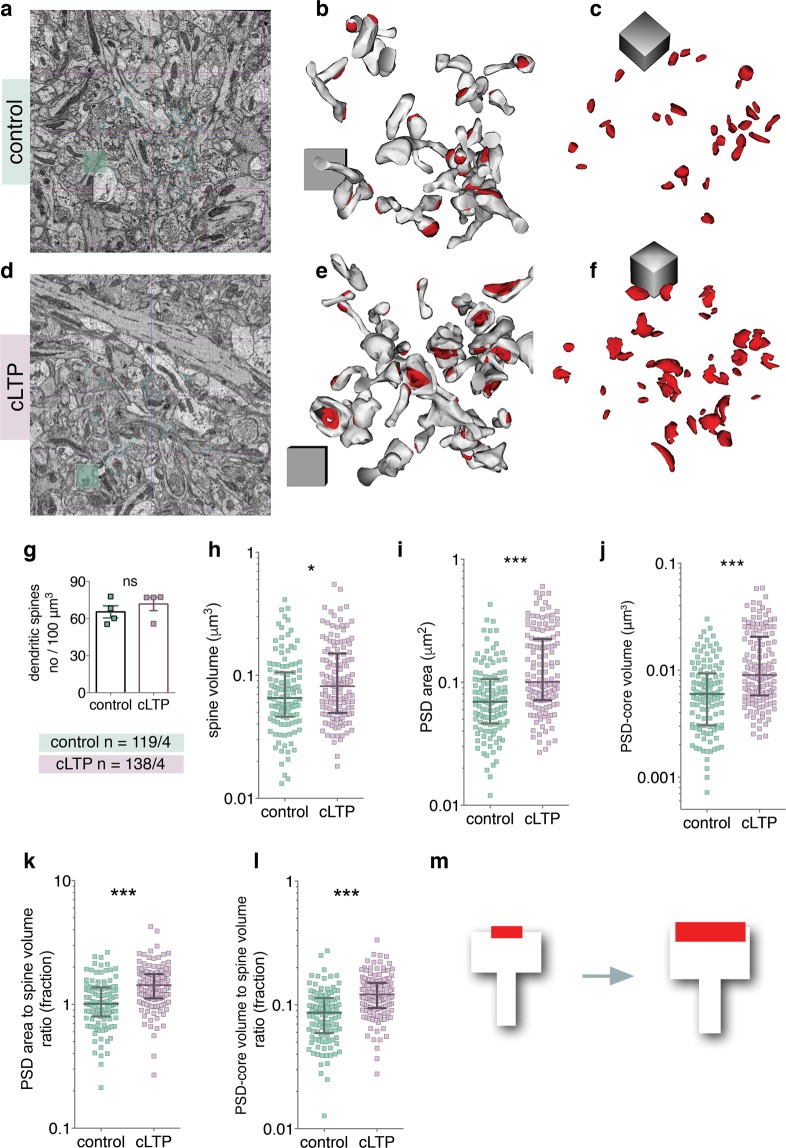
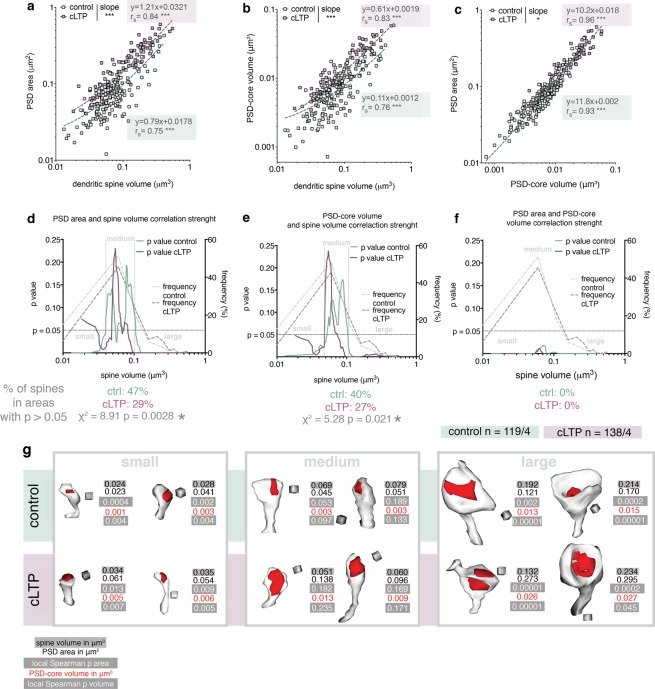
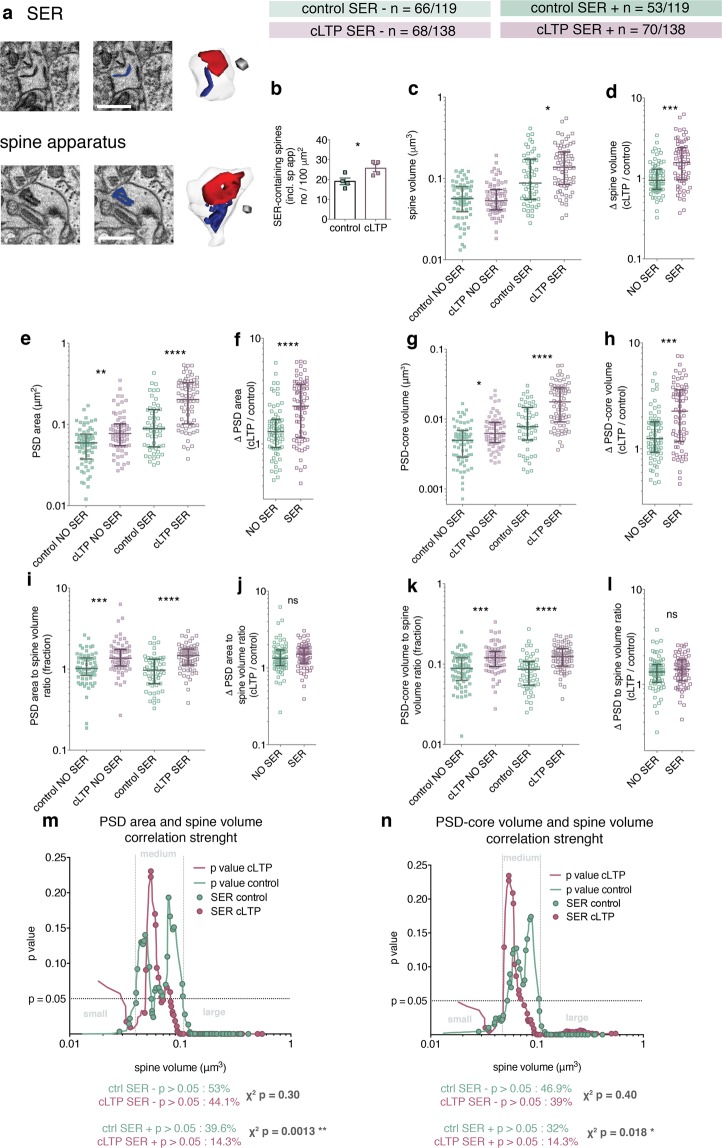
Structural plasticity of dendritic spines is thought to underlie memory formation. Size of a dendritic spine is considered proportional to the size of its postsynaptic density (PSD), number of glutamate receptors and synaptic strength. However, whether this correlation is true for all dendritic spine volumes, and remains stable during synaptic plasticity, is largely unknown. In this study, we take advantage of 3D electron microscopy and reconstruct dendritic spines and cores of PSDs from the stratum radiatum of the area CA1 of organotypic hippocampal slices. We observe that approximately 1/3 of dendritic spines, in a range of medium sizes, fail to reach significant correlation between dendritic spine volume and PSD surface area or PSD-core volume. During NMDA receptor-dependent chemical long-term potentiation (NMDAR-cLTP) dendritic spines and their PSD not only grow, but also PSD area and PSD-core volume to spine volume ratio is increased, and the correlation between the sizes of these two is tightened. Further analysis specified that only spines that contain smooth endoplasmic reticulum (SER) grow during cLTP, while PSD-cores grow irrespectively of the presence of SER in the spine. Dendritic spines with SER also show higher correlation of the volumetric parameters than spines without SER, and this correlation is further increased during cLTP only in the spines that contain SER. Overall, we found that correlation between PSD surface area and spine volume is not consistent across all spine volumes, is modified and tightened during synaptic plasticity and regulated by SER.
树突棘的结构可塑性被认为是记忆形成的基础。树突棘的大小被认为与其突触后密度(PSD)的大小、谷氨酸受体的数量和突触强度成正比。然而,这种相关性是否适用于所有树突棘体积,以及在突触可塑性过程中是否保持稳定,在很大程度上尚不清楚。在这项研究中,我们利用 3D 电子显微镜重建了器官型海马切片 CA1 区放射层的树突棘和 PSD 的核心。我们观察到,在中等大小的树突棘中,大约有 1/3 的树突棘与树突棘体积和 PSD 表面积或 PSD 核心体积之间没有显著的相关性。在 NMDA 受体依赖性化学长时程增强(NMDAR-cLTP)期间,树突棘及其 PSD 不仅会生长,而且 PSD 面积和 PSD 核心体积与树突棘体积的比值也会增加,这两个大小之间的相关性也会更加紧密。进一步的分析表明,只有含有光滑内质网(SER)的树突棘在 cLTP 期间生长,而 PSD 核心则独立于树突棘中 SER 的存在而生长。含有 SER 的树突棘的体积参数之间的相关性也高于不含 SER 的树突棘,并且这种相关性仅在含有 SER 的树突棘中在 cLTP 期间进一步增加。总的来说,我们发现 PSD 表面积与树突棘体积之间的相关性并不是在所有树突棘体积中都一致的,而是在突触可塑性过程中被修饰和加强,并受到 SER 的调节。