Masoodi Ibrahim, Sirwal Irshad A, Anwar Shaikh Khurshid, Alzaidi Ahmed, Balbaid Khalid A
Department of Medicine, College of Medicine, Taif University, Saudi Arabia.
Department of Nephrology, King Abdul Aziz Specialist Hospital, Taif, Saudi Arabia.
Open Access Maced J Med Sci. 2019 Jan 14;7(1):92-96. doi: 10.3889/oamjms.2019.038. eCollection 2019 Jan 15.
Pulmonary haemorrhage (PH) is a serious complication during Systemic Lupus Erythematosus (SLE).
The aim was to present data on 12 patients of SLE with classic symptoms and signs of PH admitted throughout eleven years.
This retrospective study was carried out at King Abdul Aziz Specialist hospital in Taif-a tertiary care hospital in the western region of Saudi Arabia. The data was analysed from the case files of SLE patients who had episodes of PH throughout 11 years (January 2007 to December 2017).
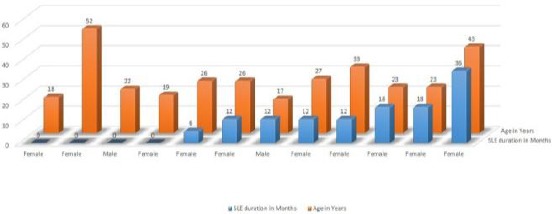
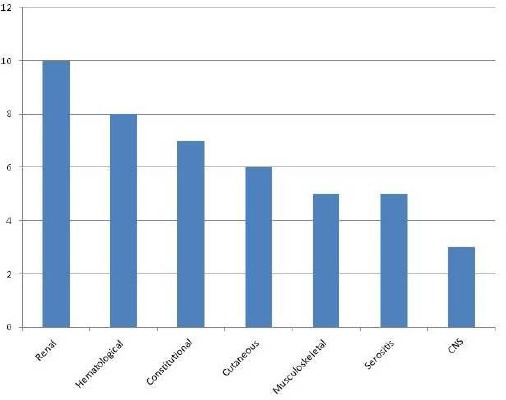
Twelve patients (10 females and 2 males) were found to have diffuse pulmonary haemorrhage during their SLE in the study period. Of 12 patients with confirmed pulmonary haemorrhage (hemoptysis, hypoxemia, new infiltrates on chest radiography, fall in haemoglobin and hemorrhagic returns of bronchoalveolar lavage with hemosiderin-laden macrophages) 4 patients had PH as the first presentation of SLE and 8 patients developed this complication during the disease. All patients presented with shortness of breath and hemoptysis. The most common extra-pulmonary involvement in the study cohort was renal (83%), which ranged from clinical nephritis, nephrotic syndrome to acute renal failure. All patients were managed in intensive care of the hospital, and of 12 patients, 9 (75%) required mechanical ventilation. All patients were uniformly treated with pulse Methylprednisolone; 9 received Cyclophosphamide, 6 received IVIG, and 4 received Plasmapheresis. Only 3 patients (25%) survived despite maximum possible support during their mean hospital stay of 18 ± 5 days.
The requirement of mechanical ventilation and the association of renal and neuropsychiatric complications predicted mortality in patients with pulmonary haemorrhage.
肺出血(PH)是系统性红斑狼疮(SLE)期间的一种严重并发症。
目的是呈现11年间收治的12例具有典型肺出血症状和体征的SLE患者的数据。
这项回顾性研究在沙特阿拉伯西部地区的三级护理医院塔伊夫的阿卜杜勒·阿齐兹专科医院进行。对2007年1月至2017年12月这11年间发生肺出血的SLE患者的病历进行了数据分析。
在研究期间,12例患者(10例女性和2例男性)在SLE病程中出现了弥漫性肺出血。在12例确诊为肺出血的患者中(咯血、低氧血症、胸部X线片上新出现的浸润影、血红蛋白下降以及支气管肺泡灌洗出现含铁血黄素巨噬细胞的出血性回流),4例患者肺出血是SLE的首发表现,8例患者在疾病过程中出现了这种并发症。所有患者均表现为呼吸急促和咯血。研究队列中最常见的肺外受累是肾脏(83%),范围从临床肾炎、肾病综合征到急性肾衰竭。所有患者均在医院重症监护室接受治疗,12例患者中有9例(75%)需要机械通气。所有患者均接受了甲基强的松龙冲击治疗;9例接受了环磷酰胺治疗,6例接受了静脉注射免疫球蛋白治疗,4例接受了血浆置换治疗。尽管在平均住院18±5天期间给予了最大可能的支持,但只有3例患者(25%)存活。
机械通气的需求以及肾脏和神经精神并发症的关联预示着肺出血患者的死亡率。