Laboratory of Genetics and Genomics, National Institute on Aging Intramural Research Program, National Institutes of Health, Baltimore, MD, USA.
Department of Biotechnology, Chonnam National University, Yeosu, Chonnam 59626, Republic of Korea.
Nucleic Acids Res. 2019 Mar 18;47(5):2472-2486. doi: 10.1093/nar/gkz082.
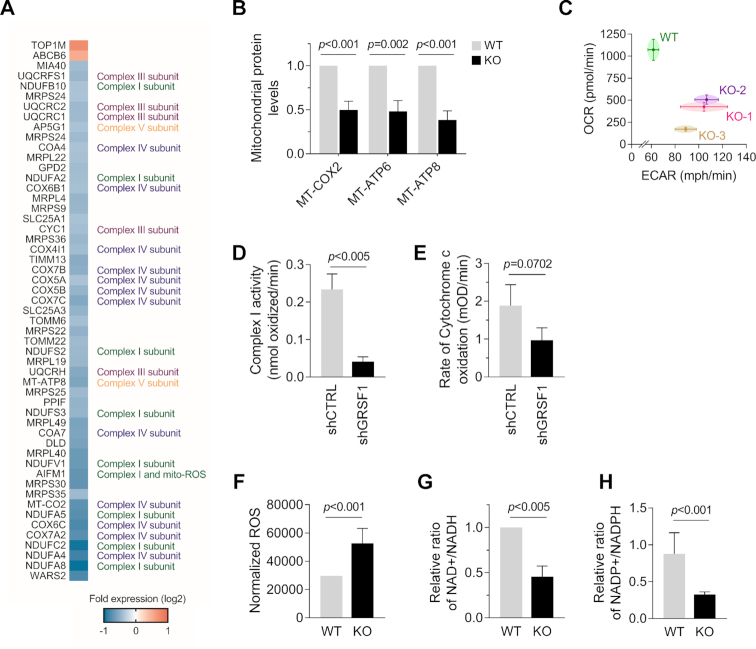
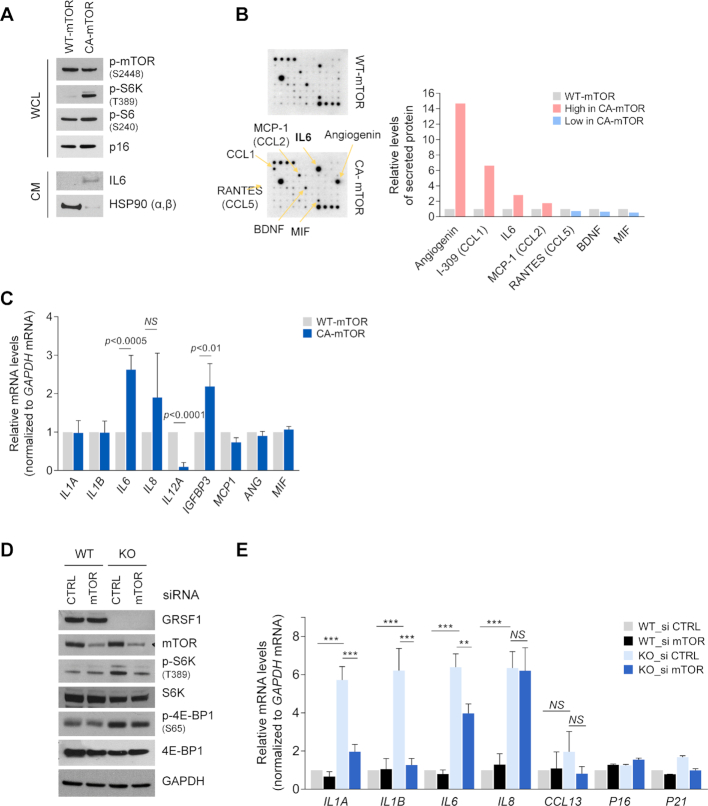
The RNA-binding protein GRSF1 (G-rich RNA sequence-binding factor 1) critically maintains mitochondrial homeostasis. Accordingly, loss of GRSF1 impaired mitochondrial respiration and increased the levels of reactive oxygen species (ROS), triggering DNA damage, growth suppression, and a senescent phenotype characterized by elevated production and secretion of interleukin (IL)6. Here, we characterize the pathways that govern IL6 production in response to mitochondrial dysfunction in GRSF1-depleted cells. We report that loss of GRSF1 broadly altered protein expression programs, impairing the function of respiratory complexes I and IV. The rise in oxidative stress led to increased DNA damage and activation of mTOR, which in turn activated NF-κB to induce IL6 gene transcription and orchestrate a pro-inflammatory program. Collectively, our results indicate that GRSF1 helps preserve mitochondrial homeostasis, in turn preventing oxidative DNA damage and the activation of mTOR and NF-κB, and suppressing a transcriptional pro-inflammatory program leading to increased IL6 production.
RNA 结合蛋白 GRSF1(富含 G 的 RNA 序列结合因子 1)对维持线粒体的动态平衡至关重要。因此,GRSF1 的缺失会损害线粒体呼吸作用并增加活性氧(ROS)的水平,引发 DNA 损伤、生长抑制以及以白细胞介素(IL)6 分泌增加和分泌为特征的衰老表型。在这里,我们描述了在 GRSF1 耗尽的细胞中,针对线粒体功能障碍调控 IL6 产生的途径。我们报告说,GRSF1 的缺失广泛改变了蛋白质表达程序,损害了呼吸复合物 I 和 IV 的功能。氧化应激的增加导致 DNA 损伤和 mTOR 的激活,进而激活 NF-κB 诱导 IL6 基因转录并协调促炎程序。总的来说,我们的结果表明 GRSF1 有助于维持线粒体的动态平衡,从而防止氧化 DNA 损伤和 mTOR 和 NF-κB 的激活,并抑制导致 IL6 产生增加的转录促炎程序。