Department of Clinical and Experimental Epilepsy, UCL Queen Square Institute of Neurology, University College London, London WC1N 3BG, United Kingdom.
UCL School of Pharmacy, University College London, London WC1N 1AX, United Kingdom, and.
J Neurosci. 2019 Apr 17;39(16):3159-3169. doi: 10.1523/JNEUROSCI.1143-18.2019. Epub 2019 Feb 12.
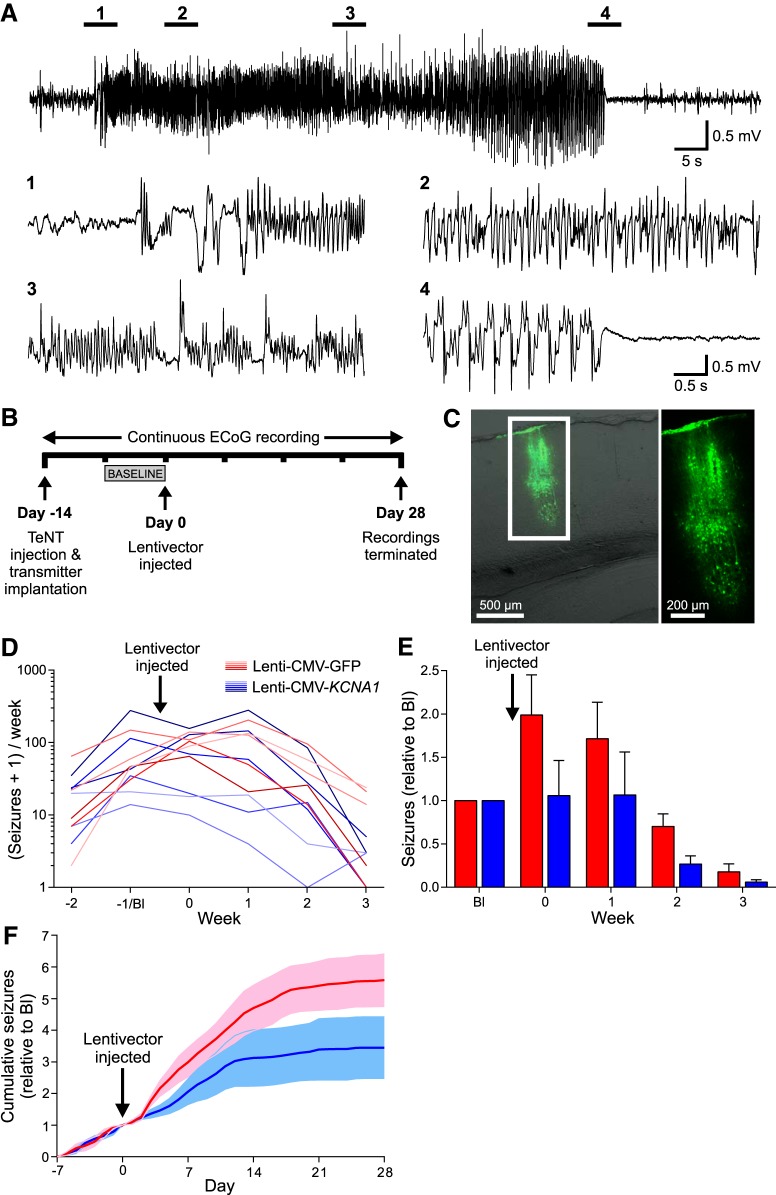
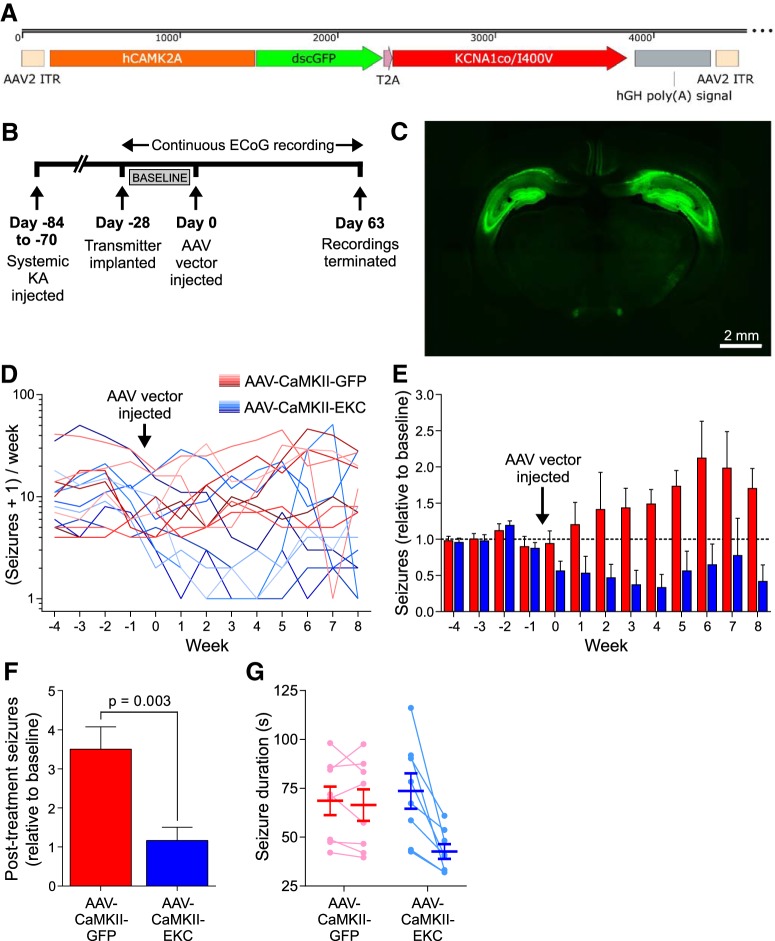
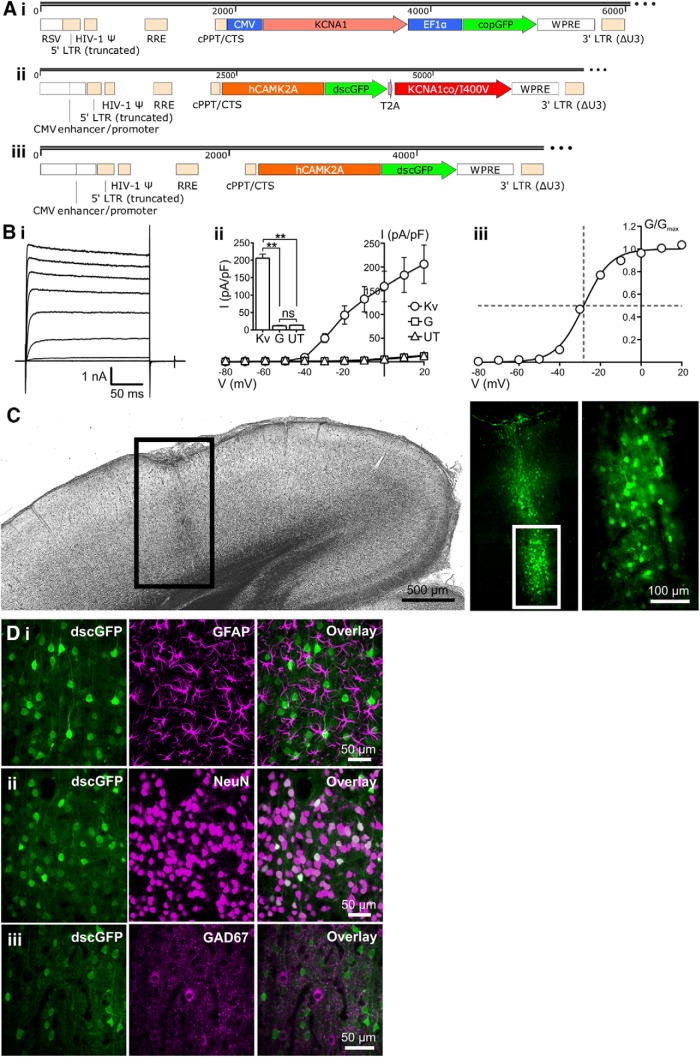
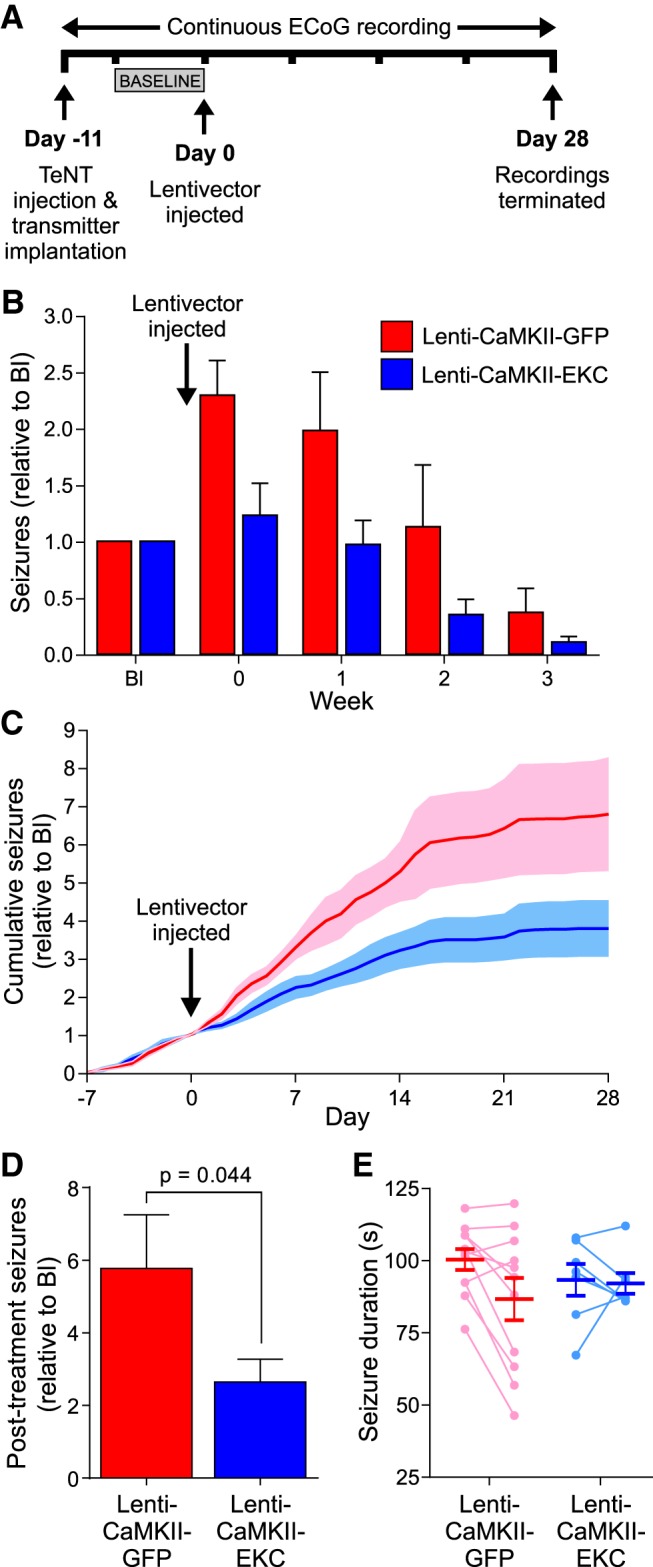
Refractory focal epilepsy is a devastating disease for which there is frequently no effective treatment. Gene therapy represents a promising alternative, but treating epilepsy in this way involves irreversible changes to brain tissue, so vector design must be carefully optimized to guarantee safety without compromising efficacy. We set out to develop an epilepsy gene therapy vector optimized for clinical translation. The gene encoding the voltage-gated potassium channel Kv1.1, , was codon optimized for human expression and mutated to accelerate the recovery of the channels from inactivation. For improved safety, this engineered potassium channel (EKC) gene was packaged into a nonintegrating lentiviral vector under the control of a cell type-specific promoter. In a blinded, randomized, placebo-controlled preclinical trial, the EKC lentivector robustly reduced seizure frequency in a male rat model of focal neocortical epilepsy characterized by discrete spontaneous seizures. When packaged into an adeno-associated viral vector (AAV2/9), the EKC gene was also effective at suppressing seizures in a male rat model of temporal lobe epilepsy. This demonstration of efficacy in a clinically relevant setting, combined with the improved safety conferred by cell type-specific expression and integration-deficient delivery, identify EKC gene therapy as being ready for clinical translation in the treatment of refractory focal epilepsy. Pharmacoresistant epilepsy affects up to 0.3% of the population. Although epilepsy surgery can be effective, it is limited by risks to normal brain function. We have developed a gene therapy that builds on a mechanistic understanding of altered neuronal and circuit excitability in cortical epilepsy. The potassium channel gene was mutated to bypass post-transcriptional editing and was packaged in a nonintegrating lentivector to reduce the risk of insertional mutagenesis. A randomized, blinded preclinical study demonstrated therapeutic effectiveness in a rodent model of focal neocortical epilepsy. Adeno-associated viral delivery of the channel to both hippocampi was also effective in a model of temporal lobe epilepsy. These results support clinical translation to address a major unmet need.
耐药性局灶性癫痫是一种毁灭性疾病,通常没有有效的治疗方法。基因治疗代表了一种很有前途的替代方法,但以这种方式治疗癫痫涉及对脑组织的不可逆改变,因此必须仔细优化载体设计,以保证安全性而不影响疗效。我们着手开发一种针对临床转化优化的癫痫基因治疗载体。编码电压门控钾通道 Kv1.1 的基因经过密码子优化,以提高人类表达效率,并突变以加速通道从失活中恢复。为了提高安全性,这种工程化钾通道(EKC)基因被包装到一个非整合慢病毒载体中,由细胞类型特异性启动子控制。在一项盲法、随机、安慰剂对照的临床前试验中,EKC 慢病毒载体在一种具有离散自发性发作的局灶性新皮质癫痫雄性大鼠模型中显著降低了癫痫发作频率。当被包装到腺相关病毒载体(AAV2/9)中时,EKC 基因也能有效抑制颞叶癫痫雄性大鼠模型中的癫痫发作。这种在临床相关环境中的疗效证明,加上细胞类型特异性表达和非整合性传递所带来的安全性提高,使 EKC 基因治疗成为治疗耐药性局灶性癫痫的临床转化的候选方案。耐药性癫痫影响了高达 0.3%的人群。尽管癫痫手术可能有效,但它受到对正常大脑功能风险的限制。我们已经开发了一种基因治疗方法,该方法基于对皮质癫痫中神经元和电路兴奋性改变的机制理解。钾通道基因经过突变以绕过转录后编辑,并被包装在非整合慢病毒载体中,以降低插入突变的风险。一项随机、盲法临床前研究证明了在局灶性新皮质癫痫啮齿动物模型中的治疗效果。将通道递送到两个海马的腺相关病毒传递也在颞叶癫痫模型中有效。这些结果支持临床转化,以满足主要的未满足需求。