Laboratory of Molecular Cell Biology, SAIC-Frederick, National Cancer Institute, Frederick, MD 21702, USA.
BMC Mol Biol. 2011 Sep 16;12:41. doi: 10.1186/1471-2199-12-41.
It is known that retinoid receptor function is attenuated during T cell activation, a phenomenon that involves actin remodeling, suggesting that actin modification may play a role in such inhibition. Here we have investigated the role of actin dynamics and the effect of actin cytoskeleton modifying agents on retinoid receptor-mediated transactivation.
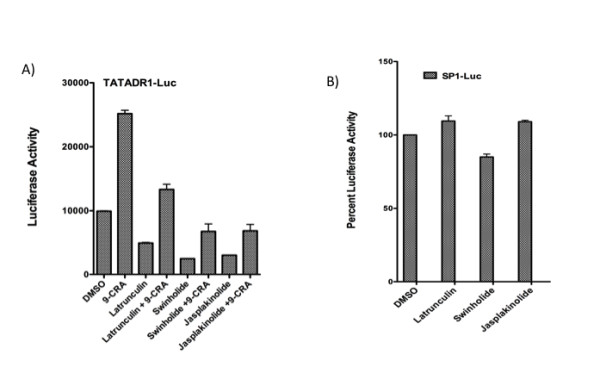
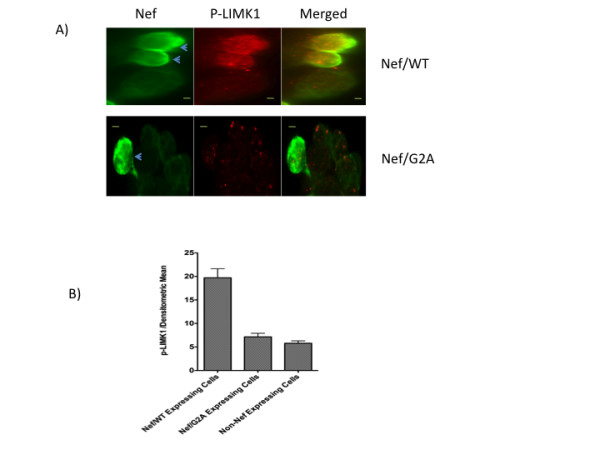
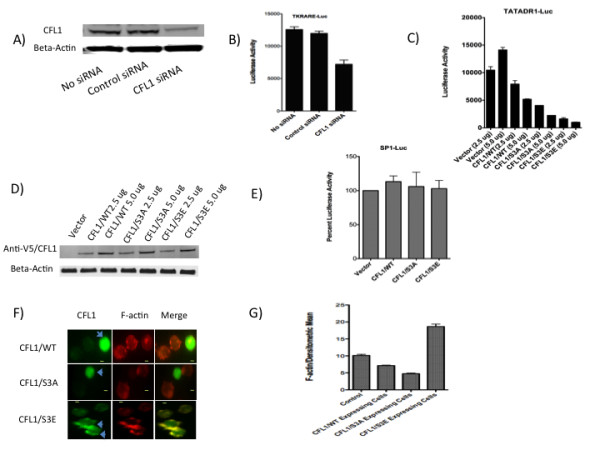
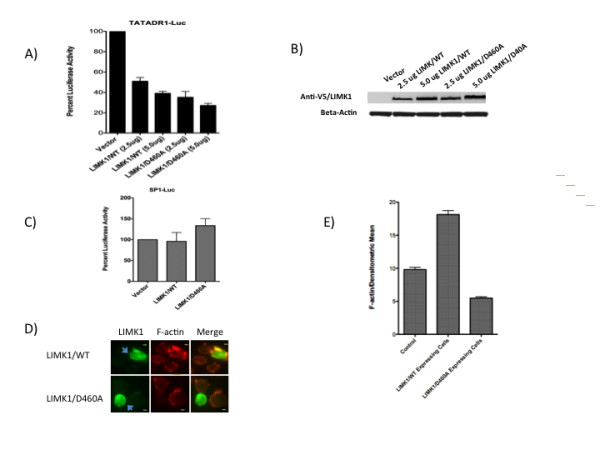
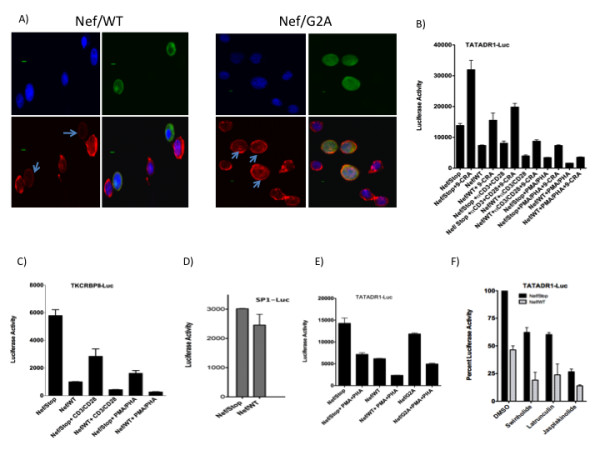
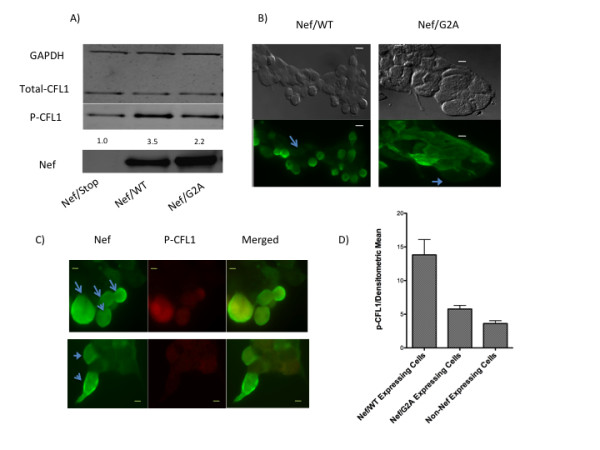
Agents that disturb the F-actin assembly or disassembly attenuated receptor-mediated transcription indicating that actin cytoskeletal homeostasis is important for retinoid receptor function. Overexpression or siRNA-induced knockdown of cofilin-1 (CFL1), a key regulator of F-actin assembly, induced the loss of receptor function. In addition, expression of either constitutively active or inactive/dominant-negative mutants of CFL1or CFL1 kinase LIMK1 induced loss of receptor function suggesting a critical role of the LIMK1-mediated CFL1 pathway in receptor-dependent transcription. Further evidence of the role of LMK1/CFL1-mediated actin dynamics, was provided by studying the effect of Nef, an actin modifying HIV-1 protein, on receptor function. Expression of Nef induced phosphorylation of CFL1 at serine 3 and LIMK1 at threonine 508, inhibited retinoid-receptor mediated reporter activity, and the expression of a number of genes that contain retinoid receptor binding sites in their promoters. The results suggest that the Nef-mediated inhibition of receptor function encompasses deregulation of actin filament dynamics by LIMK1 activation and phosphorylation of CFL1.
We have identified a critical role of LIMK1-mediated CFL1 pathway and actin dynamics in modulating retinoid receptor mediated function and shown that LIMK1-mediated phosphocycling of CFL1 plays a crucial role in maintaining actin homeostasis and receptor activity. We suggest that T cell activation-induced repression of nuclear receptor-dependent transactivation is in part through the modification of actin dynamics.
已知在 T 细胞激活过程中,视黄酸受体功能减弱,这一现象涉及到肌动蛋白重塑,表明肌动蛋白修饰可能在这种抑制中发挥作用。在这里,我们研究了肌动蛋白动力学的作用以及肌动蛋白细胞骨架修饰剂对视黄酸受体介导的反式激活的影响。
干扰 F-肌动蛋白组装或解体的试剂削弱了受体介导的转录,表明肌动蛋白细胞骨架的动态平衡对于视黄酸受体功能很重要。卷曲相关蛋白-1(CFL1)的过表达或 siRNA 诱导的敲低,一种 F-肌动蛋白组装的关键调节因子,诱导了受体功能的丧失。此外,表达组成型激活或失活/显性负突变体的 CFL1 或 CFL1 激酶 LIMK1 诱导受体功能丧失,表明 LIMK1 介导的 CFL1 途径在受体依赖性转录中起着关键作用。进一步证明了 LIMK1/CFL1 介导的肌动蛋白动力学的作用,是通过研究 HIV-1 蛋白 Nef 对受体功能的影响。Nef 的表达诱导 CFL1 丝氨酸 3 和 LIMK1 苏氨酸 508 的磷酸化,抑制视黄酸受体介导的报告基因活性,以及包含视黄酸受体结合位点的启动子的许多基因的表达。结果表明,Nef 介导的受体功能抑制包括通过 LIMK1 激活和 CFL1 磷酸化来调节肌动蛋白丝动力学。
我们确定了 LIMK1 介导的 CFL1 途径和肌动蛋白动力学在调节视黄酸受体介导的功能中的关键作用,并表明 LIMK1 介导的 CFL1 磷酸循环在维持肌动蛋白动态平衡和受体活性中起着至关重要的作用。我们认为 T 细胞激活诱导的核受体依赖性反式激活的抑制部分是通过肌动蛋白动力学的修饰。