Selvaskandan Haresh, Cheung Chee Kay, Muto Masahiro, Barratt Jonathan
Department of Infection, Immunity and Inflammation, University of Leicester, Leicester, LE1 9HN, UK.
Clin Exp Nephrol. 2019 May;23(5):577-588. doi: 10.1007/s10157-019-01700-1. Epub 2019 Feb 13.
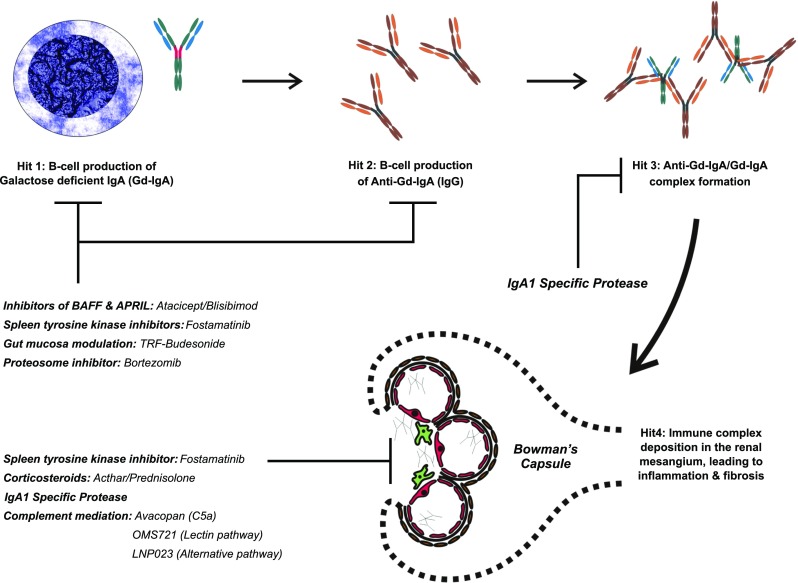
IgA nephropathy is an inflammatory renal disease characterised by the deposition of IgA in the glomerular mesangium and is the most commonly reported primary glomerulonephritis worldwide. Thirty to forty percent of patients with the disease develop progressive renal function decline, requiring renal replacement therapy within two decades of diagnosis. Despite this, accurate individual risk stratification at diagnosis and predicting treatment response remains a challenge. Furthermore, there are currently no disease specific treatments currently licensed to treat the condition due to long standing challenges in the nature and prevalence of the disease. Despite this, there have been exciting recent advances in the field that may represent paradigm shifts in the way IgA nephropathy is managed in the near future. In this review, we explore the evidence base informing current approaches to management and explore new strategies and future directions in the diagnosis and management of IgA nephropathy.
IgA肾病是一种炎症性肾脏疾病,其特征是IgA在肾小球系膜中沉积,是全球报道最常见的原发性肾小球肾炎。30%至40%的该疾病患者会出现进行性肾功能下降,在诊断后的二十年内需要肾脏替代治疗。尽管如此,在诊断时进行准确的个体风险分层以及预测治疗反应仍然是一项挑战。此外,由于该疾病的性质和患病率长期存在挑战,目前尚无专门获批用于治疗该疾病的疗法。尽管如此,该领域最近取得了令人兴奋的进展,可能代表着在不久的将来IgA肾病管理方式的范式转变。在本综述中,我们探讨了为当前管理方法提供依据的证据基础,并探索IgA肾病诊断和管理的新策略及未来方向。