MRC Toxicology Unit, University of Cambridge, Lancaster Road, Leicester LE1 9HN, UK.
Leicester Cancer Research Centre, University of Leicester, Leicester LE2 7LX, UK.
Dis Model Mech. 2019 Feb 12;12(2):dmm036863. doi: 10.1242/dmm.036863.
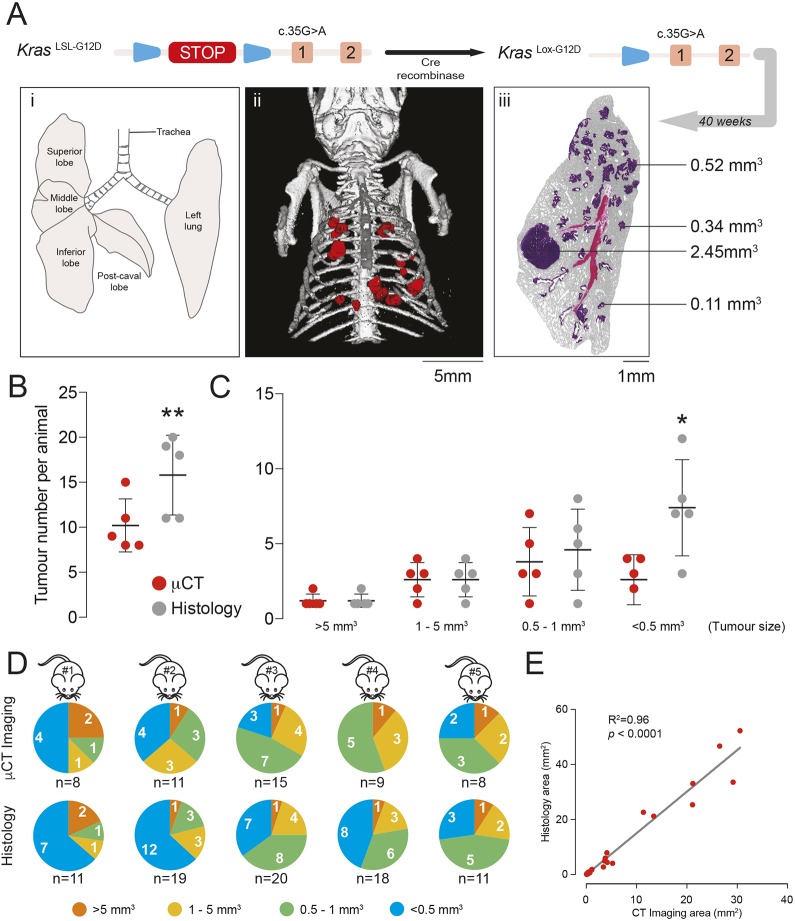
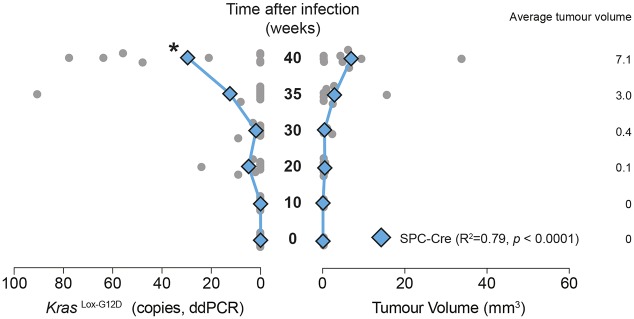
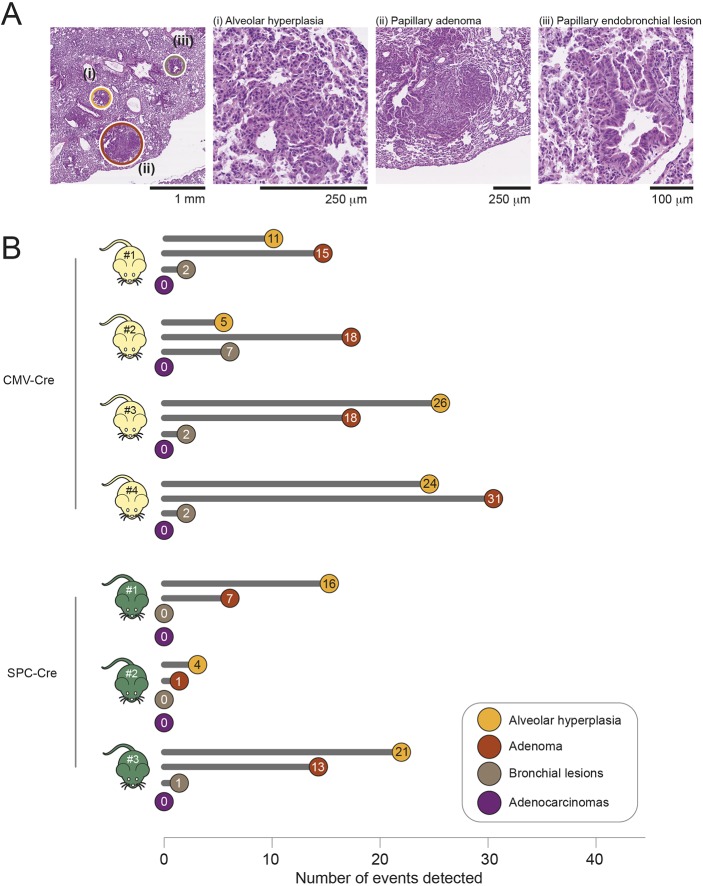
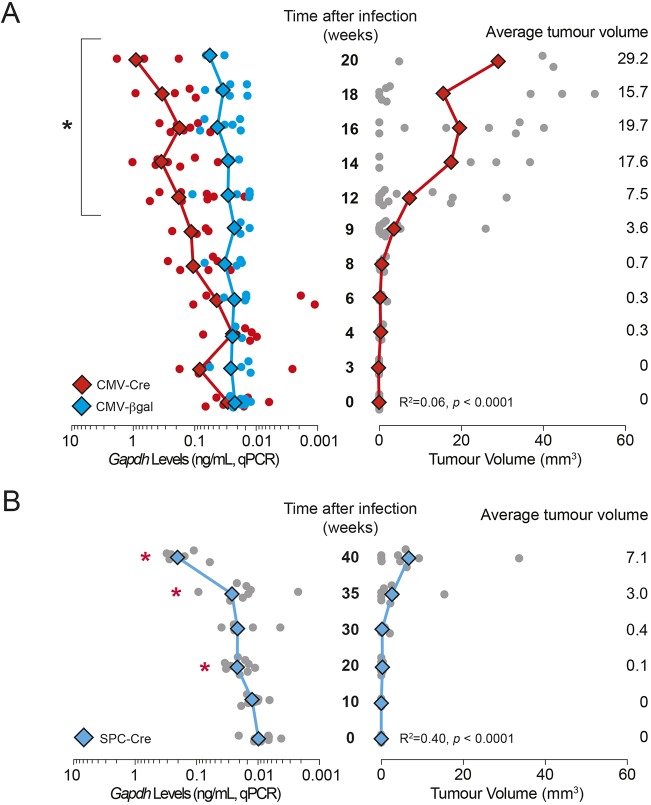
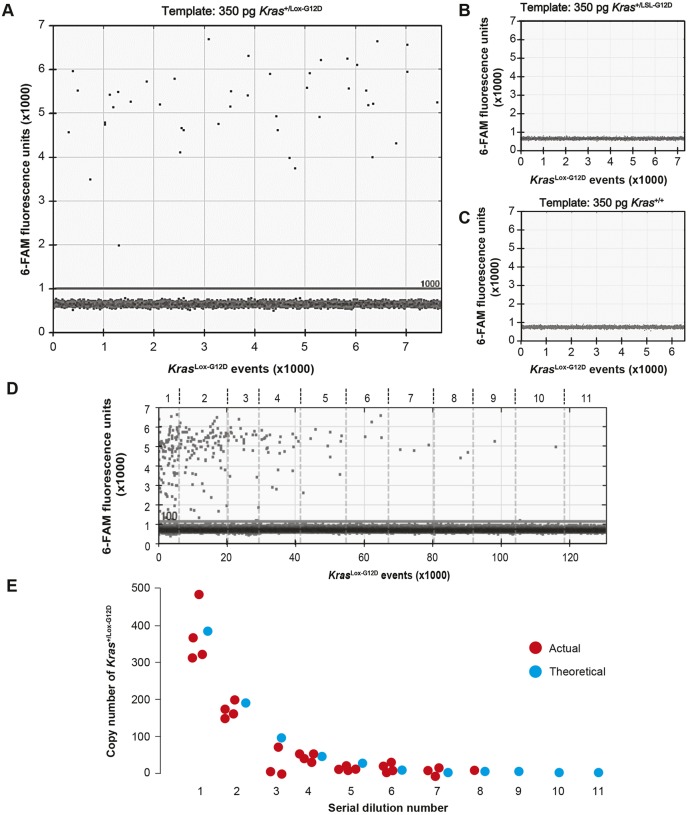
Lung cancer is the leading cause of cancer-related death. Two-thirds of cases are diagnosed at an advanced stage that is refractory to curative treatment. Therefore, strategies for the early detection of lung cancer are urgently sought. Total circulating free DNA (cfDNA) and tumour-derived circulating tumour DNA (ctDNA) are emerging as important biomarkers within a 'liquid biopsy' for monitoring human disease progression and response to therapy. Owing to the late clinical diagnosis of lung adenocarcinoma, the potential for cfDNA and ctDNA as early detection biomarkers remains unexplored. Here, using a Cre-regulated genetically engineered mouse model of lung adenocarcinoma development, driven by Kras (the mouse), we serially tracked the release of cfDNA/ctDNA and compared this with tumour burden as determined by micro-computed tomography (CT). To monitor ctDNA, a droplet digital PCR assay was developed to permit discrimination of the allele from the and alleles. We show that micro-CT correlates with endpoint histology and is able to detect pre-malignant tumours with a combined volume larger than 7 mm Changes in cfDNA/ctDNA levels correlate with micro-CT measurements in longitudinal sampling and are able to monitor the emergence of lesions before the adenoma-adenocarcinoma transition. Potentially, this work has implications for the early detection of human lung adenocarcinoma using ctDNA/cfDNA profiling.A video abstract for this article is available at https://youtu.be/Ku8xJJyGs3UThis article has an associated First Person interview with the joint first authors of the paper.
肺癌是癌症相关死亡的主要原因。三分之二的病例在晚期被诊断出来,此时已经无法进行治愈性治疗。因此,迫切需要寻找肺癌的早期检测策略。总循环游离 DNA(cfDNA)和肿瘤衍生的循环肿瘤 DNA(ctDNA)作为“液体活检”中监测人类疾病进展和治疗反应的重要生物标志物而出现。由于肺腺癌的临床诊断较晚,cfDNA 和 ctDNA 作为早期检测生物标志物的潜力仍未得到探索。在这里,我们使用一种由 Kras(鼠)驱动的、受 Cre 调控的肺腺癌发展的基因工程小鼠模型,连续跟踪 cfDNA/ctDNA 的释放,并将其与微计算机断层扫描(CT)确定的肿瘤负担进行比较。为了监测 ctDNA,开发了一种液滴数字 PCR 检测方法,以区分 等位基因和 等位基因。我们表明,微 CT 与终点组织学相关,能够检测到联合体积大于 7mm 的癌前肿瘤。cfDNA/ctDNA 水平的变化与纵向采样中的微 CT 测量相关,能够在腺瘤-腺癌转化之前监测到病变的出现。潜在地,这项工作对于使用 ctDNA/cfDNA 分析进行人类肺腺癌的早期检测具有重要意义。本文有一篇相关的第一人称采访,采访对象是该论文的两位共同第一作者。