Chen Chiung-Mei, Chen Wan-Ling, Hung Chen-Ting, Lin Te-Hsien, Lee Ming-Chung, Chen I-Cheng, Lin Chih-Hsin, Chao Chih-Ying, Wu Yih-Ru, Chang Kuo-Hsuan, Hsieh-Li Hsiu Mei, Lee-Chen Guey-Jen
Department of Neurology, Chang-Gung Memorial Hospital, Chang-Gung University College of Medicine, Taoyuan 33305, Taiwan.
Department of Life Science, National Taiwan Normal University, Taipei 11677, Taiwan.
Aging (Albany NY). 2019 Feb 13;11(3):986-1007. doi: 10.18632/aging.101804.
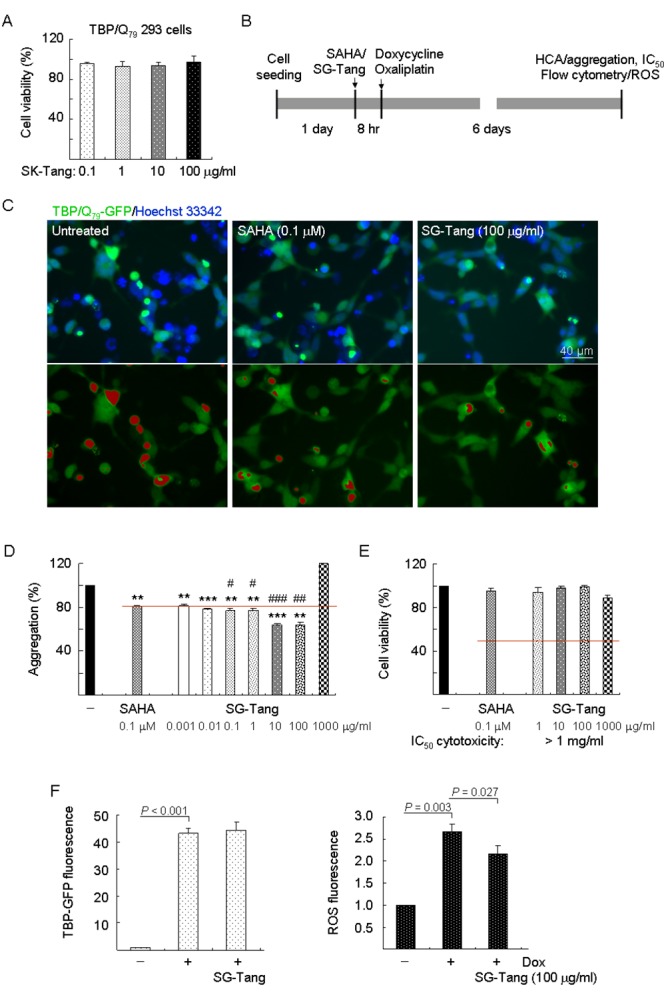
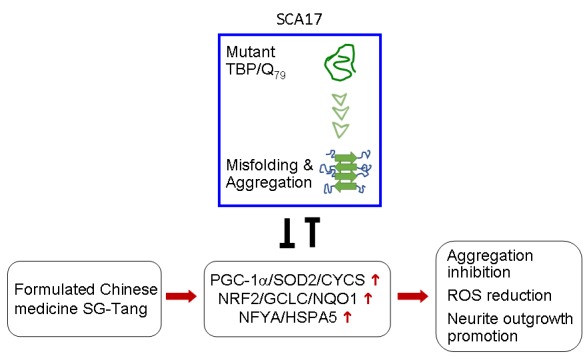
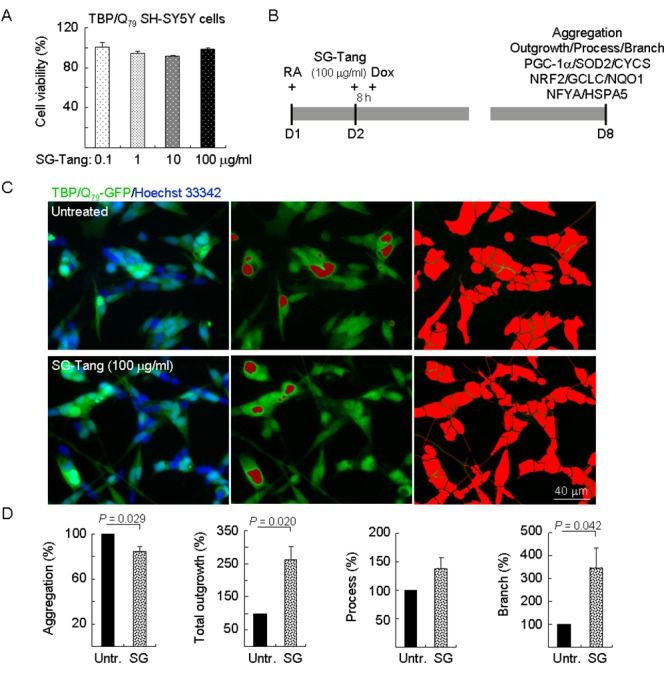
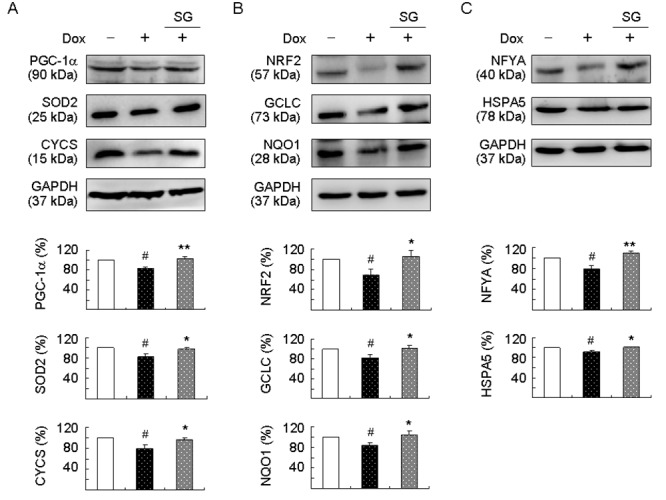
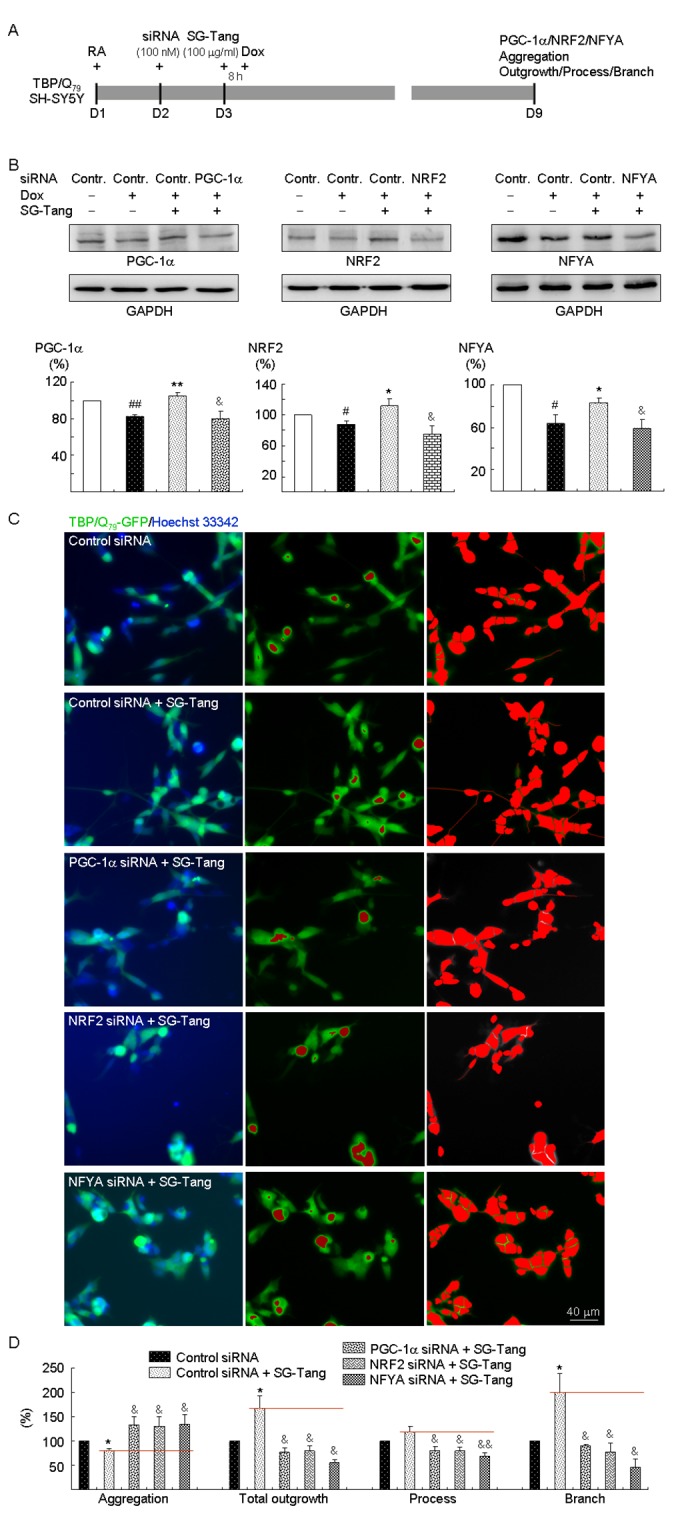
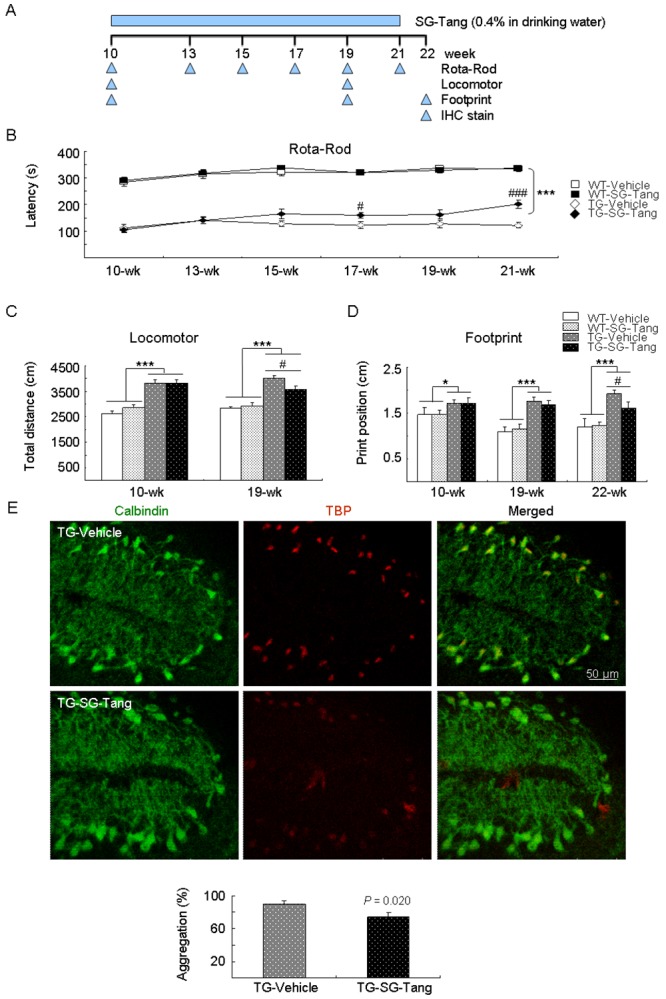
Spinocerebellar ataxia (SCA) type 17 is an autosomal dominant ataxia caused by expanded polyglutamine (polyQ) tract in the TATA-box binding protein (TBP). Substantial studies have shown involvement of compromised mitochondria biogenesis regulator peroxisome proliferator-activated receptor gamma-coactivator 1 alpha (PGC-1α), nuclear factor erythroid 2-related factor 2 (NRF2), nuclear factor-Y subunit A (NFYA), and their downstream target genes in the pathogenesis of polyQ-expansion diseases. The extracts of () and () have long been used as a Chinese herbal medicine (CHM). Shaoyao Gancao Tang (SG-Tang) is a formulated CHM made of and at a 1:1 ratio. In the present study, we demonstrated the aggregate-inhibitory and anti-oxidative effect of SG-Tang in 293 TBP/Q cells. We then showed that SG-Tang reduced the aggregates and ameliorated the neurite outgrowth deficits in TBP/Q SH-SY5Y cells. SG-Tang upregulated expression levels of NFYA, PGC-1α, NRF2, and their downstream target genes in TBP/Q SH-SY5Y cells. Knock down of NFYA, PGC-1α, and NRF2 attenuated the neurite outgrowth promoting effect of SG-Tang on TBP/Q SH-SY5Y cells. Furthermore, SG-Tang inhibited aggregation and rescued motor-deficits in SCA17 mouse model. The study results suggest the potential of SG-Tang in treating SCA17 and probable other polyQ diseases.
17型脊髓小脑共济失调(SCA17)是一种常染色体显性共济失调,由TATA盒结合蛋白(TBP)中多聚谷氨酰胺(polyQ)序列扩增引起。大量研究表明,线粒体生物合成调节因子过氧化物酶体增殖物激活受体γ共激活因子1α(PGC-1α)、核因子红细胞2相关因子2(NRF2)、核因子Y亚基A(NFYA)及其下游靶基因参与了polyQ扩增疾病的发病机制。()和()的提取物长期以来一直被用作中药。芍药甘草汤(SG-Tang)是一种由()和()按1:1比例制成的配方中药。在本研究中,我们证明了SG-Tang在293 TBP/Q细胞中的聚集抑制和抗氧化作用。然后我们表明,SG-Tang减少了TBP/Q SH-SY5Y细胞中的聚集体,并改善了神经突生长缺陷。SG-Tang上调了TBP/Q SH-SY5Y细胞中NFYA、PGC-1α、NRF2及其下游靶基因的表达水平。敲低NFYA、PGC-1α和NRF2减弱了SG-Tang对TBP/Q SH-SY5Y细胞的神经突生长促进作用。此外,SG-Tang在SCA17小鼠模型中抑制聚集并挽救运动缺陷。研究结果表明SG-Tang在治疗SCA17及可能的其他polyQ疾病方面具有潜力。 (注:原文括号处内容缺失,翻译时保留原样)