Hashimoto Kenji
Division of Clinical Neuroscience, Center for Forensic Mental Health, Chiba University, Chiba, Japan.
Front Pharmacol. 2019 Jan 30;10:36. doi: 10.3389/fphar.2019.00036. eCollection 2019.
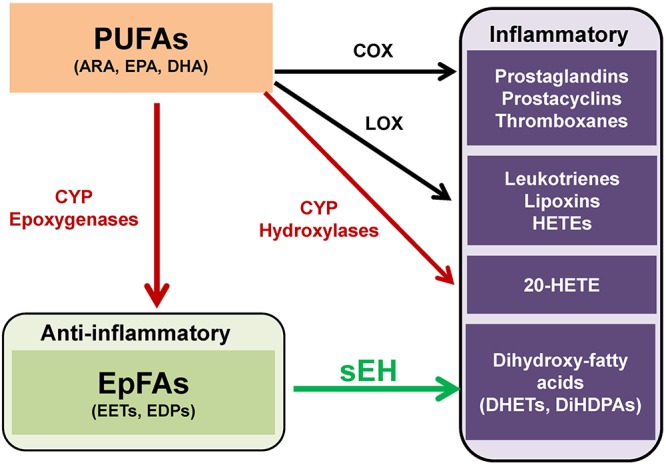
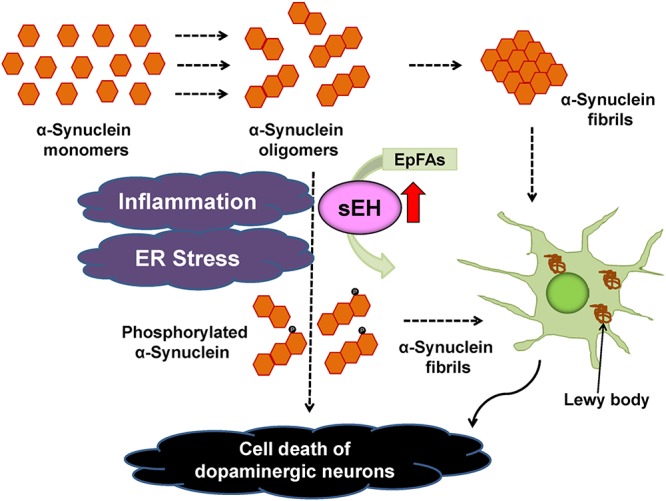
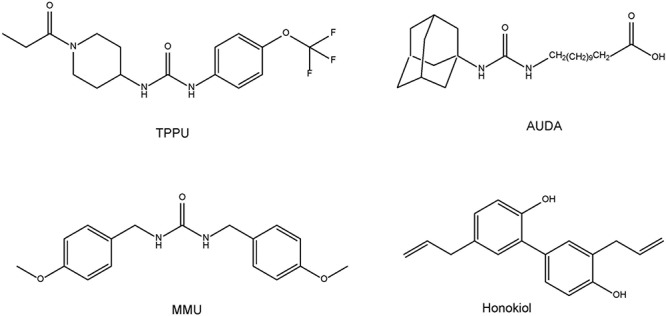
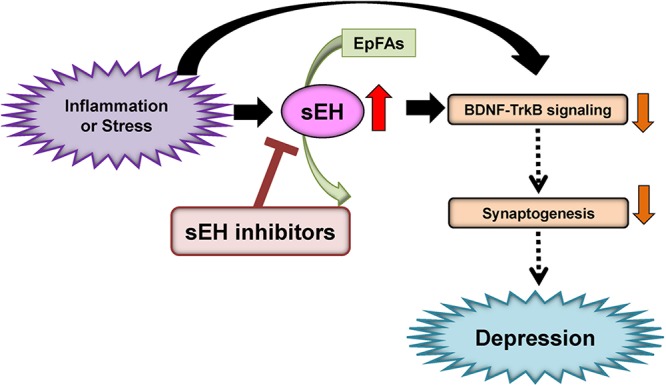
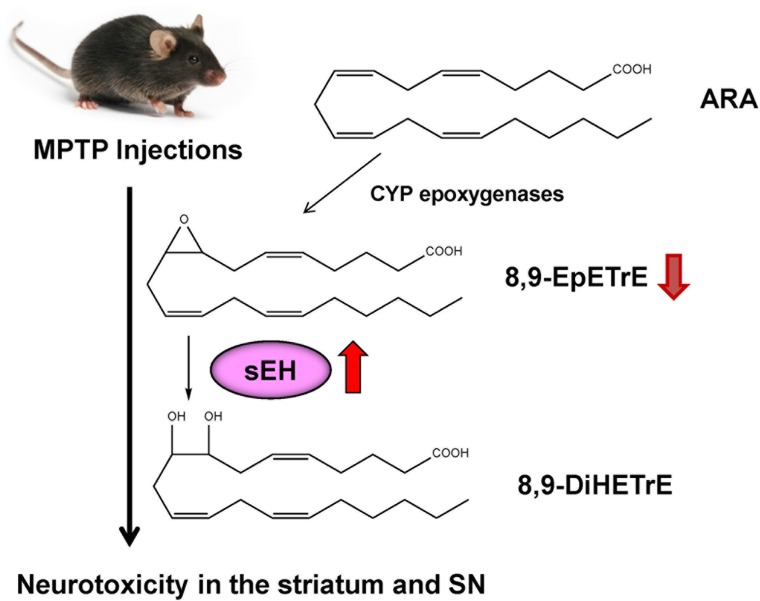
Inflammation plays a key role in the pathogenesis of a number of psychiatric and neurological disorders. Soluble epoxide hydrolases (sEH), enzymes present in all living organisms, metabolize epoxy fatty acids (EpFAs) to corresponding 1,2-diols by the addition of a molecule of water. Accumulating evidence suggests that sEH in the metabolism of polyunsaturated fatty acids (PUFAs) plays a key role in inflammation. Preclinical studies demonstrated that protein expression of sEH in the prefrontal cortex, striatum, and hippocampus from mice with depression-like phenotype was higher than control mice. Furthermore, protein expression of sEH in the parietal cortex from patients with major depressive disorder was higher than controls. Interestingly, knock-out (KO) mice exhibit stress resilience after chronic social defeat stress. Furthermore, the sEH inhibitors have antidepressant effects in animal models of depression. In addition, pharmacological inhibition or gene KO of sEH protected against dopaminergic neurotoxicity in the striatum after repeated administration of MPTP (1-methyl-4-phenyl-1,2,3,6-tetrahydropyridine) in an animal model of Parkinson's disease (PD). Protein expression of sEH in the striatum from MPTP-treated mice was higher than control mice. A number of studies using postmortem brain samples showed that the deposition of protein aggregates of α-synuclein, termed Lewy bodies, is evident in multiple brain regions of patients from PD and dementia with Lewy bodies (DLB). Moreover, the expression of the sEH protein in the striatum from patients with DLB was significantly higher compared with controls. Interestingly, there was a positive correlation between sEH expression and the ratio of phosphorylated α-synuclein to α-synuclein in the striatum. In the review, the author discusses the role of sEH in the metabolism of PUFAs in inflammation-related psychiatric and neurological disorders.
炎症在多种精神和神经疾病的发病机制中起关键作用。可溶性环氧化物水解酶(sEH)存在于所有生物体中,通过添加一分子水将环氧脂肪酸(EpFAs)代谢为相应的1,2 -二醇。越来越多的证据表明,sEH在多不饱和脂肪酸(PUFAs)代谢中在炎症中起关键作用。临床前研究表明,具有抑郁样表型的小鼠前额叶皮质、纹状体和海马体中sEH的蛋白表达高于对照小鼠。此外,重度抑郁症患者顶叶皮质中sEH的蛋白表达高于对照组。有趣的是,基因敲除(KO)小鼠在慢性社会挫败应激后表现出应激恢复力。此外,sEH抑制剂在抑郁症动物模型中具有抗抑郁作用。此外,在帕金森病(PD)动物模型中,反复给予1 -甲基-4 -苯基-1,2,3,6 -四氢吡啶(MPTP)后,sEH的药理抑制或基因敲除可保护纹状体免受多巴胺能神经毒性。MPTP处理小鼠纹状体中sEH的蛋白表达高于对照小鼠。多项使用死后脑样本的研究表明,α-突触核蛋白的蛋白聚集体(称为路易小体)在PD和路易体痴呆(DLB)患者的多个脑区中明显沉积。此外,与对照组相比,DLB患者纹状体中sEH蛋白的表达显著更高。有趣的是,sEH表达与纹状体中磷酸化α-突触核蛋白与α-突触核蛋白的比率之间存在正相关。在这篇综述中,作者讨论了sEH在与炎症相关的精神和神经疾病中PUFAs代谢中的作用。