Institut Pasteur, Department of Virology, Arboviruses and Insect Vectors, Paris, France.
Laboratory of Epidemiology and Veterinarian microbiology, Medical entomology, Tunis-Belvédère, Tunisia.
PLoS Negl Trop Dis. 2019 Feb 14;13(2):e0006997. doi: 10.1371/journal.pntd.0006997. eCollection 2019 Feb.
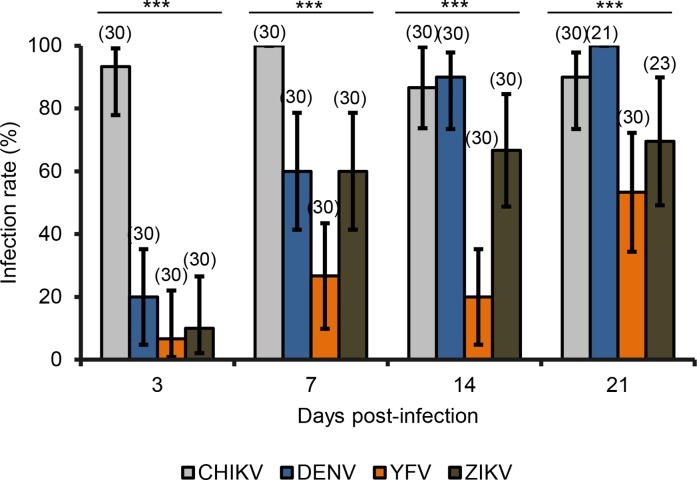
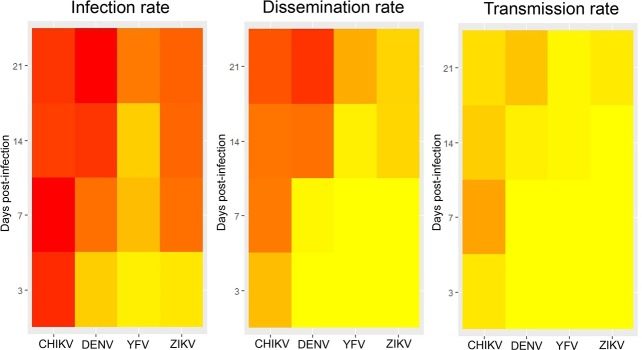
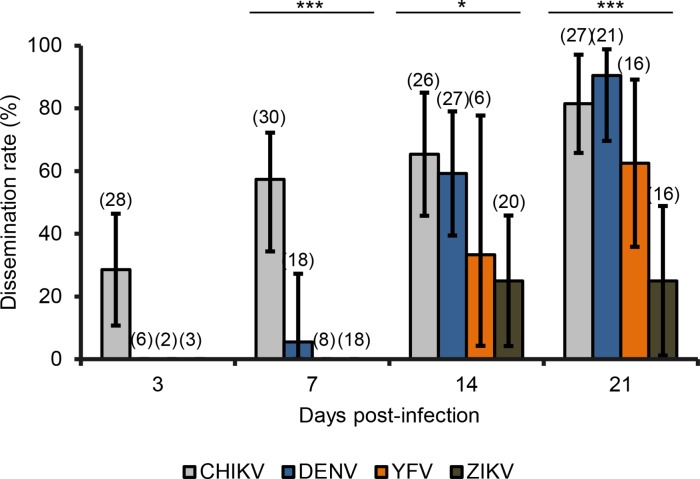
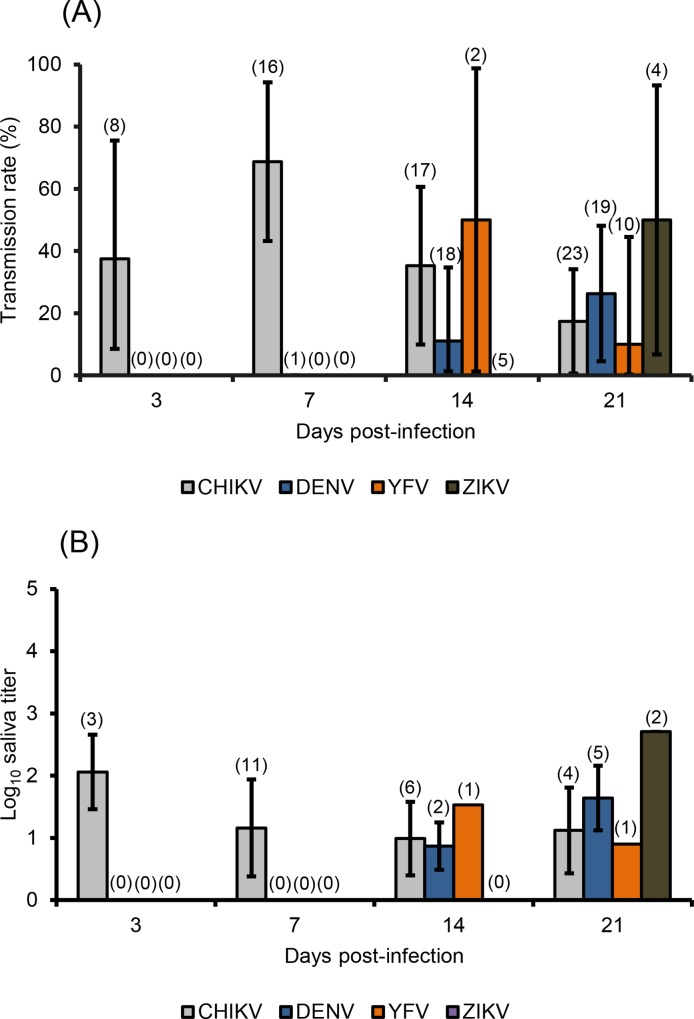
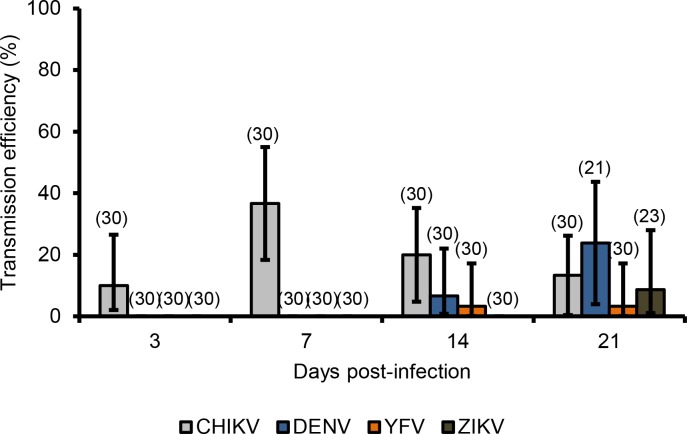
In 2015, the mosquito Aedes albopictus was detected in Rabat, Morocco. This invasive species can be involved in the transmission of more than 25 arboviruses. It is known that each combination of mosquito population and virus genotype leads to a specific interaction that can shape the outcome of infection. Testing the vector competence of local mosquitoes is therefore a prerequisite to assess the risks of emergence. A field-collected strain of Ae. albopictus from Morocco was experimentally infected with dengue (DENV), chikungunya (CHIKV), zika (ZIKV) and yellow fever (YFV) viruses. We found that this species can highly transmit CHIKV and to a lesser extent, DENV, ZIKV and YFV. Viruses can be detected in mosquito saliva at day 3 (CHIKV), day 14 (DENV and YFV), and day 21 (ZIKV) post-infection. These results suggest that the local transmission of these four arboviruses by Ae. albopictus newly introduced in Morocco is a likely scenario. Trial registration: ClinicalTrials.gov APAFIS#6573-201606l412077987v2.
2015 年,在摩洛哥拉巴特检测到白纹伊蚊。这种入侵物种可能参与传播 25 种以上的虫媒病毒。已知蚊子种群和病毒基因型的每种组合都会导致特定的相互作用,从而影响感染的结果。因此,测试当地蚊子的媒介传播能力是评估新出现风险的前提。从摩洛哥采集的白纹伊蚊野外种群经实验感染登革热(DENV)、基孔肯雅热(CHIKV)、寨卡(ZIKV)和黄热病(YFV)病毒。我们发现,该物种可高度传播 CHIKV,对 DENV、ZIKV 和 YFV 的传播能力则较低。感染后第 3 天(CHIKV)、第 14 天(DENV 和 YFV)和第 21 天(ZIKV)可在蚊子唾液中检测到病毒。这些结果表明,新引入摩洛哥的白纹伊蚊可能会导致这四种虫媒病毒在当地传播。试验注册:ClinicalTrials.gov APAFIS#6573-201606l412077987v2。