Düring Daniel Normen, Rocha Mariana Diales, Dittrich Falk, Gahr Manfred, Hahnloser Richard Hans Robert
Institute of Neuroinformatics, University of Zürich/ETH Zürich, Zurich, Switzerland.
Neuroscience Center Zurich (ZNZ), Zurich, Switzerland.
Front Neuroanat. 2019 Jan 31;13:2. doi: 10.3389/fnana.2019.00002. eCollection 2019.
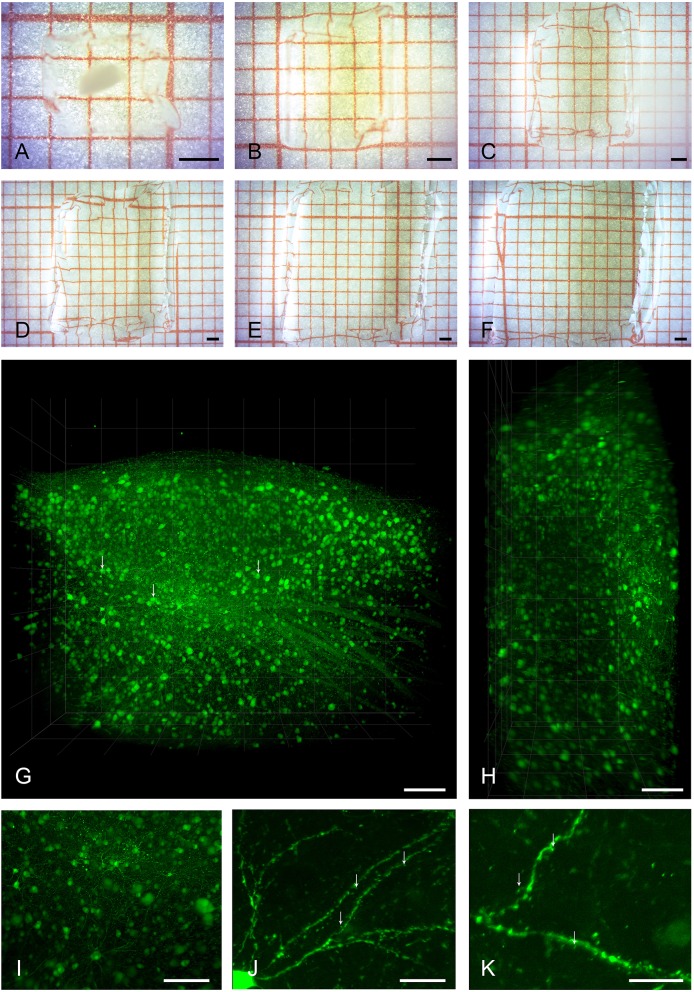
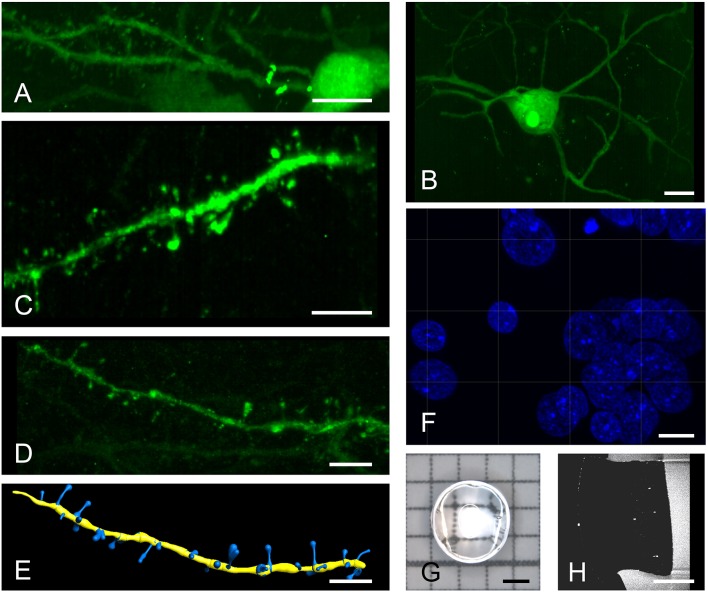
Expansion microscopy and light sheet imaging (ExLSM) provide a viable alternative to existing tissue clearing and large volume imaging approaches. The analysis of intact volumes of brain tissue presents a distinct challenge in neuroscience. Recent advances in tissue clearing and light sheet microscopy have re-addressed this challenge and blossomed into a plethora of protocols with diverse advantages and disadvantages. While refractive index matching achieves near perfect transparency and allows for imaging at large depths, the resolution of cleared brains is usually limited to the micrometer range. Moreover, the often long and harsh tissue clearing protocols hinder preservation of native fluorescence and antigenicity. Here we image large expanded brain volumes of zebra finch brain tissue in commercially available light sheet microscopes. Our expansion light sheet microscopy (ExLSM) approach presents a viable alternative to many clearing and imaging methods because it improves on tissue processing times, fluorophore compatibility, and image resolution.
扩展显微镜和光片成像(ExLSM)为现有的组织透明化和大体积成像方法提供了一种可行的替代方案。在神经科学中,对完整的脑组织体积进行分析是一项独特的挑战。组织透明化和光片显微镜技术的最新进展重新应对了这一挑战,并发展出了大量各有优缺点的方案。虽然折射率匹配可实现近乎完美的透明度并允许在大深度进行成像,但透明化后的大脑分辨率通常限制在微米范围内。此外,通常冗长且苛刻的组织透明化方案会阻碍天然荧光和抗原性的保留。在这里,我们在市售的光片显微镜中对斑胸草雀脑组织的大体积扩展脑区进行成像。我们的扩展光片显微镜(ExLSM)方法是许多透明化和成像方法的可行替代方案,因为它在组织处理时间、荧光团兼容性和图像分辨率方面都有改进。