Department of Radiation Oncology, School of Medicine, University of Colorado, Aurora, CO, United States.
Front Immunol. 2019 Jan 31;9:3154. doi: 10.3389/fimmu.2018.03154. eCollection 2018.
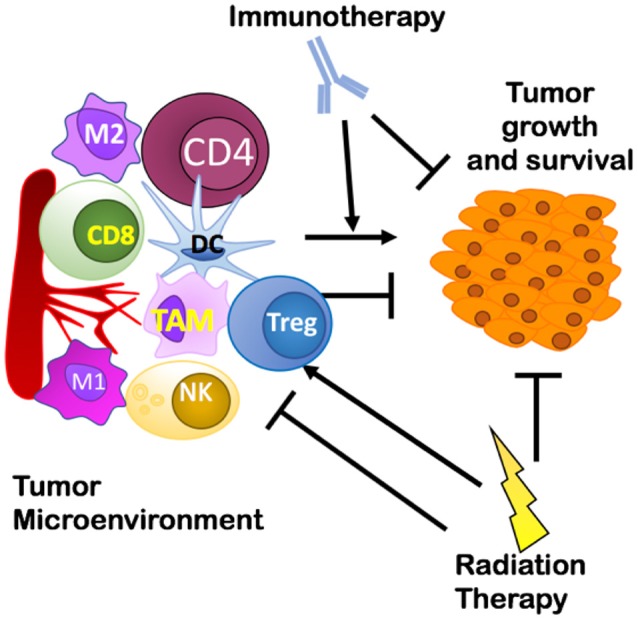
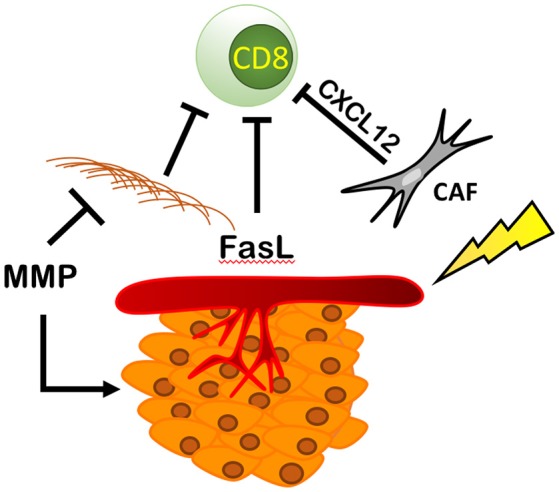
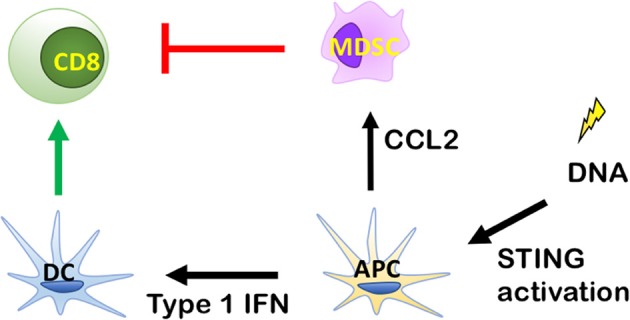
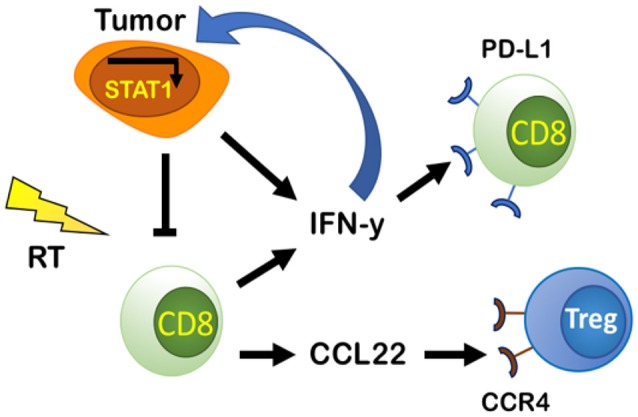
Radiation therapy has been used for many years to treat tumors based on its DNA-damage-mediated ability to kill cells. More recently, RT has been shown to exert beneficial modulatory effects on immune responses, such as triggering immunogenic cell death, enhancing antigen presentation, and activating cytotoxic T cells. Consequently, combining radiation therapy with immunotherapy represents an important area of research. Thus far, immune-checkpoint inhibitors targeting programmed death-ligand 1 (PD-L1), programmed cell death protein 1 (PD-1), and cytotoxic T-lymphocyte-associated protein 4 (CTLA-4) have been the focus of many research studies and clinical trials. The available data suggest that such immunotherapies are enhanced when combined with radiation therapy. However, treatment resistance, intrinsic or acquired, is still prevalent. Various theories as to how to enhance these combination therapies to overcome treatment resistance have been proposed. In this review, we focus on the principles surrounding radiation therapy's positive and negative effects on the tumor microenvironment. We explore mechanisms underlying radiation therapy's synergistic and antagonistic effects on immune responses and provide a base of knowledge for radio-immunology combination therapies to overcome treatment resistance. We provide evidence for targeting regulatory T cells, tumor-associated macrophages, and cancer-associated fibroblasts in combination radio-immunotherapies to improve cancer treatment.
放射治疗已被用于治疗肿瘤多年,其基于 DNA 损伤介导的杀伤细胞能力。最近,放射治疗已被证明对免疫反应具有有益的调节作用,例如触发免疫原性细胞死亡、增强抗原呈递和激活细胞毒性 T 细胞。因此,将放射治疗与免疫治疗相结合是一个重要的研究领域。迄今为止,针对程序性死亡配体 1 (PD-L1)、程序性细胞死亡蛋白 1 (PD-1)和细胞毒性 T 淋巴细胞相关蛋白 4 (CTLA-4)的免疫检查点抑制剂一直是许多研究和临床试验的焦点。现有数据表明,当与放射治疗联合使用时,这些免疫疗法会增强。然而,治疗抵抗,无论是内在的还是获得的,仍然很普遍。为了增强这些联合疗法以克服治疗抵抗,已经提出了各种理论。在这篇综述中,我们重点讨论了放射治疗对肿瘤微环境的积极和消极影响的原理。我们探讨了放射治疗对免疫反应协同和拮抗作用的机制,并为克服治疗抵抗的放射免疫联合治疗提供了知识基础。我们提供了证据表明,在联合放射免疫治疗中靶向调节性 T 细胞、肿瘤相关巨噬细胞和癌症相关成纤维细胞,可以改善癌症治疗。