Department of Psychology, Université du Québec à Trois-Rivières, Québec, Canada.
School of Psychology, Université Laval, Québec, Canada.
Sleep. 2019 May 1;42(5). doi: 10.1093/sleep/zsz038.
Research indicates that sleep efficiency below 80% substantially increases mortality risk in elderly persons. The aim of this study was to identify factors that would best predict poor sleep efficiency in the elderly, and to determine whether associations between these factors and sleep efficiency were similar for men and women and for younger and older elderly persons.
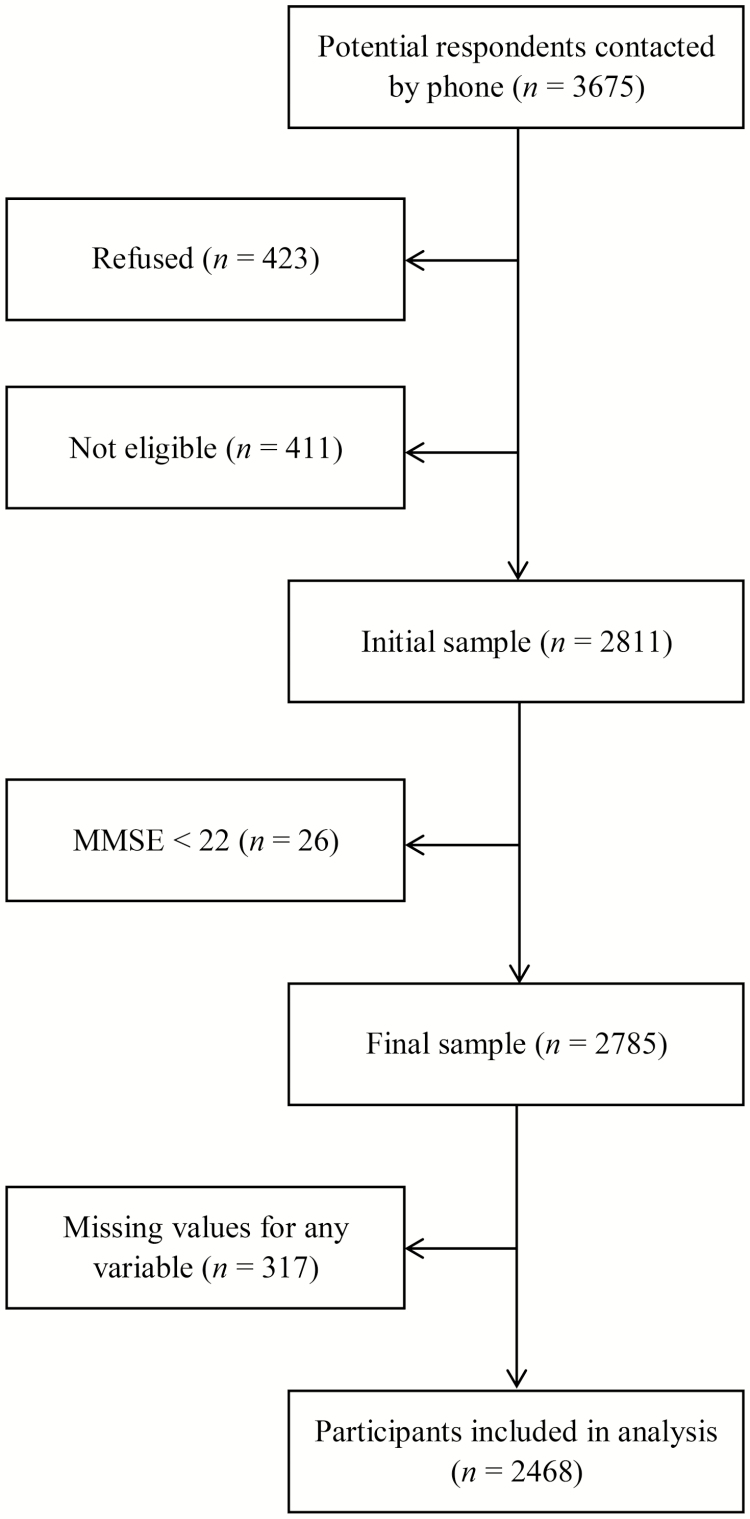
A total of 2468 individuals aged 65-96 years (40.7% men) participated. They were recruited via random generation of telephone numbers according to a geographic sampling strategy. The participants agreed to have health professionals visit their home and to answer structured interview questions. Sleep efficiency was calculated based on interview responses. Descriptive statistics and logistic regressions were conducted.
The factors most strongly associated with sleep efficiency below 80% were pain, nocturia, sleep medication use, and awakening from bad dreams. Some factors varied by sex: women aged 75 years and older or who had an anxiety disorder were more likely to have sleep efficiency below 80%, whereas being single or having painful illness raised the likelihood for men only. Except for sex, all the factors that showed associations with sleep efficiency affected younger and older elderly persons similarly.
Poor sleep efficiency is prevalent among elderly persons. The results shed new light on factors associated with poor sleep efficiency, highlighting the presence of sex differences and that certain factors make no significant contribution, such as typically proscribed sleep hygiene behaviors, mood disorders, and illness in general.
研究表明,老年人的睡眠效率低于 80%会大大增加死亡率。本研究旨在确定哪些因素最能预测老年人睡眠效率低下,并确定这些因素与睡眠效率之间的关联在男性和女性以及年轻和年老的老年人中是否相似。
共有 2468 名年龄在 65-96 岁之间的个体(40.7%为男性)参与了这项研究。他们是根据地理抽样策略通过随机生成电话号码招募的。参与者同意让健康专业人员访问他们的家,并回答结构化的访谈问题。根据访谈回答计算睡眠效率。进行描述性统计和逻辑回归分析。
与睡眠效率低于 80%最相关的因素是疼痛、夜尿、睡眠药物使用和噩梦惊醒。一些因素因性别而异:75 岁及以上的女性或患有焦虑症的女性更容易出现睡眠效率低于 80%的情况,而单身或患有疼痛性疾病的男性则更容易出现这种情况。除了性别之外,所有与睡眠效率相关的因素对年轻和年老的老年人的影响相似。
睡眠效率低下在老年人中很常见。研究结果揭示了与睡眠效率低下相关的因素,强调了存在性别差异以及某些因素(如通常被禁止的睡眠卫生行为、情绪障碍和一般疾病)没有显著贡献。