Food Animal Environmental Systems Research Unit, Agricultural Research Service, United States Department of Agriculture, Bowling Green, Kentucky, United States of America.
Department of Agriculture, Western Kentucky University, Bowling Green, Kentucky, United States of America.
PLoS One. 2019 Feb 15;14(2):e0212510. doi: 10.1371/journal.pone.0212510. eCollection 2019.
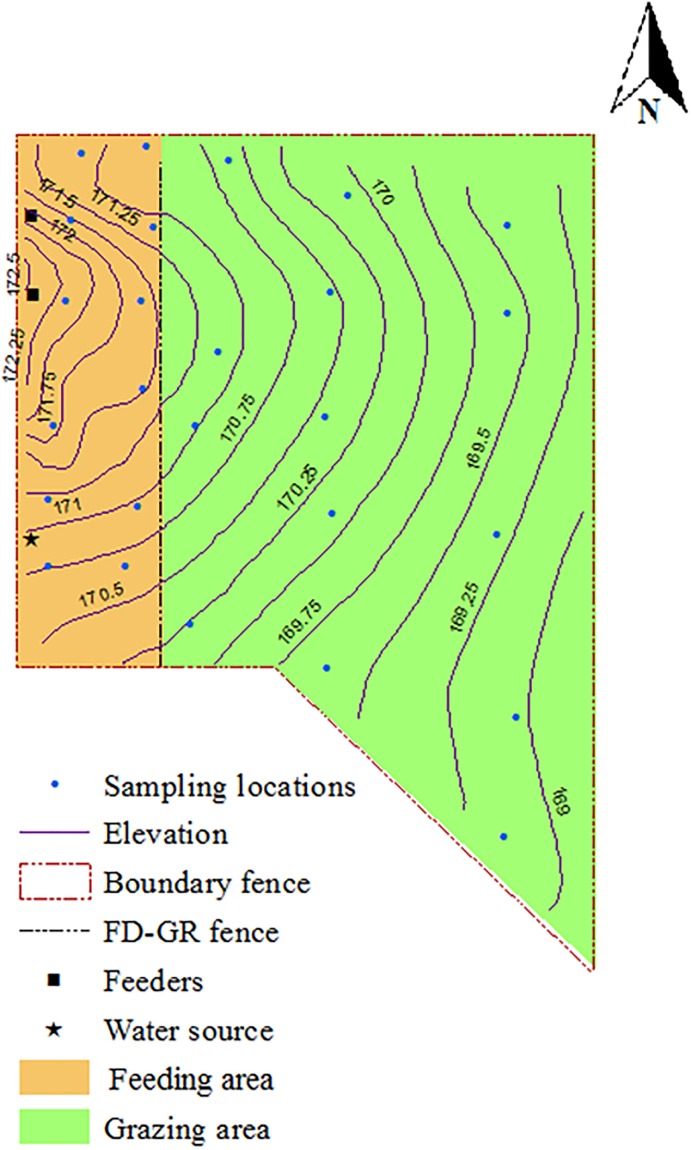
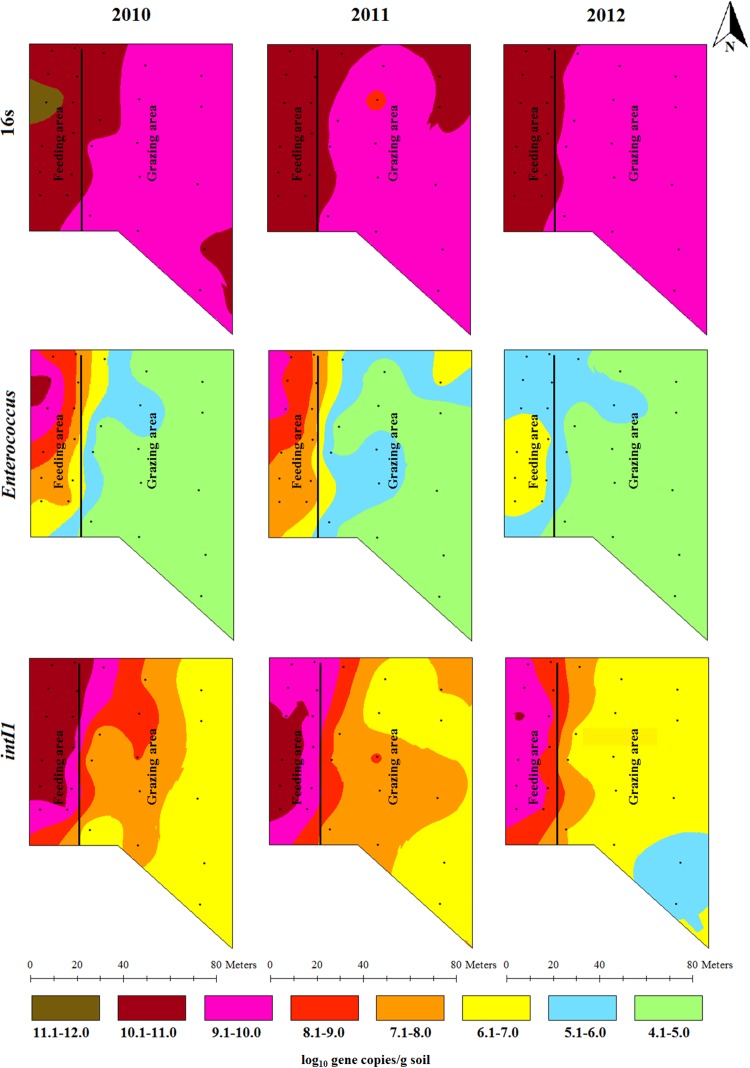
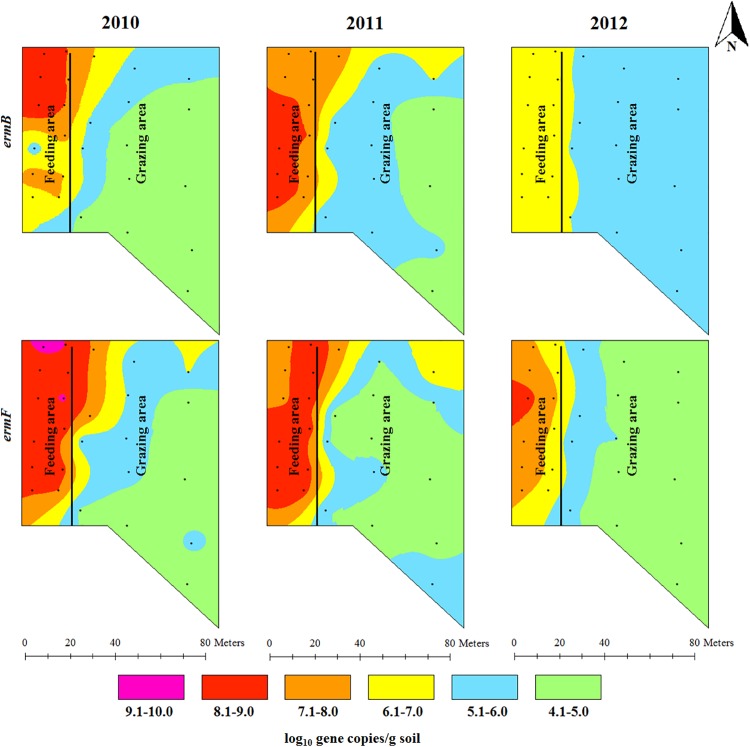
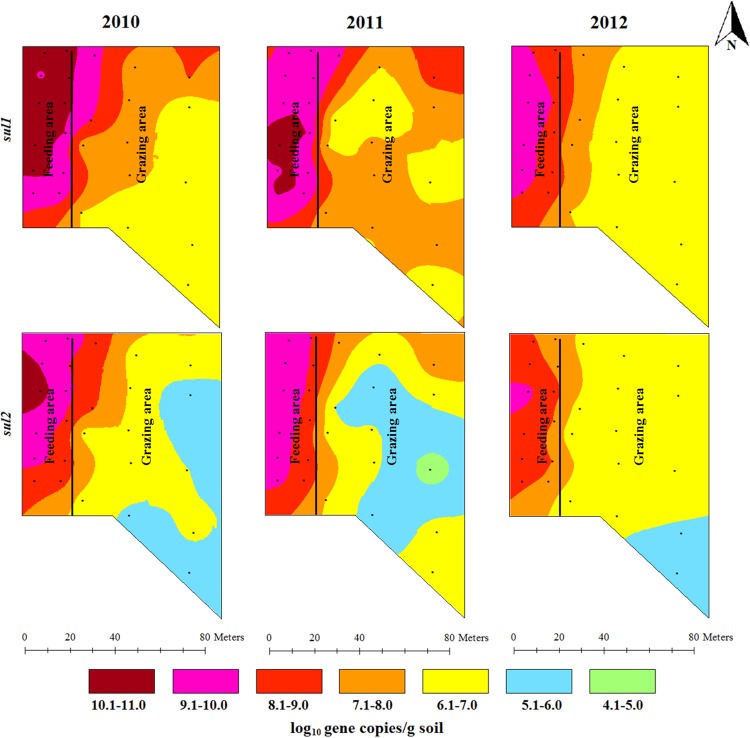
Confined animal feeding operations can facilitate the spread of genes associated with antibiotic resistance. It is not known how cattle removal from beef cattle backgrounding operation affects the persistence of antibiotic resistance genes (ARGs) in the environment. We investigated the effect of cessation of beef cattle backgrounding operation on the persistence and distribution of ARGs in the beef cattle backgrounding environment. The study was conducted at a pasture-feedlot type beef cattle backgrounding operation which consisted of feeding and grazing areas that were separated by a fence with an access gate. Backgrounding occurred for seven years before cattle were removed from the facility. Soil samples (n = 78) from 26 georeferenced locations were collected at the baseline before cattle were removed, and then one year and two years after cattle were removed. Metagenomic DNA was extracted from the soil samples and total bacterial population (16S rRNA), total Enterococcus species and class 1 integrons (intI1), and erythromycin (ermB and ermF), sulfonamide (sul1 and sul2) and tetracycline (tetO, tetW and tetQ) resistance genes were quantified. Concentrations of total bacteria, Enterococcus spp., class 1 integrons, and ARGs were higher in the feeding area and its immediate vicinity (around the fence and the gate) followed by a gradient decline along the grazing area. Although the concentrations of total bacteria, Enterococcus spp., class 1 integrons and ARGs in the feeding area significantly decreased two years after cattle removal, their concentrations were still higher than that observed in the grazing area. Higher concentrations over two years in the feeding area when compared to the grazing area suggest a lasting effect of confined beef cattle production system on the persistence of bacteria and ARGs in the soil.
封闭式动物饲养场可以促进与抗生素耐药性相关的基因传播。目前尚不清楚从肉牛育肥场撤出牛会如何影响环境中抗生素耐药基因(ARGs)的持久性。我们研究了停止肉牛育肥场作业对肉牛育肥环境中 ARG 持久性和分布的影响。该研究在一个牧场-饲料场类型的肉牛育肥场进行,该场由一个带有入口门的围栏隔开的饲养区和放牧区组成。在牛从该设施中撤出之前,育肥场已经进行了七年。在牛被撤出之前(基线),从 26 个地理位置采集了 78 个土壤样本,然后在牛被撤出一年和两年后采集了这些样本。从土壤样本中提取了宏基因组 DNA,并定量了总细菌种群(16S rRNA)、总肠球菌属和 1 类整合子(intI1)以及红霉素(ermB 和 ermF)、磺胺类(sul1 和 sul2)和四环素(tetO、tetW 和 tetQ)耐药基因。在饲养区及其附近(围栏周围和门口附近),总细菌、肠球菌属、1 类整合子和 ARG 的浓度较高,随后沿着放牧区呈梯度下降。尽管牛撤出两年后,饲养区的总细菌、肠球菌属、1 类整合子和 ARG 的浓度显著下降,但它们的浓度仍高于放牧区的浓度。与放牧区相比,饲养区两年后浓度更高,这表明封闭式肉牛生产系统对土壤中细菌和 ARG 的持久性具有持久影响。