Gaggioli Andrea, Falletta Elisa Maria, Ferrise Francesco, Graziosi Serena, Gallace Alberto, D'Ausilio Alessandro, Cipresso Pietro, Riva Giuseppe, Chirico Alice
Applied Technology for Neuro-Psychology Laboratory, Istituto Auxologico Italiano, Milan, Italy.
Department of Psychology, Università Cattolica del Sacro Cuore, Milan, Italy.
Front Psychol. 2019 Feb 4;9:2604. doi: 10.3389/fpsyg.2018.02604. eCollection 2018.
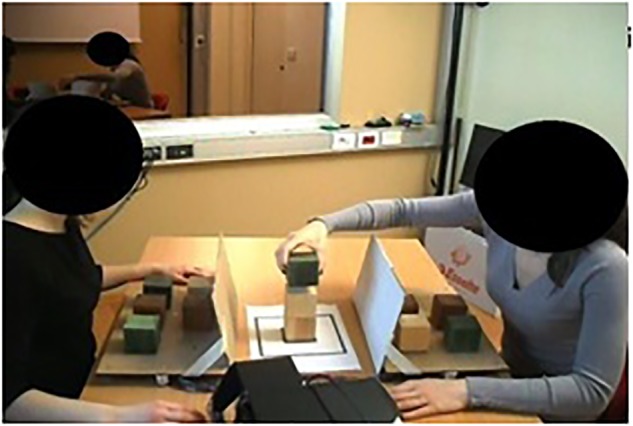
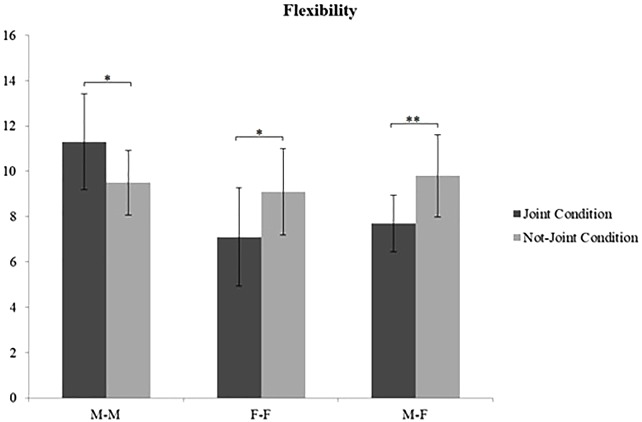
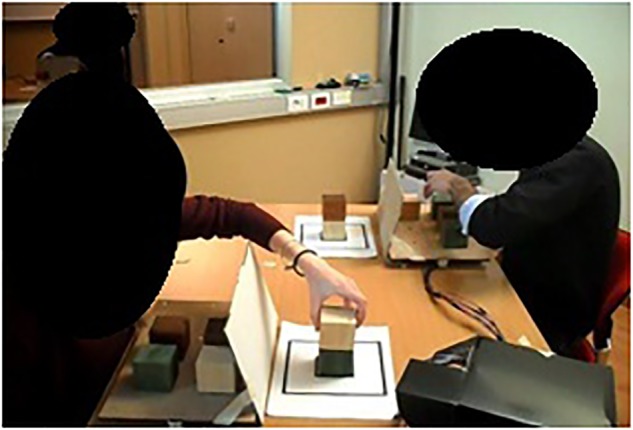
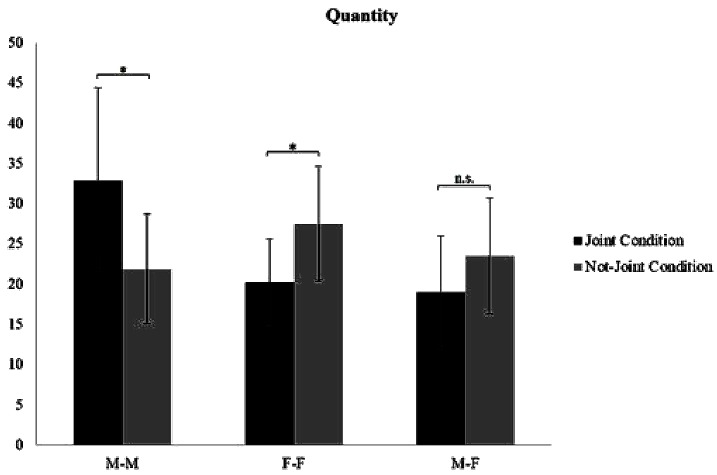
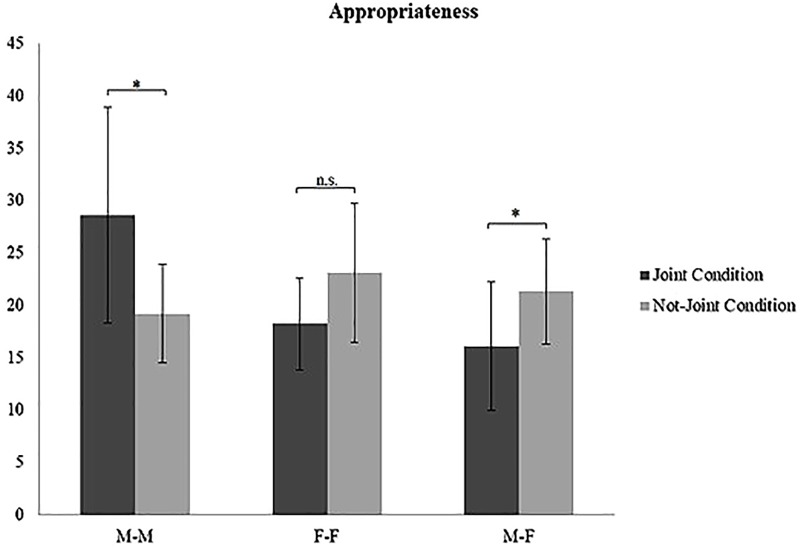
Although it is noted that interpersonal sensorimotor coordination can influence several high-level socio-cognitive processes, its impact on creative collaboration is nearly unexplored. Here, we investigated the effects of a form of sensorimotor coordination, that is, sensorimotor synchronization, on a subsequent creative collaboration task. 60 pairs ( total = 120 participants) formed by previously unacquainted individuals performed a tower-building task either jointly or alone, followed by a dyadic creativity task. Tower building time in the joint condition was recorded through a sensorized platform and creativity performance was evaluated by two independent raters based on the quantity and quality of generated ideas. We controlled for gender composition and for the disposition to cooperate and to adopt a creative, analytical style. Results showed that male-male couples were more creative after the joint-action condition, whereas female-female and mixed-gender couples were more creative after the solo condition. Regression analyses of tower building time on creativity performance revealed that building time was a significant predictor of creativity dimensions in male-male and in mixed-gender couples but did not predict creative performance in female-female couples. Overall, these findings suggest that the manipulation of sensorimotor coordination can influence performance in a subsequent creative collaboration task, with the nature, and magnitude of this effect depending on the gender composition of the dyads. These results have potential implications for the design of sensorimotor-based strategies to enhance dyadic creative performance in several contexts, especially for the organizational settings.
尽管有人指出人际感觉运动协调会影响多个高级社会认知过程,但它对创造性合作的影响几乎未被探索。在此,我们研究了一种感觉运动协调形式,即感觉运动同步,对后续创造性合作任务的影响。由之前互不相识的个体组成的60对(共120名参与者)进行了一项建塔任务,要么是两人合作,要么是单独进行,随后进行了一项双人创造力任务。通过一个传感平台记录合作条件下的建塔时间,并由两名独立评估者根据产生想法的数量和质量对创造力表现进行评估。我们控制了性别组成以及合作倾向和采用创造性、分析性风格的倾向。结果表明,在联合行动条件后,男男组合更具创造力,而女女组合和混合性别组合在单独行动条件后更具创造力。对建塔时间与创造力表现的回归分析表明,建塔时间是男男组合和混合性别组合中创造力维度的显著预测指标,但不能预测女女组合的创造力表现。总体而言,这些发现表明,感觉运动协调的操控可以影响后续创造性合作任务的表现,这种影响的性质和程度取决于二元组的性别组成。这些结果对设计基于感觉运动的策略以在多种情境中提升二元创造性表现具有潜在意义,尤其是在组织环境中。