Fraunhofer-Chalmers Centre, Chalmers Science Park, Gothenburg, Sweden.
Department of Mathematical Sciences, Chalmers University of Technology and University of Gothenburg, Gothenburg, Sweden.
J Pharmacokinet Pharmacodyn. 2019 Jun;46(3):223-240. doi: 10.1007/s10928-019-09622-x. Epub 2019 Feb 18.
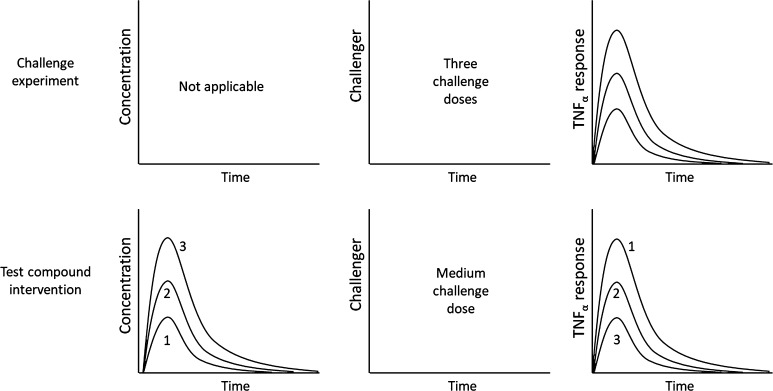
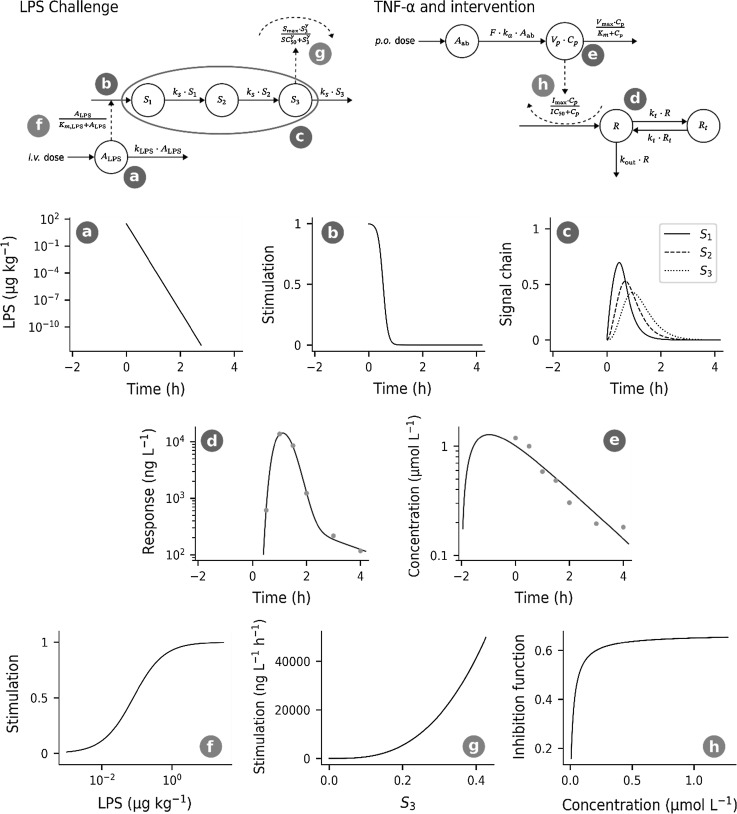
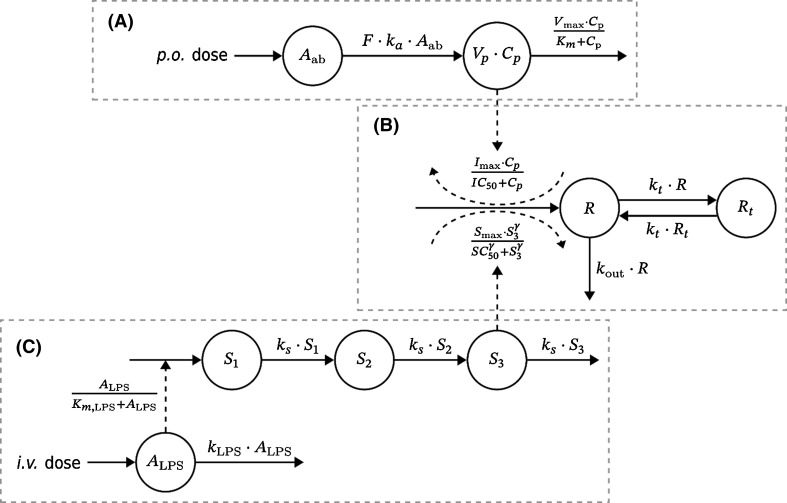
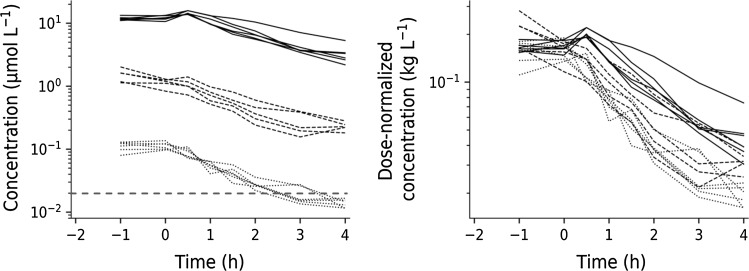
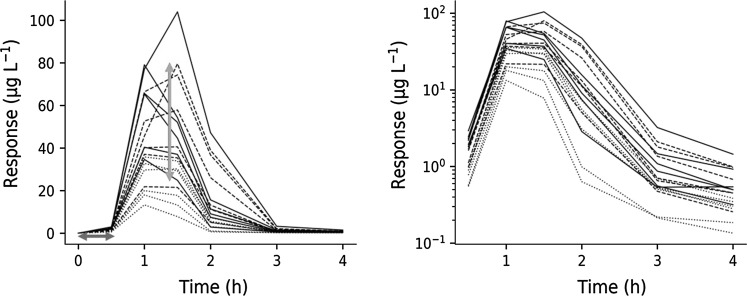
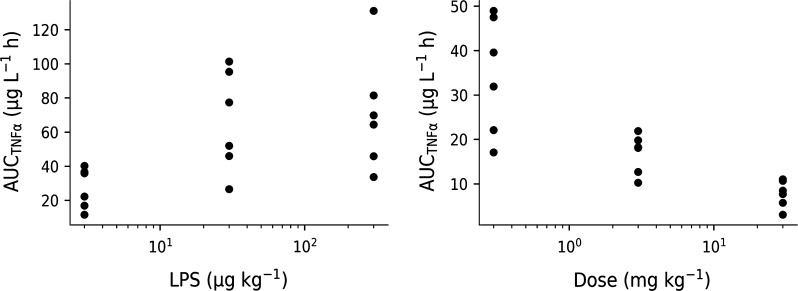
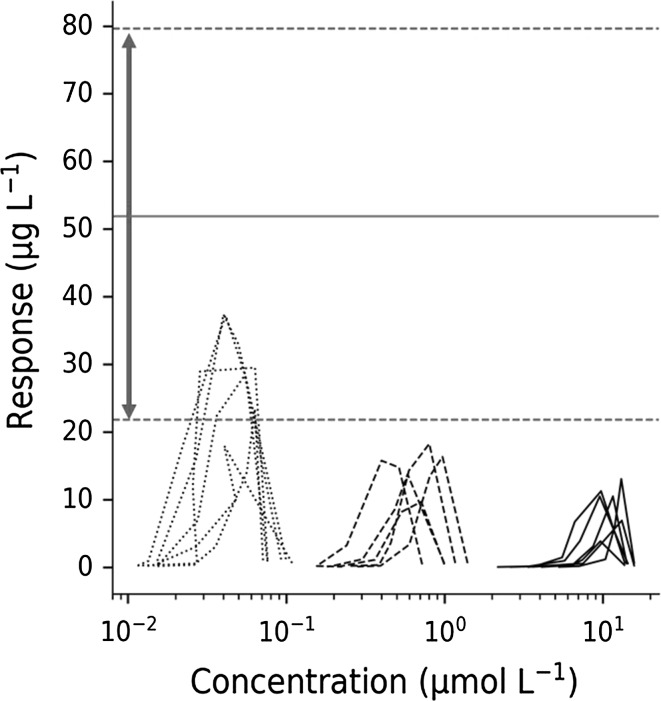
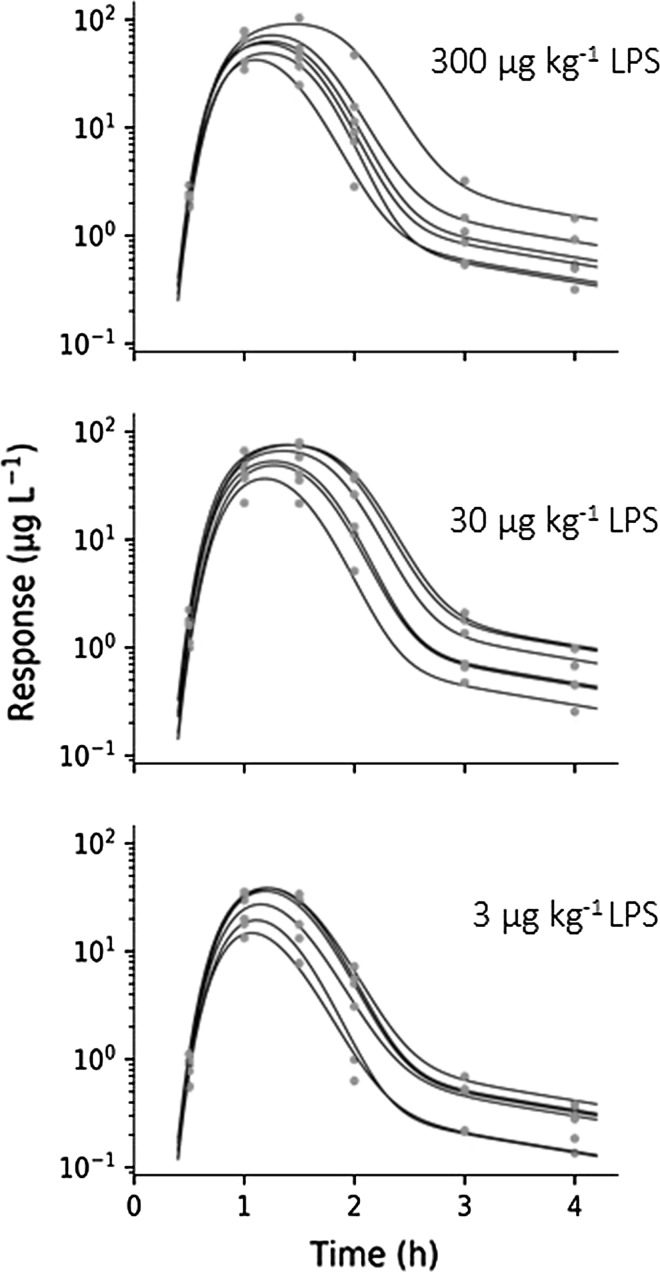
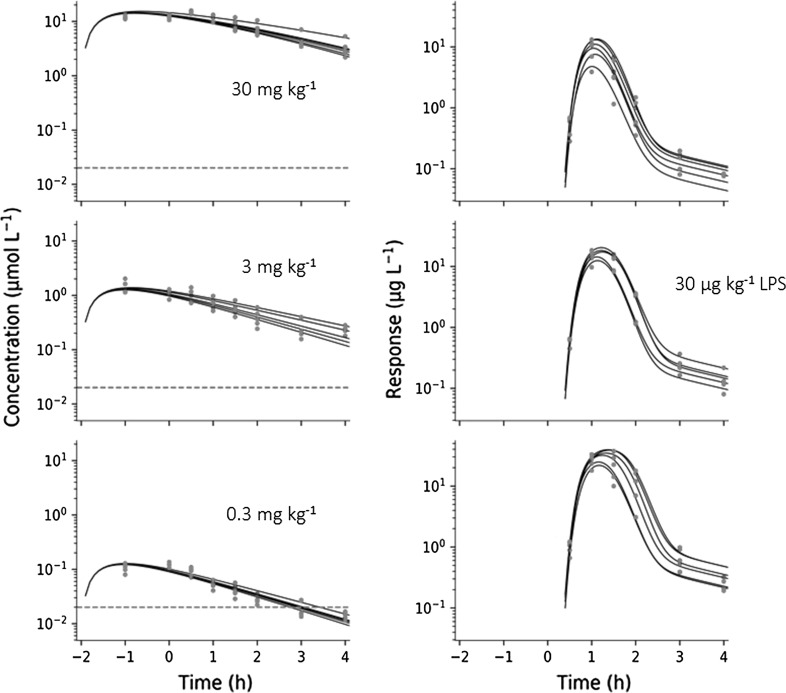
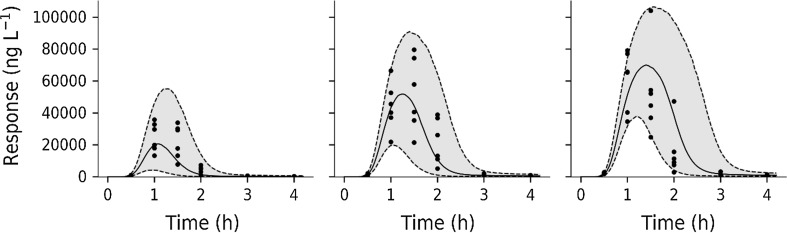
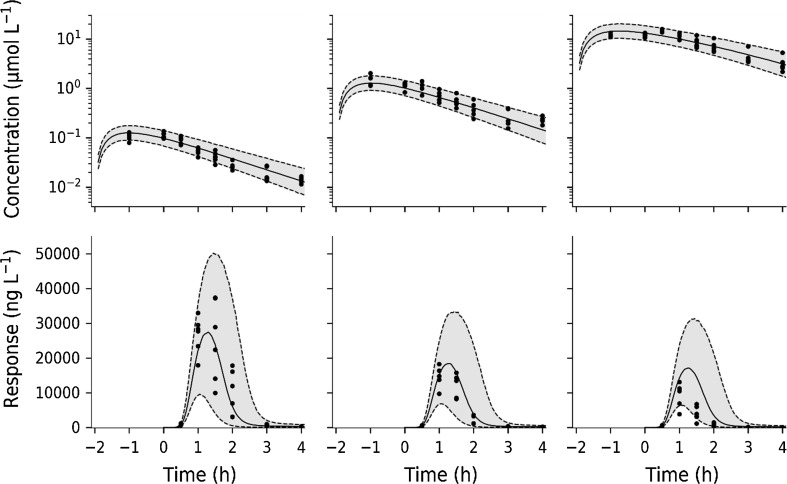
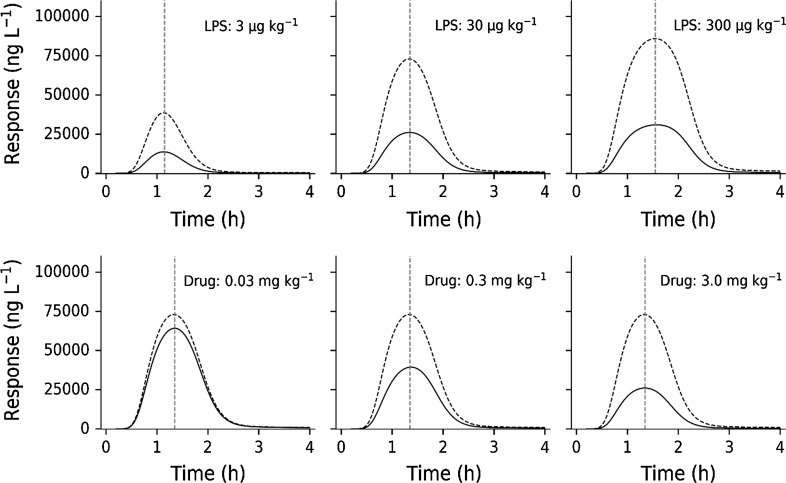
A mechanism-based biomarker model of TNF-response, including different external provocations of LPS challenge and test compound intervention, was developed. The model contained system properties (such as k, k), challenge characteristics (such as k, k, K, S, SC) and test-compound-related parameters (I, IC). The exposure to test compound was modelled by means of first-order input and Michaelis-Menten type of nonlinear elimination. Test compound potency was estimated to 20 nM with a 70% partial reduction in TNF-response at the highest dose of 30 mg·kg. Future selection of drug candidates may focus the estimation on potency and efficacy by applying the selected structure consisting of TNF system and LPS challenge characteristics. A related aim was to demonstrate how an exploratory (graphical) analysis may guide us to a tentative model structure, which enables us to better understand target biology. The analysis demonstrated how to tackle a biomarker with a baseline below the limit of detection. Repeated LPS-challenges may also reveal how the rate and extent of replenishment of TNF pools occur. Lack of LPS exposure-time courses was solved by including a biophase model, with the underlying assumption that TNF-response time courses, as such, contain kinetic information. A transduction type of model with non-linear stimulation of TNF release was finally selected. Typical features of a challenge experiment were shown by means of model simulations. Experimental shortcomings of present and published designs are identified and discussed. The final model coupled to suggested guidance rules may serve as a general basis for the collection and analysis of pharmacological challenge data of future studies.
建立了一个基于 TNF 反应的机制生物标志物模型,包括 LPS 挑战和测试化合物干预的不同外部刺激。该模型包含系统特性(如 k、k)、挑战特性(如 k、k、K、S、SC)和测试化合物相关参数(I、IC)。通过一级输入和米氏非线性能消除的方式对测试化合物的暴露进行建模。测试化合物的效力估计为 20 nM,在最高剂量 30 mg·kg 时,TNF 反应减少 70%。未来药物候选物的选择可能会通过应用包含 TNF 系统和 LPS 挑战特性的选定结构,重点关注效力和疗效的估计。另一个相关的目标是展示探索性(图形)分析如何指导我们选择一个暂定的模型结构,从而使我们能够更好地理解目标生物学。该分析展示了如何处理基线低于检测限的生物标志物。重复的 LPS 挑战也可以揭示 TNF 池的补充速度和程度。通过包含生物相模型解决了缺乏 LPS 暴露时间过程的问题,其基本假设是 TNF 反应时间过程本身包含动力学信息。最后选择了一种具有 TNF 释放非线性刺激的转导类型模型。通过模型模拟展示了挑战实验的典型特征。识别并讨论了当前和已发表设计的实验缺点。最后,与建议的指导规则相结合的模型可以作为未来研究中收集和分析药理学挑战数据的一般基础。