Division of Systems Biomedicine and Pharmacology, Leiden Academic Centre for Drug Research, Leiden University, Leiden, The Netherlands.
Department of Intensive Care Medicine, University Medical Center, University Utrecht, Utrecht, The Netherlands.
Clin Pharmacol Ther. 2021 Aug;110(2):346-360. doi: 10.1002/cpt.2194. Epub 2021 Mar 2.
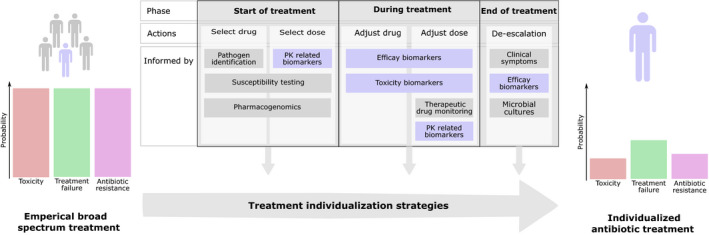
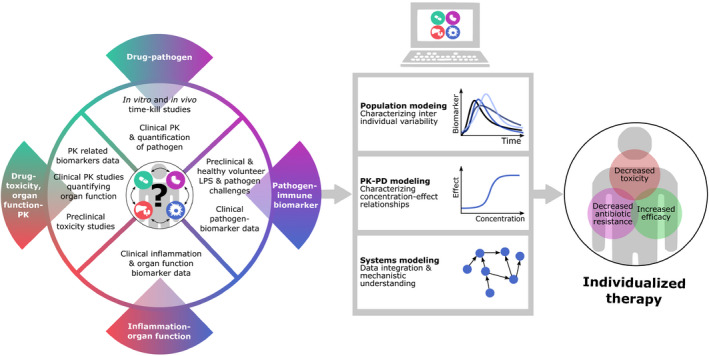
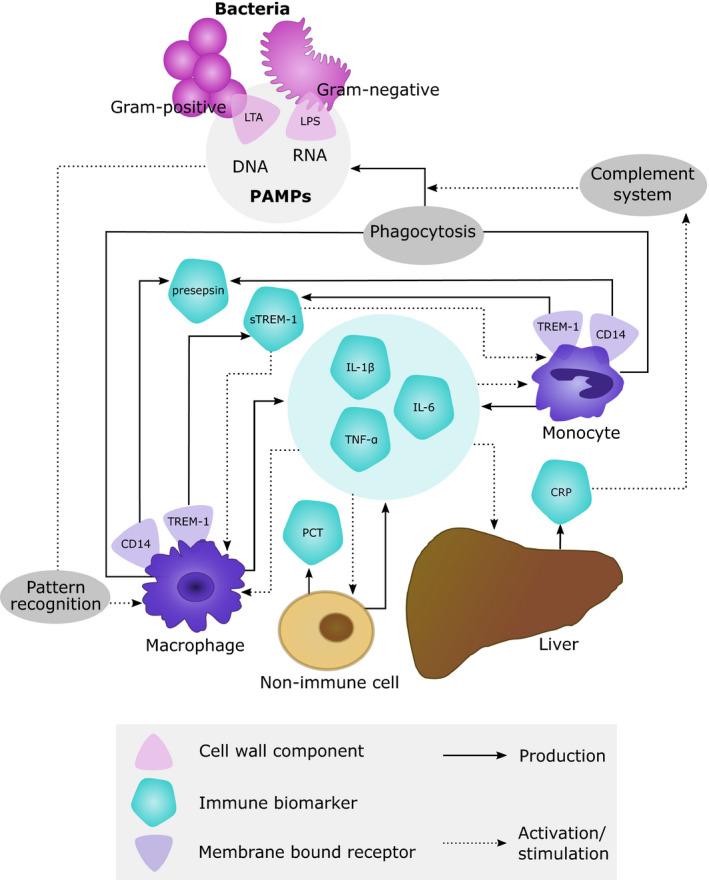
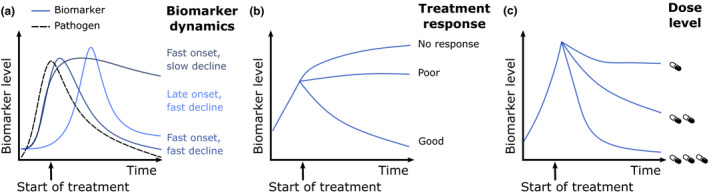
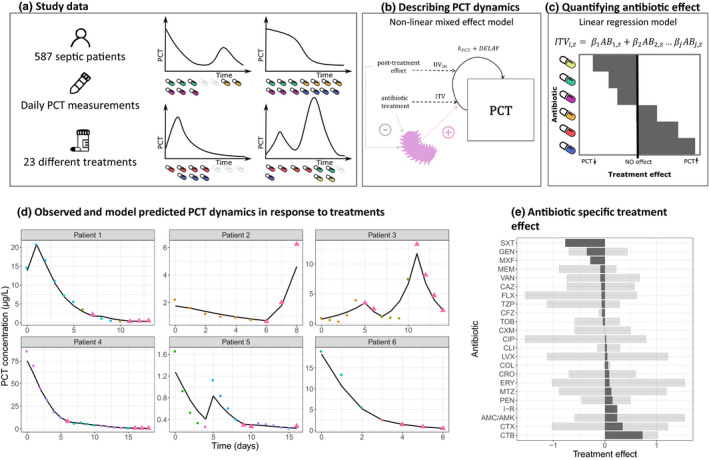
Treatment failure of antibiotic therapy due to insufficient efficacy or occurrence of toxicity is a major clinical challenge, and is expected to become even more urgent with the global rise of antibiotic resistance. Strategies to optimize treatment in individual patients are therefore of crucial importance. Currently, therapeutic drug monitoring plays an important role in optimizing antibiotic exposure to reduce treatment failure and toxicity. Biomarker-based strategies may be a powerful tool to further quantify and monitor antibiotic treatment response, and reduce variation in treatment response between patients. Host response biomarkers, such as CRP, procalcitonin, IL-6, and presepsin, could potentially carry significant information to be utilized for treatment individualization. To achieve this, the complex interactions among immune system, pathogen, drug, and biomarker need to be better understood and characterized. The purpose of this tutorial is to discuss the use and evidence of currently available biomarker-based approaches to inform antibiotic treatment. To this end, we also included a discussion on how treatment response biomarker data from preclinical, healthy volunteer, and patient-based studies can be further characterized using pharmacometric and system pharmacology based modeling approaches. As an illustrative example of how such modeling strategies can be used, we describe a case study in which we quantitatively characterize procalcitonin dynamics in relation to antibiotic treatments in patients with sepsis.
由于疗效不足或出现毒性而导致抗生素治疗失败是一个主要的临床挑战,随着抗生素耐药性在全球范围内的上升,预计这一问题将变得更加紧迫。因此,优化个体患者治疗的策略至关重要。目前,治疗药物监测在优化抗生素暴露以降低治疗失败和毒性方面发挥着重要作用。基于生物标志物的策略可能是进一步量化和监测抗生素治疗反应并减少患者间治疗反应变异性的有力工具。宿主反应生物标志物,如 CRP、降钙素原、IL-6 和前降钙素,可能具有重要信息,可以用于个体化治疗。为此,需要更好地理解和描述免疫系统、病原体、药物和生物标志物之间的复杂相互作用。本教程的目的是讨论当前可用的基于生物标志物的方法在告知抗生素治疗中的使用和证据。为此,我们还讨论了如何使用基于药代动力学和系统药理学的建模方法进一步描述来自临床前、健康志愿者和患者研究的治疗反应生物标志物数据。作为如何使用此类建模策略的说明性示例,我们描述了一个案例研究,其中我们定量描述了降钙素原动力学与脓毒症患者抗生素治疗的关系。