Department of Neuropsychiatry, Division of Neuroscience, Graduate School of Medicine, Mie University, Tsu, Mie, Japan.
Pharmacol Res Perspect. 2019 Feb;7(1):e00457. doi: 10.1002/prp2.457.
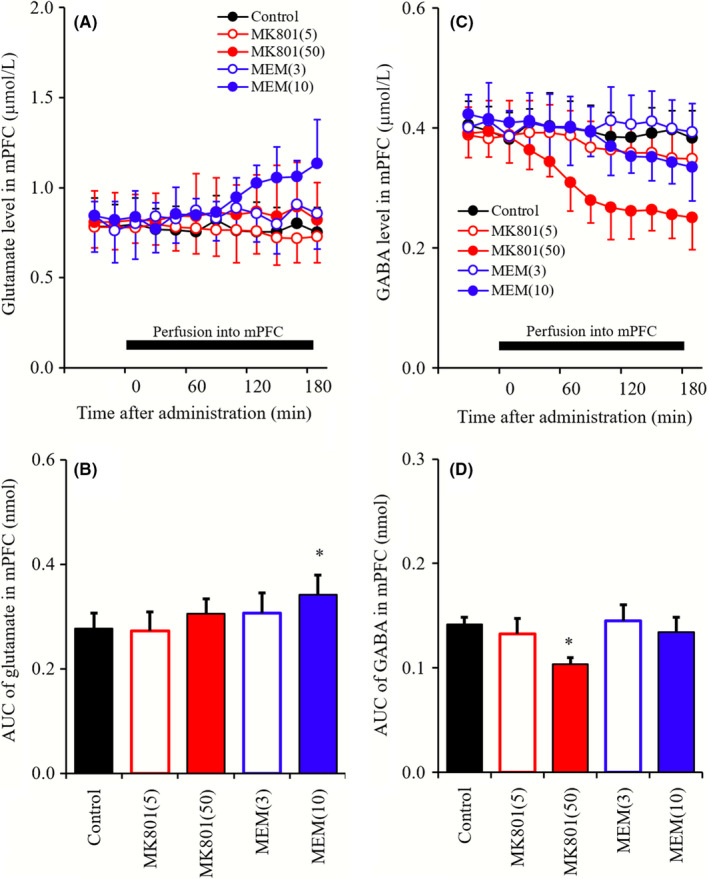
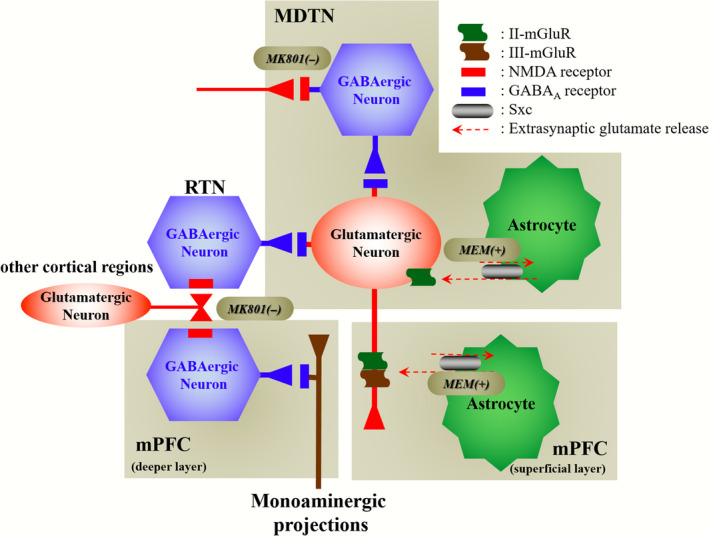
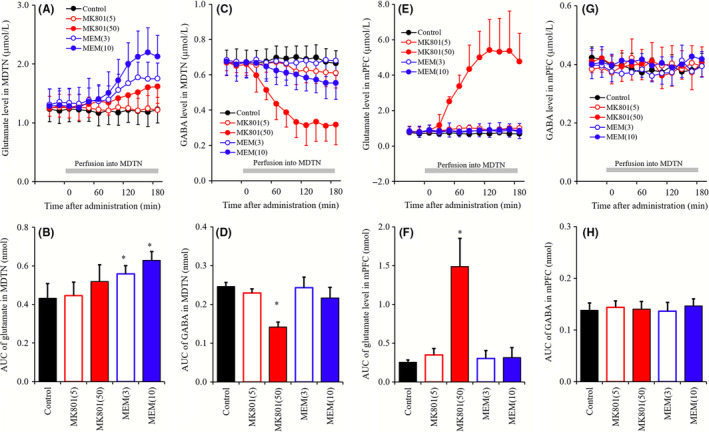
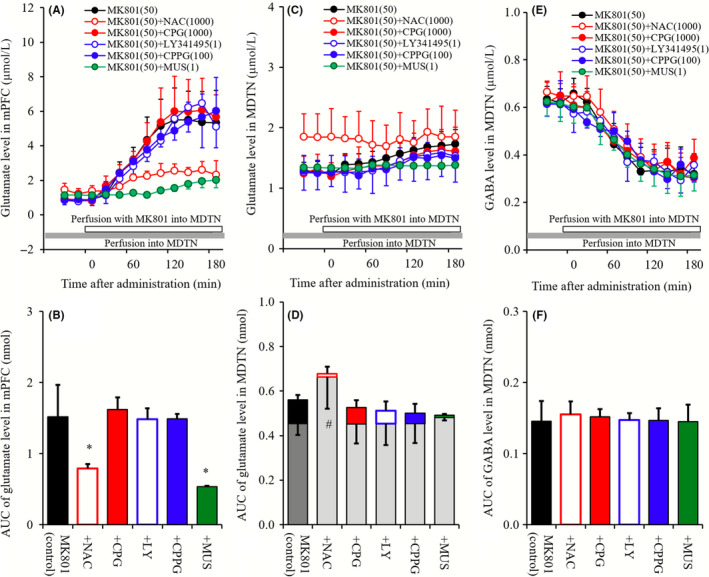
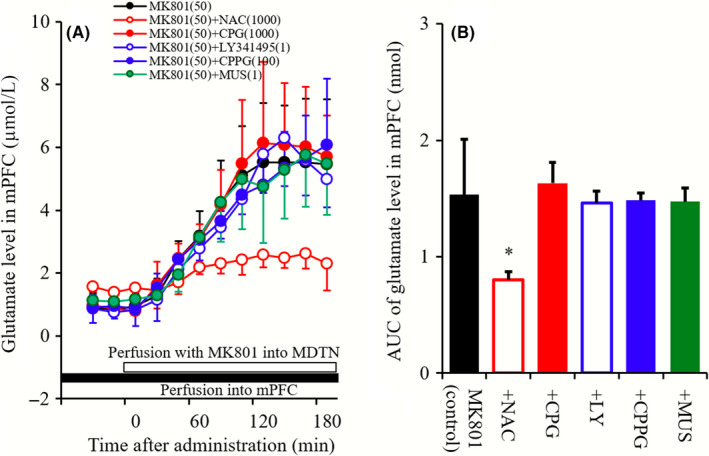
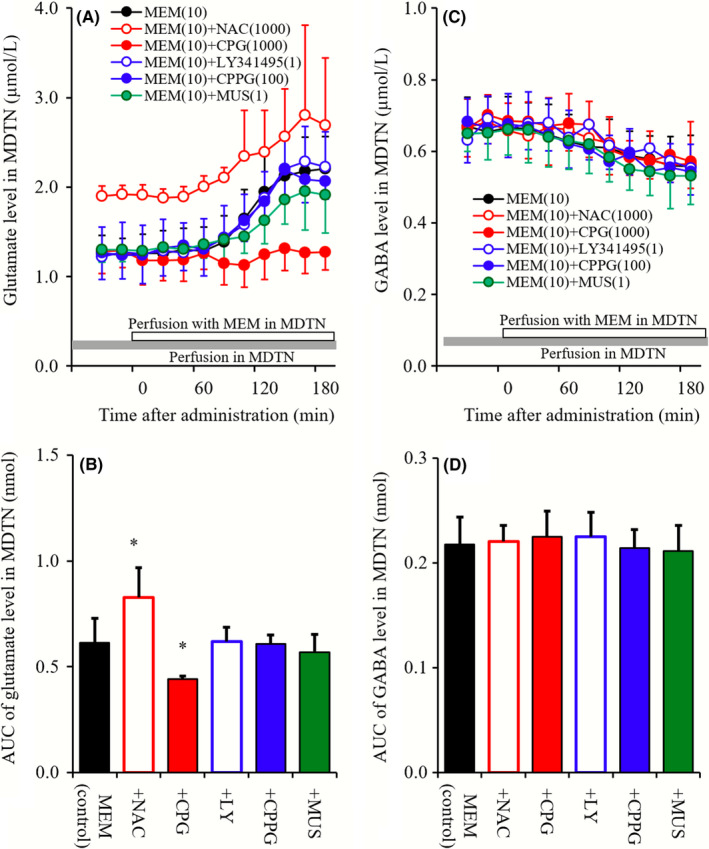
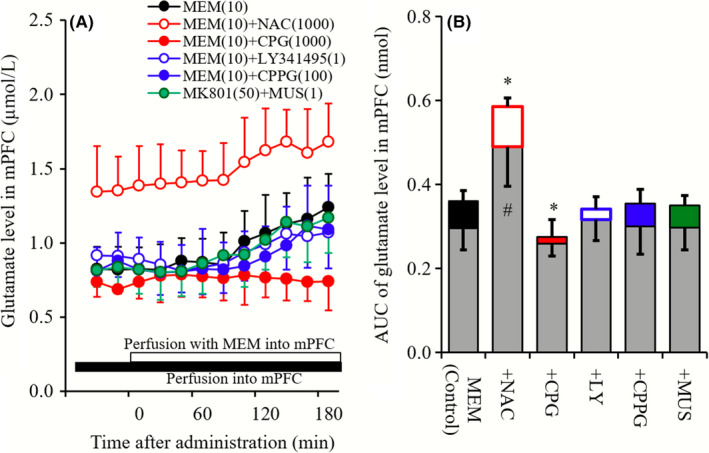
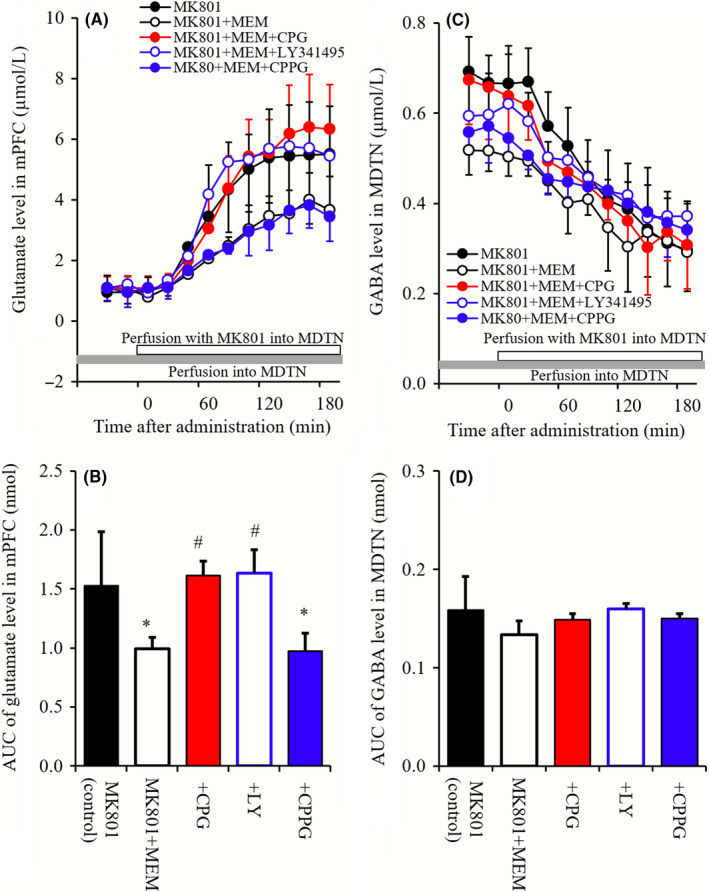
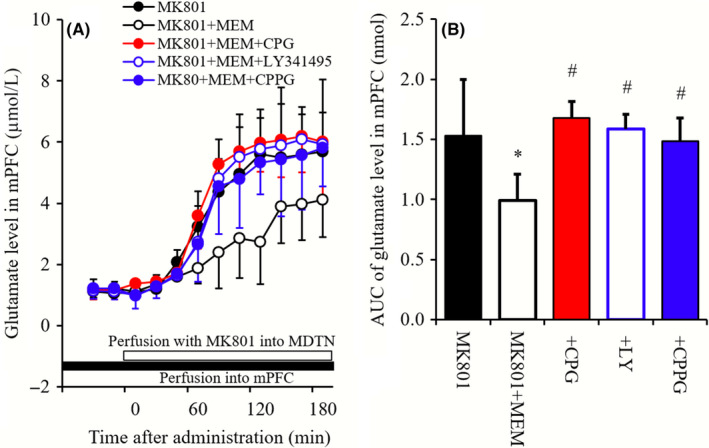
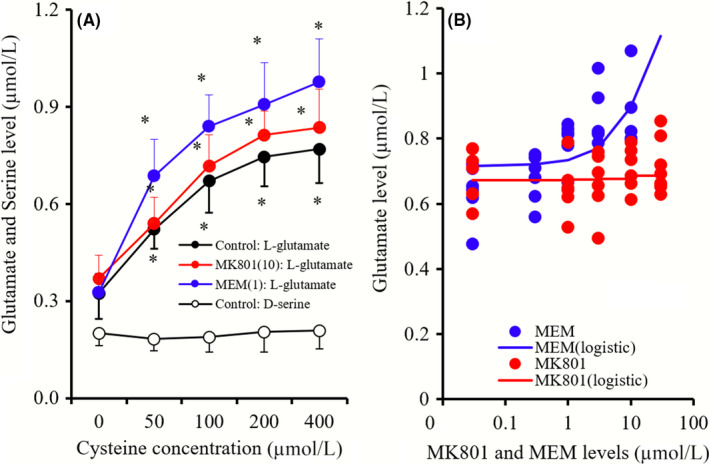
Deficiencies in N-methyl-d-aspartate (NMDA)/glutamate receptor (NMDAR) signaling have been considered central to the cognitive impairments of schizophrenia; however, an NMDAR antagonist memantine (MEM) improves cognitive impairments of Alzheimer's disease and schizophrenia. These mechanisms of paradoxical clinical effects of NMDAR antagonists remain unclear. To explore the mechanisms by which MK801 and MEM affect thalamocortical transmission, we determined interactions between local administrations of MK801, MEM, system xc (Sxc), and metabotropic glutamate receptors (mGluRs) on extracellular glutamate and GABA levels in the mediodorsal thalamic nucleus (MDTN) and medial prefrontal cortex (mPFC) using dual-probe microdialysis with ultra-high-pressure liquid chromatography. Effects of MK801 and MEM on Sxc activity were also determined using primary cultured astrocytes. Sxc activity was enhanced by MEM, but was unaffected by MK801. MK801 enhanced thalamocortical glutamatergic transmission by GABAergic disinhibition in the MDTN. In the MDTN and the mPFC, MEM weakly increased glutamate release by activating Sxc, whereas MEM inhibited thalamocortical glutamatergic transmission. Paradoxical effects of MEM were induced following secondary activation of inhibitory II-mGluR and III-mGluR by exporting glutamate from astroglial Sxc. The present results suggest that the effects of therapeutically relevant concentrations of MEM on thalamocortical glutamatergic transmission are predominantly caused by activation of Sxc rather than inhibition of NMDAR. These demonstrations suggest that the combination between reduced NMDAR and activated Sxc contribute to the neuroprotective effects of MEM. Furthermore, activation of Sxc may compensate for the cognitive impairments that are induced by hyperactivation of thalamocortical glutamatergic transmission following activation of Sxc/II-mGluR in the MDTN and Sxc/II-mGluR/III-mGluR in the mPFC.
N-甲基-D-天冬氨酸(NMDA)/谷氨酸受体(NMDAR)信号的缺乏被认为是精神分裂症认知障碍的核心;然而,NMDAR 拮抗剂美金刚(MEM)可改善阿尔茨海默病和精神分裂症的认知障碍。这些 NMDAR 拮抗剂的矛盾临床效果的机制尚不清楚。为了探索 MK801 和 MEM 影响丘脑皮质传递的机制,我们使用双探针微透析和超高压液相色谱法,在中背侧丘脑核(MDTN)和内侧前额叶皮层(mPFC)中确定了 MK801、MEM、系统 xc(Sxc)和代谢型谷氨酸受体(mGluRs)局部给药对细胞外谷氨酸和 GABA 水平的相互作用。还使用原代培养的星形胶质细胞确定了 MK801 和 MEM 对 Sxc 活性的影响。MEM 增强了 Sxc 活性,但 MK801 没有影响。MK801 通过 GABA 能抑制在 MDTN 中增强丘脑皮质谷氨酸能传递。在 MDTN 和 mPFC 中,MEM 通过激活 Sxc 弱增谷氨酸释放,而 MEM 抑制丘脑皮质谷氨酸能传递。通过从星形胶质细胞 Sxc 中输出谷氨酸,二级激活抑制性 II-mGluR 和 III-mGluR,从而诱导 MEM 的矛盾作用。本研究结果表明,治疗相关浓度的 MEM 对丘脑皮质谷氨酸能传递的影响主要是由 Sxc 的激活引起的,而不是由 NMDAR 的抑制引起的。这些结果表明,减少的 NMDAR 和激活的 Sxc 的结合有助于 MEM 的神经保护作用。此外,Sxc 的激活可能会补偿由于 MDTN 中的 Sxc/II-mGluR 和 mPFC 中的 Sxc/II-mGluR/III-mGluR 的激活导致的丘脑皮质谷氨酸能传递过度激活引起的认知障碍。