From the Diabetes Research Program, Division of Endocrinology, Diabetes and Metabolism, Department of Medicine, New York University School of Medicine, New York.
Arterioscler Thromb Vasc Biol. 2019 Apr;39(4):558-568. doi: 10.1161/ATVBAHA.119.310961.
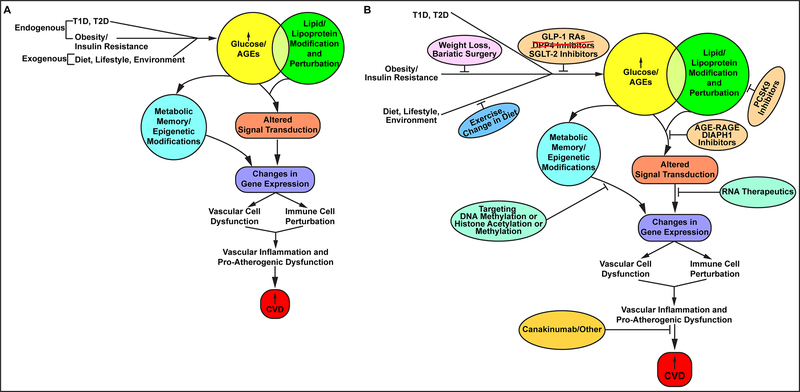
Cardiovascular disease remains a leading cause of morbidity and mortality in people with types 1 or 2 diabetes mellitus. Although beneficial roles for strict control of hyperglycemia have been suggested, such a strategy is not without liabilities. Specifically, the risk of hypoglycemia and its consequences remain an omnipresent threat with such approaches. The advent of the CVOT (Cardiovascular Outcomes Trials) for new antidiabetes mellitus treatments has uncovered unexpected benefits of cardiovascular protection in some of the new classes of agents, such as the GLP-1 RAs (glucagon-like peptide-1 receptor agonists) and the SGLT-2 (sodium-glucose cotransporter-2) inhibitors. Further, state-of-the-art approaches, such as antibodies to PCKSK9 (proprotein convertase subtilisin-kexin type 9); RNA therapeutics; agents targeting distinct components of the immune/inflammatory response; and novel small molecules that block the actions of RAGE (receptor for advanced glycation end products) signaling, also hold potential as new therapies for diabetes mellitus and cardiovascular disease. Finally, interventions such as weight loss, through bariatric surgery, may hold promise for benefit in diabetes and cardiovascular disease. In this Brief Review, some of the novel approaches and emerging targets for the treatment of diabetes mellitus and cardiovascular disease are discussed. Ultimately, identification of the optimal timing and combinations of such interventions, especially in the context of personalized approaches, together with emerging disease-modifying agents, holds great promise to reduce the burden that diabetes poses to the cardiovascular system.
心血管疾病仍然是 1 型或 2 型糖尿病患者发病率和死亡率的主要原因。虽然严格控制高血糖有有益的作用,但这种策略并非没有缺点。具体来说,这种方法仍然存在低血糖及其后果的风险。新的抗糖尿病治疗的心血管结局试验 (CVOT) 的出现揭示了一些新类别的药物,如 GLP-1 RAs(胰高血糖素样肽-1 受体激动剂)和 SGLT-2(钠-葡萄糖共转运蛋白-2)抑制剂,具有心血管保护的意外益处。此外,最先进的方法,如针对 PCKSK9(脯氨酸内切酶枯草溶菌素/激肽释放酶 9)的抗体;RNA 疗法;针对免疫/炎症反应不同成分的药物;以及阻断 RAGE(晚期糖基化终产物受体)信号传导的新型小分子,也有可能成为糖尿病和心血管疾病的新疗法。最后,通过减肥手术进行减肥等干预措施可能对糖尿病和心血管疾病有益。在这篇简要综述中,讨论了一些治疗糖尿病和心血管疾病的新方法和新靶点。最终,确定此类干预措施的最佳时机和组合,尤其是在个性化方法的背景下,以及新出现的疾病修饰药物,有望降低糖尿病对心血管系统的负担。