Department of Epidemiology and Demography, KEMRI/Wellcome Trust Research Programme, PO Box 230, Kilifi, 80108, Kenya.
Department of Infectious Disease Epidemiology, London School of Hygiene and Tropical Medicine, London, WC1E 7HT, UK.
Nat Commun. 2019 Feb 20;10(1):856. doi: 10.1038/s41467-019-08775-0.
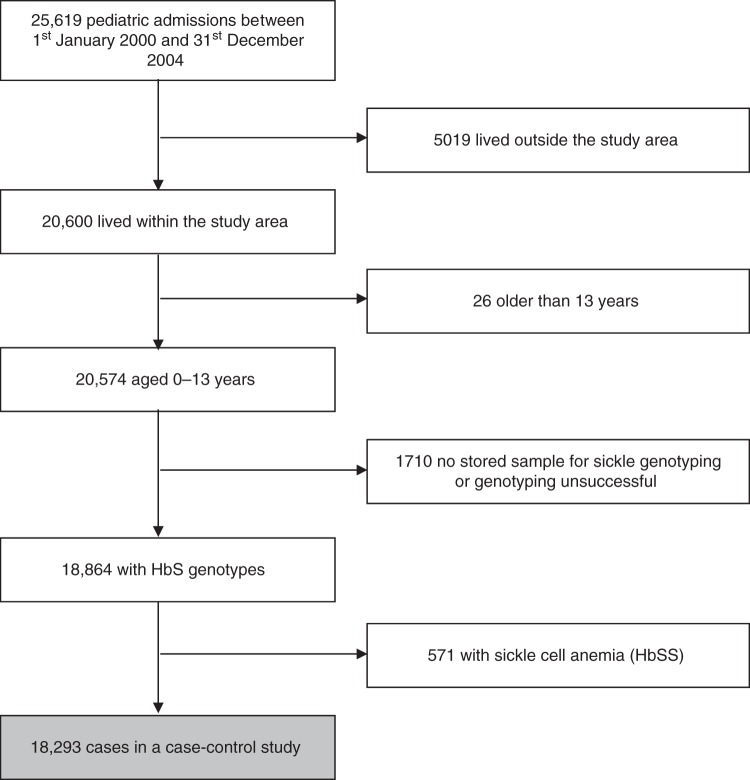
Most estimates of the burden of malaria are based on its direct impacts; however, its true burden is likely to be greater because of its wider effects on overall health. Here we estimate the indirect impact of malaria on children's health in a case-control study, using the sickle cell trait (HbAS), a condition associated with a high degree of specific malaria resistance, as a proxy indicator for an effective intervention. We estimate the odds ratios for HbAS among cases (all children admitted to Kilifi County Hospital during 2000-2004) versus community controls. As expected, HbAS protects strongly against malaria admissions (aOR 0.26; 95%CI 0.22-0.31), but it also protects against other syndromes, including neonatal conditions (aOR 0.79; 0.67-0.93), bacteraemia (aOR 0.69; 0.54-0.88) and severe malnutrition (aOR 0.67; 0.55-0.83). The wider health impacts of malaria should be considered when estimating the potential added benefits of effective malaria interventions.
大多数疟疾负担的估算都是基于其直接影响;然而,由于疟疾对整体健康的更广泛影响,其实际负担可能更大。在这里,我们使用镰状细胞特征(HbAS)作为有效干预的替代指标,在病例对照研究中估算疟疾对儿童健康的间接影响。我们估计病例(2000-2004 年期间所有入住基利菲县医院的儿童)与社区对照之间 HbAS 的比值比。正如预期的那样,HbAS 对疟疾住院有很强的保护作用(aOR 0.26;95%CI 0.22-0.31),但它也对其他综合征,包括新生儿疾病(aOR 0.79;0.67-0.93)、菌血症(aOR 0.69;0.54-0.88)和严重营养不良(aOR 0.67;0.55-0.83)有保护作用。在估计有效疟疾干预措施的潜在额外益处时,应考虑疟疾对更广泛健康的影响。