Mahmoodi Marzieh, Koohpeyma Farhad, Saki Forough, Maleksabet Amir, Zare Mohammad Ali
Student Research Committee, School of Nutrition and Food Sciences, Shiraz University of Medical Sciences, Shiraz, Iran.
Department of Endocrinology, Endocrinology and Metabolism Research Center, Shiraz University of Medical Sciences, Shiraz, Iran.
Avicenna J Phytomed. 2019 Jan-Feb;9(1):72-83.
Oxidative stress leads to reactive oxygen species (ROS) overproduction, which causes tissue injury in diabetic patients. The aim of this study was to evaluate the effects of extract on TNF-α, oxidative stress products, and insulin levels as well as lipid profile in diabetic rats.
Rats were randomly divided into 6 groups of 10 animals. Diabetes was induced by a single injection of streptozotocin (STZ). Control and diabetic control rats orally received 1 mL/day of normal saline, whereas the other three groups received 250, 500 and 1000 mg/kg/day of extract, and one non-diabetic group orally received 1000 mg/kg/day extract, for 28 days. At the end of the treatment course, rats were anesthetized and their serum samples were analyzed for TNF-α, malondialdehyde (MDA), super oxide dismutase (SOD), total antioxidant capacity (TAC), lipid profile, total plasma protein, blood glucose, insulin, and liver enzymes levels.
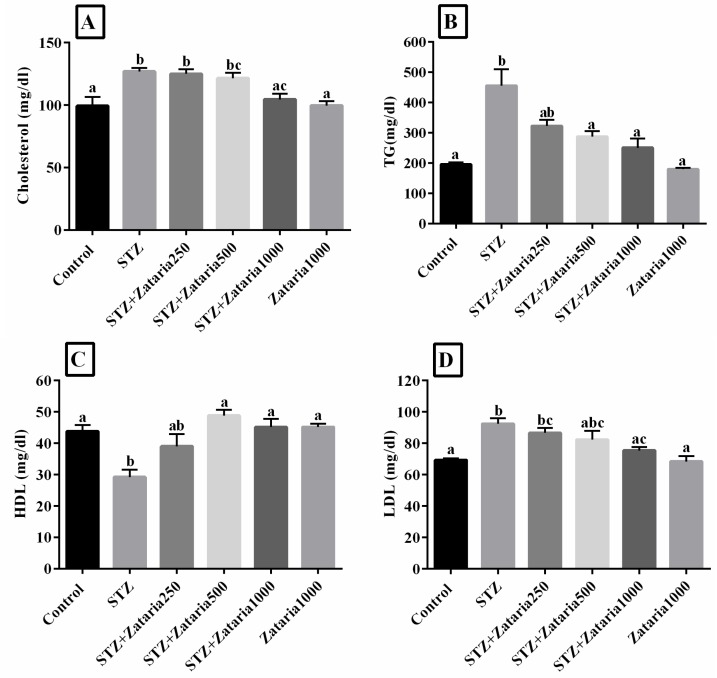
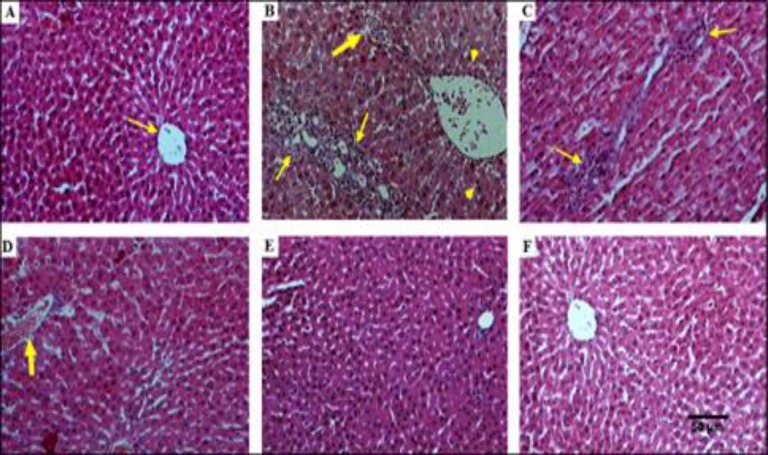
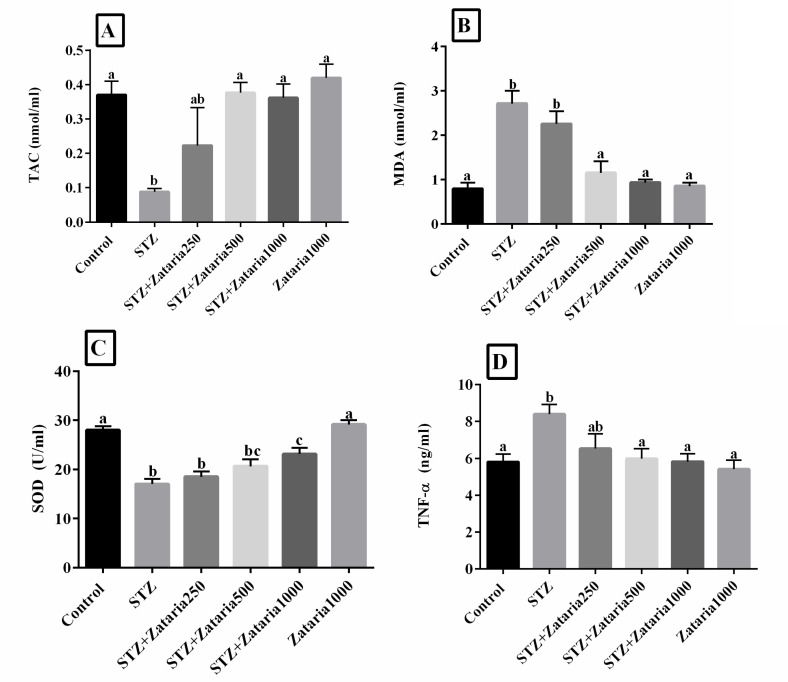
Our results showed that cholesterol, LDL, TG, MDA and TNF-α levels decreased, but HDL, SOD, TAC, and total protein increased significantly in the diabetic group receiving 1000 mg/kg compared to the diabetic control group (P<0.05). Moreover, blood glucose level was significantly reduced following administration of different concentrations of Z. . Liver sections of diabetic rats treated with Z. 1000 mg/kg showed normal hepatocytes and restoration of liver architecture.
extract ameliorated oxidative stress, TNF-α serum level, lipid abnormality, blood glucose, and liver damage in rats with diabetes mellitus.
氧化应激导致活性氧(ROS)过量产生,这会引起糖尿病患者的组织损伤。本研究的目的是评估提取物对糖尿病大鼠肿瘤坏死因子-α(TNF-α)、氧化应激产物、胰岛素水平以及血脂谱的影响。
将大鼠随机分为6组,每组10只动物。通过单次注射链脲佐菌素(STZ)诱导糖尿病。对照组和糖尿病对照组大鼠口服给予1 mL/天的生理盐水,而其他三组分别给予250、500和1000 mg/kg/天的提取物,一个非糖尿病组口服给予1000 mg/kg/天的提取物,持续28天。在治疗过程结束时,将大鼠麻醉,并分析其血清样本中的TNF-α、丙二醛(MDA)、超氧化物歧化酶(SOD)、总抗氧化能力(TAC)、血脂谱、总血浆蛋白、血糖、胰岛素和肝酶水平。
我们的结果表明,与糖尿病对照组相比,接受1000 mg/kg提取物的糖尿病组中胆固醇、低密度脂蛋白(LDL)、甘油三酯(TG)、MDA和TNF-α水平降低,但高密度脂蛋白(HDL)、SOD、TAC和总蛋白显著增加(P<0.05)。此外,给予不同浓度的提取物后,血糖水平显著降低。用1000 mg/kg提取物治疗的糖尿病大鼠肝脏切片显示肝细胞正常且肝结构恢复。
提取物改善了糖尿病大鼠的氧化应激、TNF-α血清水平、脂质异常、血糖和肝损伤。