Madsen Wendy, Ambrens Meghan, Ohl Melanie
School of Health, Medical and Applied Sciences, Central Queensland University, Rockhampton, QLD, Australia.
Front Public Health. 2019 Feb 7;7:14. doi: 10.3389/fpubh.2019.00014. eCollection 2019.
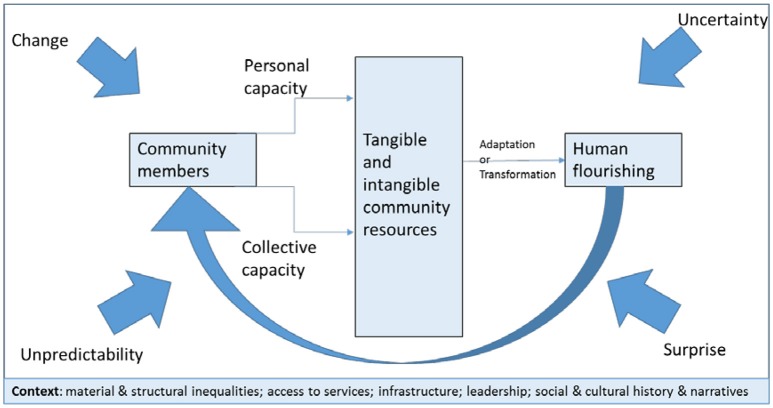
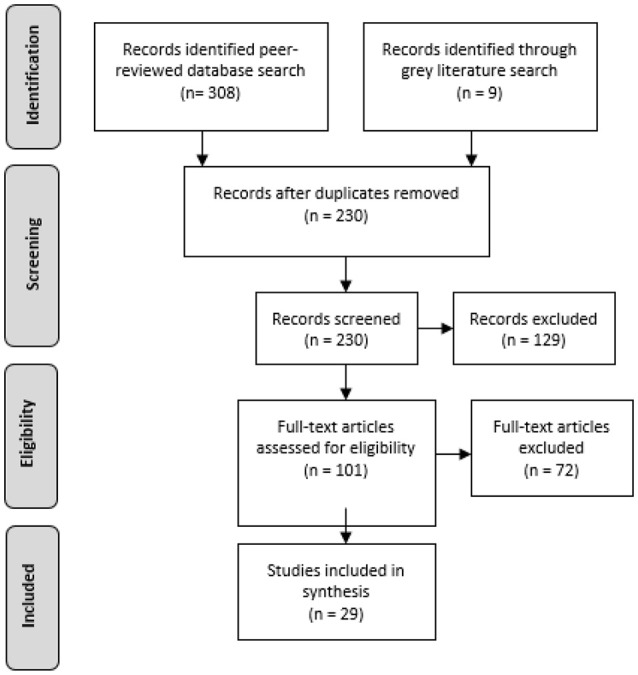
Resilience is a valuable platform for strengthening individuals and communities in the face of disaster. This review sought to evaluate the current literature related to individual and community resilience in community-dwelling older adults to understand the status of resilience in this population, identify gaps, and make recommendations about effective interventions that promote improved individual and community level capacity. Recognizing the concept of resilience is contested, the review conceptualized resilience as a collective concept that is multi-level and interdependent across those levels, cumulative, and contingent on context. The rapid review located 29 relevant peer review journal articles and industry reports related to research or evaluations of interventions aimed at increasing resilience at either a personal or community level. The results of these papers were thematically analyzed. This review found personal resilience relates to those personal capacities and resources one has and uses to deal with individual stresses and change. We identified several recurring themes within those studies focused on personal resilience, including: (1) positive reframing and agency; (2) personal meaning and purpose; (3) acceptance and belonging. At a community level, we identified the following themes influence collective capacity and resources: (1) empowerment and shared decision making; (2) collective agency; and (3) collective leadership and engagement. The review highlighted the need to reframe how communities view older adults and shift the narrative away from focusing on age-related deficits toward acknowledging the economic and social contribution older adults make to the community through activities such as volunteering and the sharing of knowledge of history, culture and skills. Demonstrating the interdependence across levels, these activities illustrate personal-level capacities promoting collective action and participation as important for increasing community resilience. The review argues resilience is developed in everyday circumstances, therefore active involvement within communities needs to be encouraged within community-dwelling older adults. Developing active involvement will not only contribute to both personal and community level resilience but will enable communities to prosper and flourish through adversity.
复原力是在面对灾难时增强个人和社区的宝贵平台。本综述旨在评估与社区居住的老年人个人和社区复原力相关的现有文献,以了解该人群的复原力状况,找出差距,并就促进个人和社区层面能力提升的有效干预措施提出建议。鉴于复原力的概念存在争议,本综述将复原力概念化为一个集体概念,它具有多层次性且各层次相互依存、具有累积性,并取决于具体情境。快速综述找到了29篇相关的同行评审期刊文章和行业报告,这些文献与旨在提高个人或社区层面复原力的干预措施的研究或评估有关。对这些论文的结果进行了主题分析。本综述发现,个人复原力与个人拥有并用于应对个人压力和变化的能力及资源相关。我们在那些关注个人复原力的研究中确定了几个反复出现的主题,包括:(1)积极重构与能动性;(2)个人意义与目的;(3)接纳与归属感。在社区层面,我们确定了以下影响集体能力和资源的主题:(1)赋权与共同决策;(2)集体能动性;(3)集体领导力与参与度。该综述强调,需要重新构建社区对老年人的看法,将叙述重点从关注与年龄相关的缺陷,转向承认老年人通过志愿服务以及分享历史、文化和技能知识等活动对社区做出的经济和社会贡献。这些活动表明了各层次之间的相互依存关系,说明了促进集体行动和参与的个人层面能力对于增强社区复原力很重要。该综述认为,复原力是在日常环境中形成的,因此需要鼓励社区居住的老年人积极参与社区活动。培养积极参与不仅有助于个人和社区层面的复原力,还将使社区在逆境中繁荣发展。