Department of Hygiene, Public Health and Preventive Medicine Showa University, School of Medicine, Tokyo, Japan.
Department of Nutrition Science, Faculty of Nursing and Nutrition, University of Nagasaki, Nagasaki, Japan.
Sci Rep. 2019 Feb 22;9(1):2539. doi: 10.1038/s41598-019-39057-w.
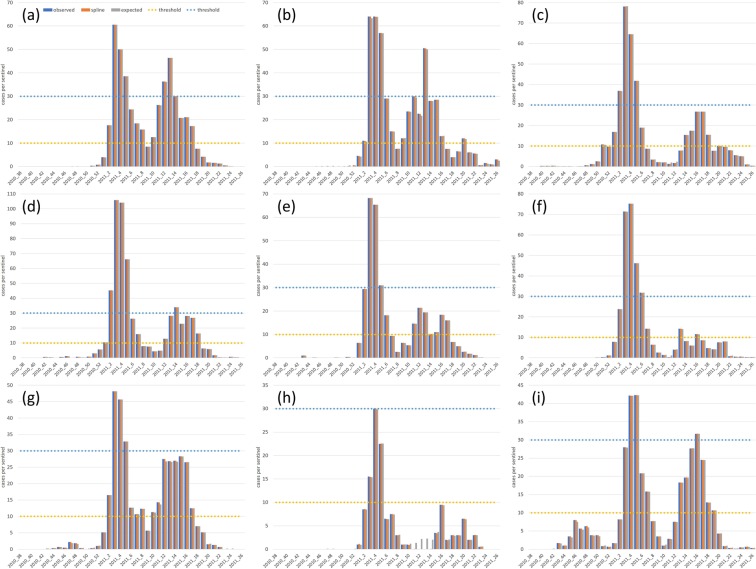
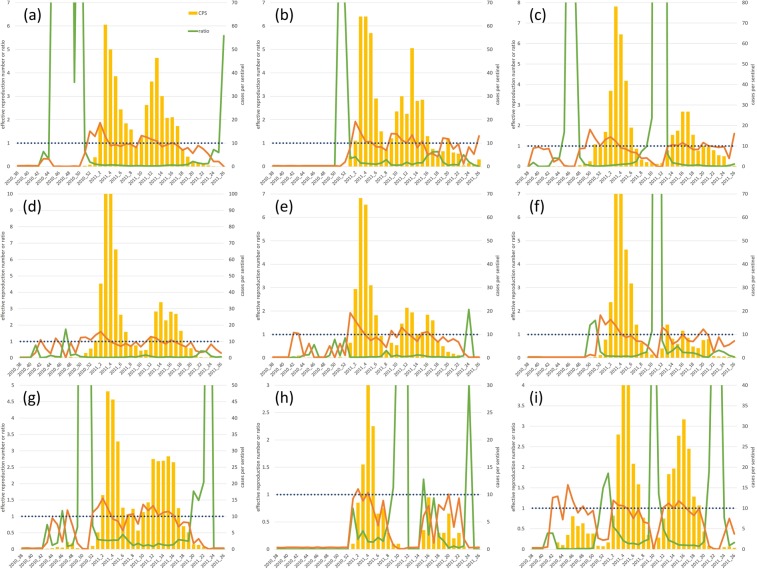
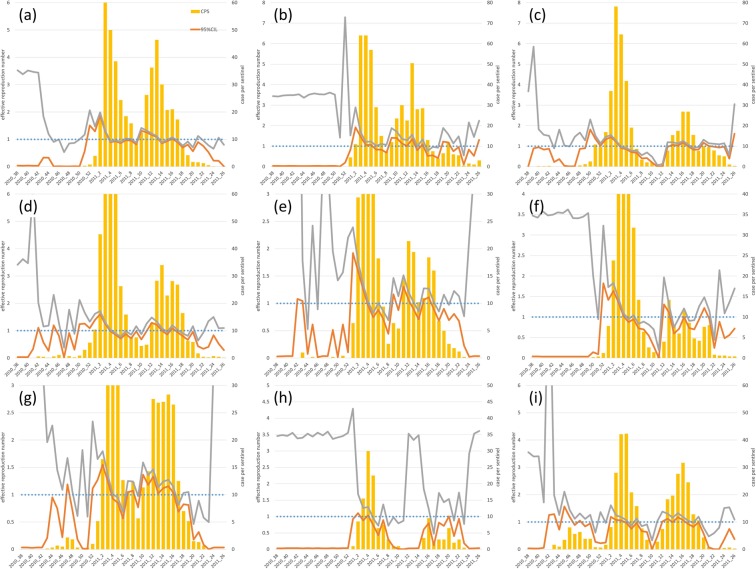
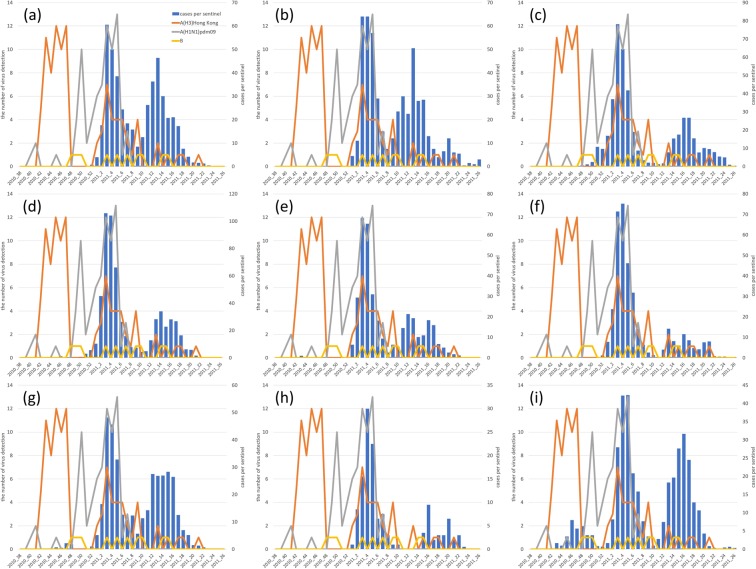
In Japan, as part of surveillance for seasonal influenza, the number of patients per influenza sentinel site is counted on a weekly basis. Currently, reference values are set for the weekly reported number of influenza cases per sentinel, and pre-epidemic and epidemic warnings are issued based on these values. In this study, we examined the association between these reference values and the effective reproduction number (R) using surveillance data for Miyazaki Prefecture collected from 2010 to 2011. There are nine public health centre jurisdictions in this prefecture, and R exceeded 1.0 at the time when pre-epidemic warnings were issued in almost all the jurisdictions. Thus, it was indicated that the validity of the reference value was also high for influenza transmission. However, our results indicated the presence of secondary epidemic caused by infections originating both from other jurisdictions and inner jurisdictions, and it is occasionally not possible to evaluate the end of an epidemic in a jurisdiction using only the reference value of termination. It is necessary to establish new methods after considering the situation in the surrounding jurisdictions for more detailed epidemic predictions.
在日本,作为季节性流感监测的一部分,每周都会统计流感哨点医院的患者人数。目前,针对每个流感哨点报告的每周流感病例数设定了参考值,并根据这些值发布了预警。在这项研究中,我们使用 2010 年至 2011 年在宫崎县收集的监测数据,研究了这些参考值与有效繁殖数 (R) 之间的关系。该县有九个公共卫生中心管辖区域,当几乎所有管辖区域都发布了流感预警时,R 值都超过了 1.0。因此,表明该参考值对于流感传播也具有较高的有效性。然而,我们的研究结果表明,存在由其他管辖区域和内部管辖区域的感染源引起的二次流行,仅使用终止参考值有时无法评估一个管辖区域的流行是否结束。有必要在考虑周边管辖区域情况的基础上,建立新的方法,以便更详细地预测疫情。