Velappan Nileena, Daughton Ashlynn Rae, Fairchild Geoffrey, Rosenberger William Earl, Generous Nicholas, Chitanvis Maneesha Elizabeth, Altherr Forest Michael, Castro Lauren A, Priedhorsky Reid, Abeyta Esteban Luis, Naranjo Leslie A, Hollander Attelia Dawn, Vuyisich Grace, Lillo Antonietta Maria, Cloyd Emily Kathryn, Vaidya Ashvini Rajendra, Deshpande Alina
Los Alamos National Laboratory, Los Alamos, NM, United States.
Specifica Inc, New Mexico Consortium Biological Laboratory, Los Alamos, NM, United States.
JMIR Public Health Surveill. 2019 Feb 25;5(1):e12032. doi: 10.2196/12032.
Information from historical infectious disease outbreaks provides real-world data about outbreaks and their impacts on affected populations. These data can be used to develop a picture of an unfolding outbreak in its early stages, when incoming information is sparse and isolated, to identify effective control measures and guide their implementation.
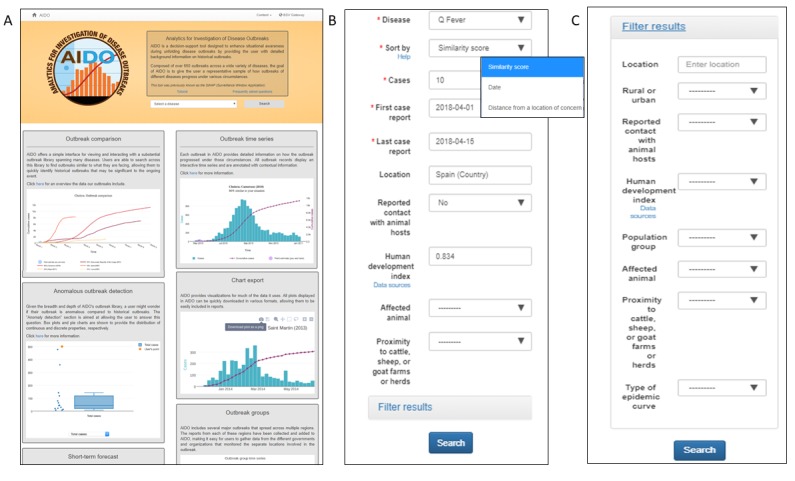
This study aimed to develop a publicly accessible Web-based visual analytic called Analytics for the Investigation of Disease Outbreaks (AIDO) that uses historical disease outbreak information for decision support and situational awareness of an unfolding outbreak.
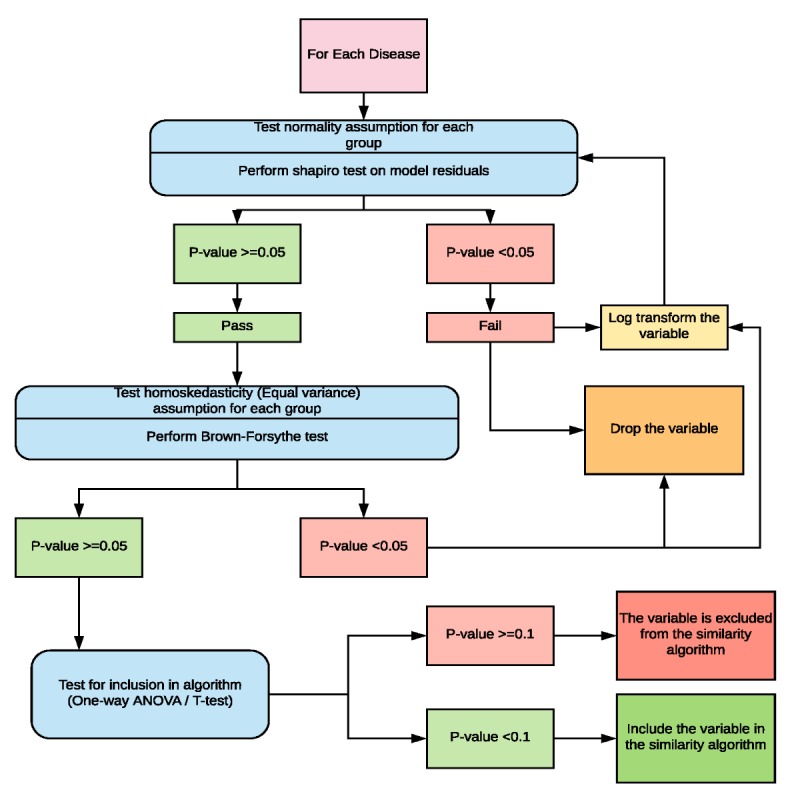
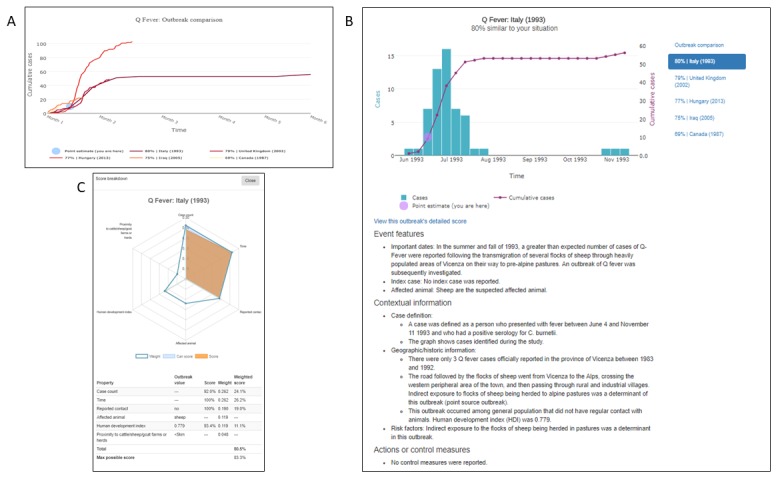
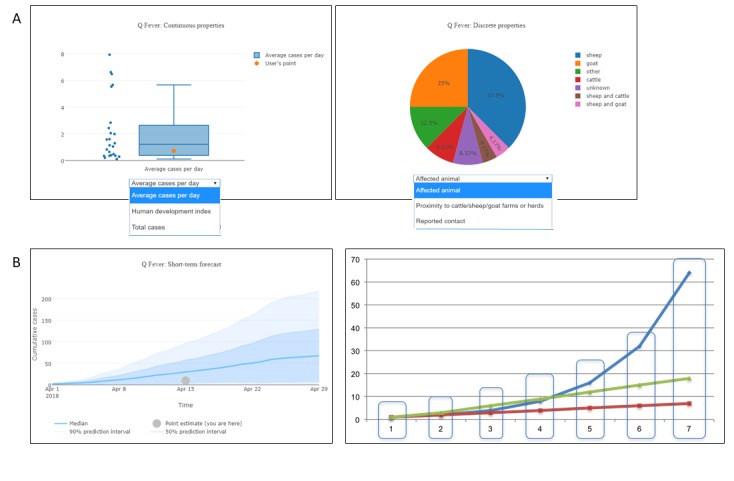
We developed an algorithm to allow the matching of unfolding outbreak data to a representative library of historical outbreaks. This process provides epidemiological clues that facilitate a user's understanding of an unfolding outbreak and facilitates informed decisions about mitigation actions. Disease-specific properties to build a complete picture of the unfolding event were identified through a data-driven approach. A method of analogs approach was used to develop a short-term forecasting feature in the analytic. The 4 major steps involved in developing this tool were (1) collection of historic outbreak data and preparation of the representative library, (2) development of AIDO algorithms, (3) development of user interface and associated visuals, and (4) verification and validation.
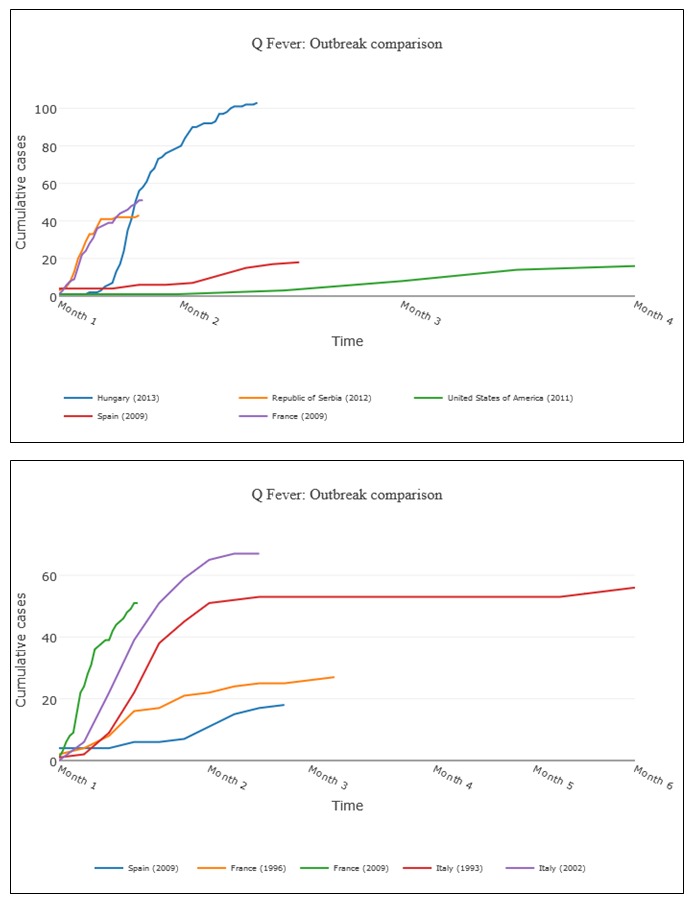
The tool currently includes representative historical outbreaks for 39 infectious diseases with over 600 diverse outbreaks. We identified 27 different properties categorized into 3 broad domains (population, location, and disease) that were used to evaluate outbreaks across all diseases for their effect on case count and duration of an outbreak. Statistical analyses revealed disease-specific properties from this set that were included in the disease-specific similarity algorithm. Although there were some similarities across diseases, we found that statistically important properties tend to vary, even between similar diseases. This may be because of our emphasis on including diverse representative outbreak presentations in our libraries. AIDO algorithm evaluations (similarity algorithm and short-term forecasting) were conducted using 4 case studies and we have shown details for the Q fever outbreak in Bilbao, Spain (2014), using data from the early stages of the outbreak. Using data from only the initial 2 weeks, AIDO identified historical outbreaks that were very similar in terms of their epidemiological picture (case count, duration, source of exposure, and urban setting). The short-term forecasting algorithm accurately predicted case count and duration for the unfolding outbreak.
AIDO is a decision support tool that facilitates increased situational awareness during an unfolding outbreak and enables informed decisions on mitigation strategies. AIDO analytics are available to epidemiologists across the globe with access to internet, at no cost. In this study, we presented a new approach to applying historical outbreak data to provide actionable information during the early stages of an unfolding infectious disease outbreak.
历史上传染病爆发的信息提供了有关疫情爆发及其对受影响人群影响的真实数据。这些数据可用于在疫情爆发的早期阶段,当收到的信息稀少且孤立时,勾勒出疫情的发展态势,以确定有效的控制措施并指导其实施。
本研究旨在开发一种名为疾病爆发调查分析工具(AIDO)的基于网络的公开可视化分析工具,该工具利用历史疾病爆发信息进行决策支持和对正在发生的疫情的态势感知。
我们开发了一种算法,以便将正在发生的疫情数据与具有代表性的历史疫情库进行匹配。这一过程提供了流行病学线索,有助于用户理解正在发生的疫情,并有助于就缓解行动做出明智决策。通过数据驱动的方法确定了构建疫情发展全貌的特定疾病属性。采用类比法在分析工具中开发了短期预测功能。开发此工具涉及的4个主要步骤为:(1)收集历史疫情数据并准备代表性库;(2)开发AIDO算法;(3)开发用户界面及相关可视化;(4)验证与确认。
该工具目前包括39种传染病的代表性历史疫情,有600多次不同的疫情。我们确定了27种不同的属性,分为3个广泛领域(人群、地点和疾病),用于评估所有疾病的疫情对病例数和疫情持续时间的影响。统计分析揭示了该集合中包含在特定疾病相似性算法中的特定疾病属性。尽管不同疾病之间存在一些相似之处,但我们发现,即使是相似疾病,具有统计学意义的属性也往往不同。这可能是因为我们强调在库中纳入各种具有代表性的疫情表现形式。使用4个案例研究对AIDO算法进行了评估(相似性算法和短期预测),我们展示了西班牙毕尔巴鄂(2014年)Q热疫情爆发早期阶段的数据细节。仅使用最初两周的数据,AIDO就识别出了在流行病学情况(病例数、持续时间、暴露源和城市环境)方面非常相似的历史疫情。短期预测算法准确预测了正在发生的疫情的病例数和持续时间。
AIDO是一种决策支持工具,有助于在疫情爆发期间增强态势感知,并就缓解策略做出明智决策。全球各地能够访问互联网的流行病学家均可免费使用AIDO分析工具。在本研究中,我们提出了一种应用历史疫情数据的新方法,以便在传染病爆发的早期阶段提供可采取行动的信息。