Di Pierdomenico Johnny, García-Ayuso Diego, Agudo-Barriuso Marta, Vidal-Sanz Manuel, Villegas-Pérez María Paz
Departamento de Oftalmología, Facultad de Medicina, Universidad de Murcia, and Instituto Murciano de Investigación Biosanitaria Hospital Virgen de la Arrixaca (IMIB-Virgen de la Arrixaca), Murcia, Spain.
Neural Regen Res. 2019 Jul;14(7):1186-1190. doi: 10.4103/1673-5374.251204.
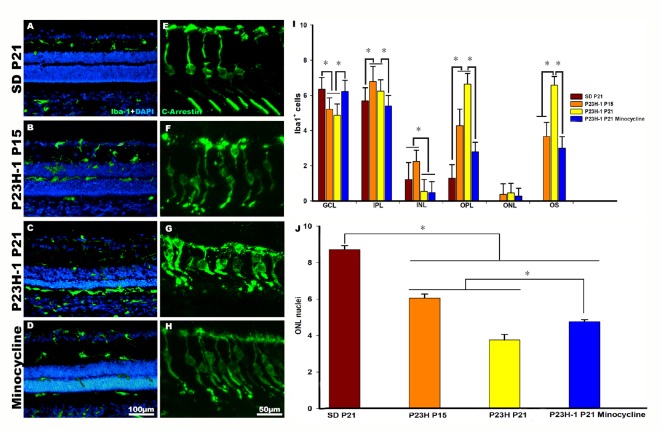
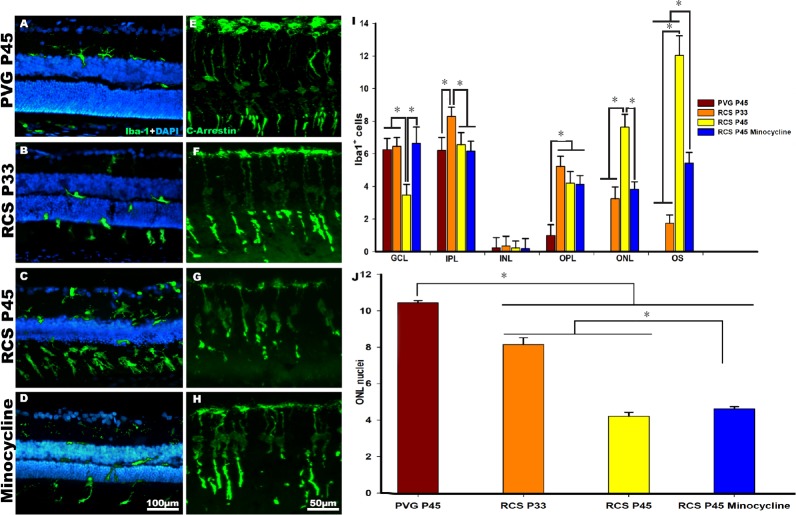
Inherited photoreceptor degeneration in humans constitutes a major cause of irreversible blindness in the world. They comprise various diseases, but retinitis pigmentosa is the most frequently observed. Retinitis pigmentosa is commonly limited to the eye, where there is progressive photoreceptor degeneration, rods and secondarily cones. The mechanisms of cone and rod degeneration continue to be investigated, since most of the mutations causing retinitis pigmentosa affect rods and thus, the secondary death of cones is an intriguing question but, ultimately, the cause of blindness. Understanding the mechanisms of rod and cone degeneration could help us to develop therapies to stop or, at least, slow down the degeneration process. Secondary cone degeneration has been attributed to the trophic dependence between rods and cones, but microglial cell activation could also have a role. In this review, based on previous work carried out in our laboratory in early stages of photoreceptor degeneration in two animal models of retinitis pigmentosa, we show that microglial cell activation is observed prior to the the initiation of photoreceptor death. We also show that there is an increase of the retinal microglial cell densities and invasion of the outer retinal layers by microglial cells. The inhibition of the microglial cells improves photoreceptor survival and morphology, documenting a role for microglial cells in photoreceptor degeneration. Furthermore, these results indicate that the modulation of microglial cell reactivity can be used to prevent or diminish photoreceptor death in inherited photoreceptor degenerations.
人类遗传性光感受器变性是全球不可逆失明的主要原因。它包括多种疾病,但视网膜色素变性是最常见的。视网膜色素变性通常局限于眼部,表现为光感受器进行性变性,先是视杆细胞,继而视锥细胞。视锥细胞和视杆细胞变性的机制仍在研究中,因为大多数导致视网膜色素变性的突变影响视杆细胞,因此,视锥细胞的继发性死亡是一个引人关注的问题,但最终是失明的原因。了解视杆细胞和视锥细胞变性的机制有助于我们开发治疗方法来阻止或至少减缓变性过程。视锥细胞的继发性变性被认为与视杆细胞和视锥细胞之间的营养依赖有关,但小胶质细胞的激活也可能起作用。在本综述中,基于我们实验室之前在两种视网膜色素变性动物模型的光感受器变性早期所开展的工作,我们发现小胶质细胞的激活在光感受器死亡开始之前就已出现。我们还发现视网膜小胶质细胞密度增加,并且小胶质细胞侵入视网膜外层。抑制小胶质细胞可改善光感受器的存活和形态,证明小胶质细胞在光感受器变性中发挥作用。此外,这些结果表明,调节小胶质细胞反应性可用于预防或减少遗传性光感受器变性中的光感受器死亡。