Kwansa-Bentum Bethel, Agyeman Kojo, Larbi-Akor Jeffrey, Anyigba Claudia, Appiah-Opong Regina
Department of Animal Biology and Conservation Science, School of Biological Sciences, College of Basic and Applied Sciences, University of Ghana, Legon, Ghana.
Department of Clinical Pathology, Noguchi Memorial Institute for Medical Research, College of Health Sciences, University of Ghana, Legon, Ghana.
Malar Res Treat. 2019 Jan 21;2019:6976298. doi: 10.1155/2019/6976298. eCollection 2019.
Malaria is one of the most important life-threatening infectious diseases in the tropics. In spite of the effectiveness of artemisinin-based combination therapy, reports on reduced sensitivity of the parasite to artemisinin in Cambodia and Thailand warrants screening for new potential antimalarial drugs for future use. Ghanaian herbalists claim that has antimalarial activity. Therefore, antiplasmodial activity, cytotoxic effects, and antioxidant and phytochemical properties of leaf extract were investigated in this study.
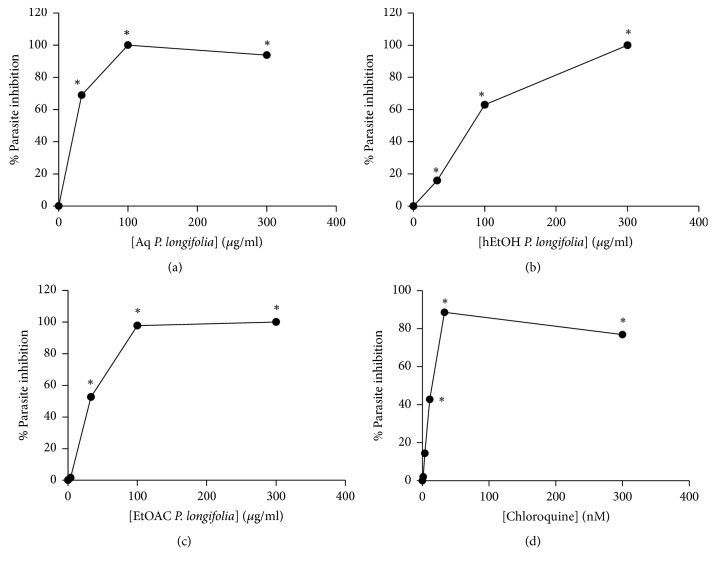
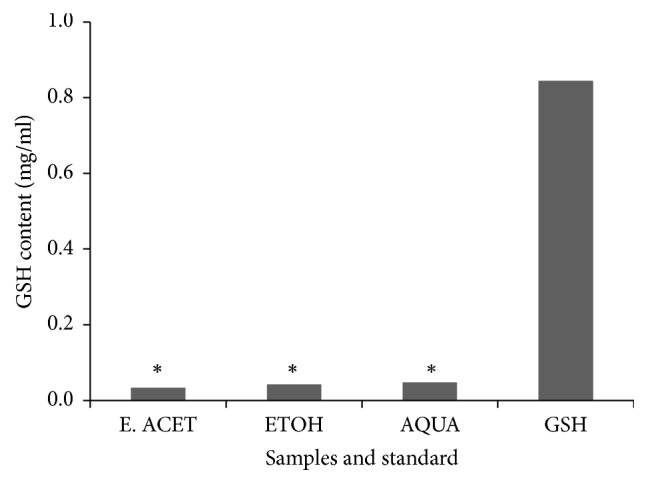
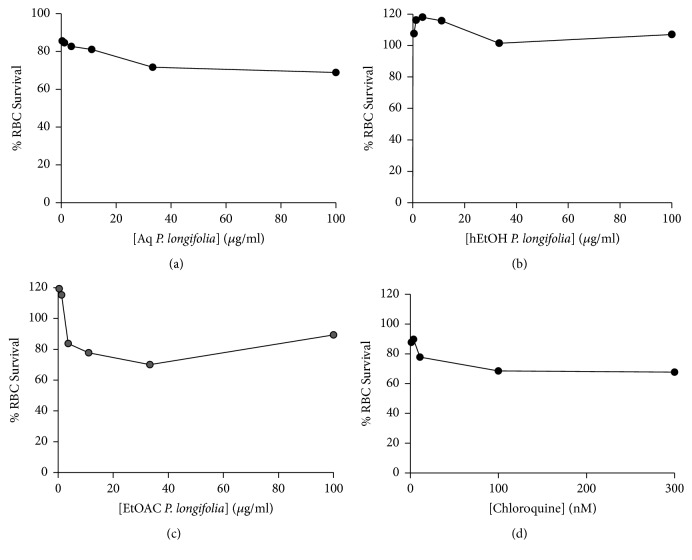
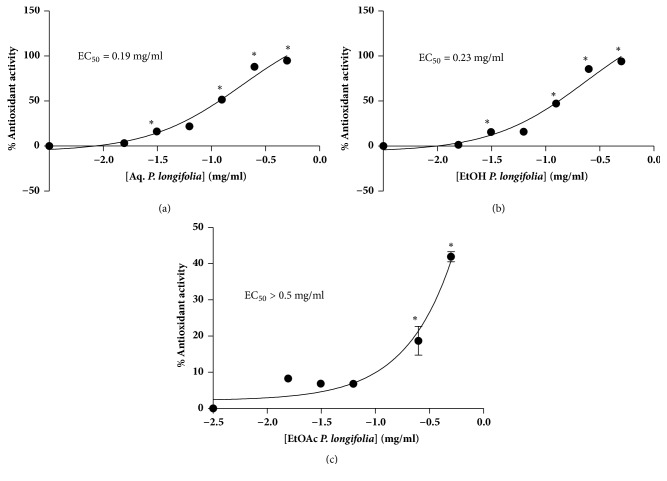
METHODOLOGY/PRINCIPAL FINDINGS: Aqueous, 70% hydroethanolic and ethyl acetate leaf extracts were prepared using standard procedures. Antiplasmodial activity was assessed by using chloroquine-sensitive malaria parasite strain NF54. The SYBR® Green and tetrazolium-based calorimetric assays were used to measure parasite growth inhibition and cytotoxicity, respectively, after extract treatment. Total antioxidant activity was evaluated using a free radical scavenging assay. Results obtained showed that extracts protected red blood cells against mediated damage. Fifty percent inhibitory concentration (IC) values were 24.0±1.08 g/ml, 22.5±0.12 g/ml, and 9.5±0.69 g/ml for aqueous, hydroethanolic, and ethyl acetate extracts, respectively. Flavonoids, tannins, and saponins were present in the hydroethanolic extract, whereas only the latter was observed in the aqueous extract. Aqueous and hydroethanolic extracts showed stronger antioxidant activities compared to the ethyl acetate extract.
CONCLUSIONS/SIGNIFICANCE: The extracts of have antiplasmodial properties and low toxicities to human red blood cells. The extracts could be developed as useful alternatives to antimalarial drugs. These results support claims of the herbalists that decoctions of are useful antimalarial agents.
疟疾是热带地区最重要的危及生命的传染病之一。尽管以青蒿素为基础的联合疗法有效,但柬埔寨和泰国关于疟原虫对青蒿素敏感性降低的报告表明,有必要筛选新的潜在抗疟药物以供未来使用。加纳草药医生称[植物名称未给出]具有抗疟活性。因此,本研究对[植物名称未给出]叶提取物的抗疟原虫活性、细胞毒性作用以及抗氧化和植物化学特性进行了研究。
方法/主要发现:采用标准程序制备水提取物、70%乙醇水提取物和乙酸乙酯提取物。使用氯喹敏感的疟原虫菌株NF54评估抗疟原虫活性。提取物处理后,分别使用SYBR® Green和基于四唑的比色法测量疟原虫生长抑制和细胞毒性。使用自由基清除试验评估总抗氧化活性。结果表明,提取物可保护红细胞免受[未提及的物质]介导的损伤。水提取物、乙醇水提取物和乙酸乙酯提取物的半数抑制浓度(IC)值分别为24.0±1.08μg/ml、22.5±0.12μg/ml和9.5±0.69μg/ml。乙醇水提取物中存在黄酮类、单宁和皂苷,而水提取物中仅观察到后者。与乙酸乙酯提取物相比,水提取物和乙醇水提取物表现出更强的抗氧化活性。
结论/意义:[植物名称未给出]的提取物具有抗疟原虫特性,对人类红细胞毒性低。这些提取物可开发为抗疟药物的有用替代品。这些结果支持了草药医生关于[植物名称未给出]煎剂是有用抗疟剂的说法。