National Research Center for Protozoan Diseases, Obihiro University of Agriculture and Veterinary Medicine, Inada-Cho, Obihiro, Hokkaido, 080-08555, Japan.
Department of Forensic Medicine and Toxicology, Faculty of Veterinary Medicine, South Valley University, Qena, 83523, Egypt.
BMC Complement Med Ther. 2022 May 12;22(1):130. doi: 10.1186/s12906-022-03566-5.
Medicinal plants have been successfully used as an alternative source of drugs for the treatment of microbial diseases. Finding a novel treatment for malaria is still challenging, and various extracts from different wild desert plants have been reported to have multiple medicinal uses for human public health, this study evaluated the antimalarial efficacy of several Egyptian plant extracts.
We assessed the cytotoxic potential of 13 plant extracts and their abilities to inhibit the in vitro growth of Plasmodium falciparum (3D7), and to treat infection with non-lethal Plasmodium yoelii 17XNL in an in vivo malaria model in BALB/c mice.
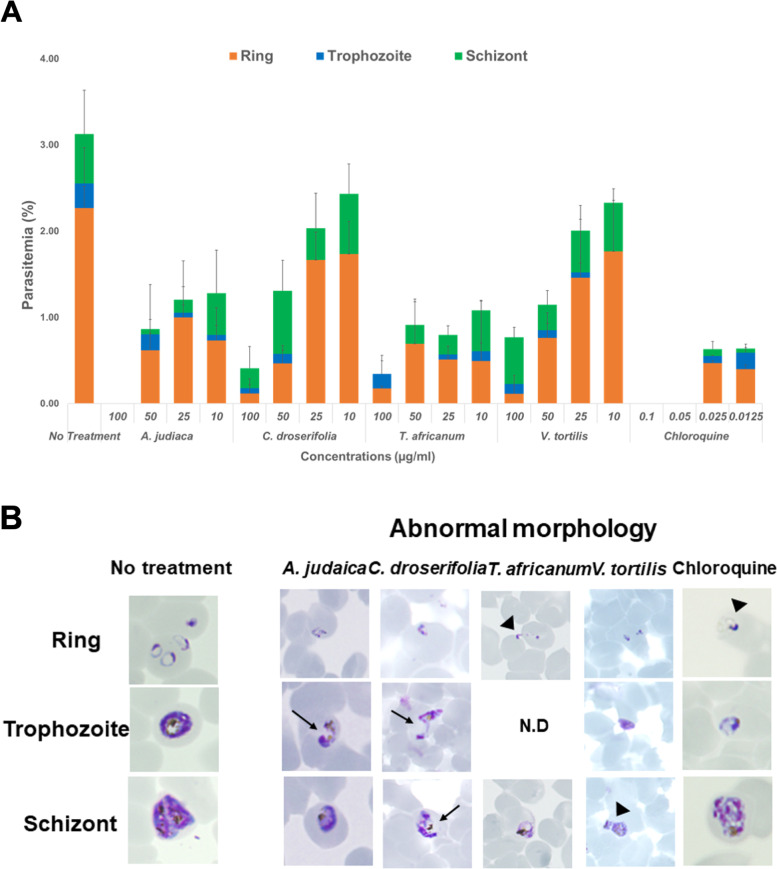
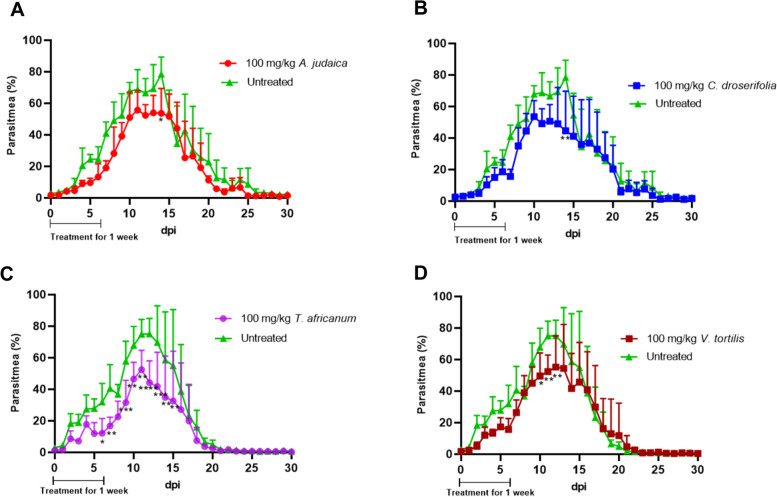
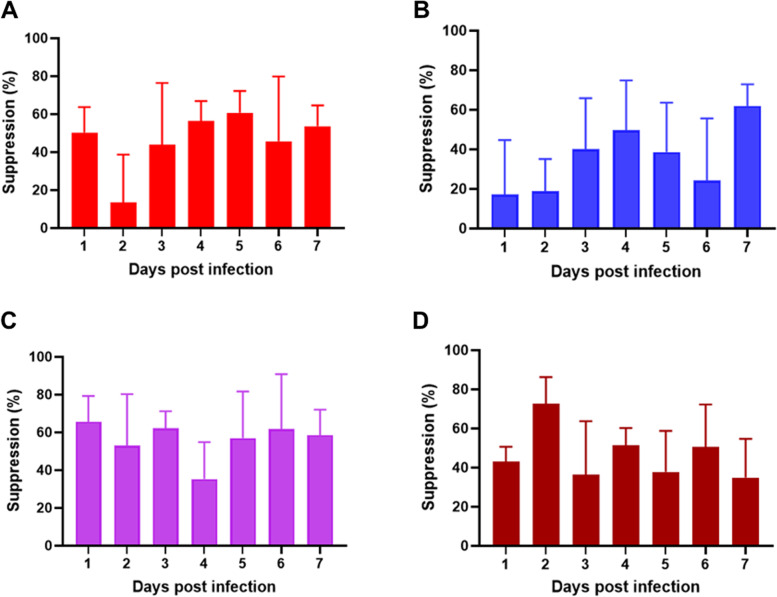
In vitro screening identified four promising candidates, Trichodesma africanum, Artemisia judaica, Cleome droserifolia, and Vachellia tortilis, with weak-to-moderate activity against P. falciparum erythrocytic blood stages with mean half-maximal inhibitory concentration 50 (IC) of 11.7 μg/ml, 20.0 μg/ml, 32.1 μg/ml, and 40.0 μg/ml, respectively. Their selectivity index values were 35.2, 15.8, 11.5, and 13.8, respectively. Among these four candidates, T. africanum crude extract exhibited the highest parasite suppression in a murine malaria model against P. yoelii.
Our study identified novel natural antimalarial agents of plant origin that have potential for development into therapeutics for treating malaria.
药用植物已被成功用作治疗微生物疾病的药物的替代来源。寻找疟疾的新疗法仍然具有挑战性,据报道,不同野生沙漠植物的各种提取物对人类公共健康具有多种药用用途,本研究评估了几种埃及植物提取物的抗疟功效。
我们评估了 13 种植物提取物的细胞毒性潜力及其抑制恶性疟原虫(3D7)体外生长以及在 BALB/c 小鼠体内疟原虫感染模型中治疗非致死性疟原虫 yoelii 17XNL 的能力。
体外筛选确定了四种有前途的候选药物,即非洲钩麻、犹太蒿、醉蝶花和沙冬青,它们对恶性疟原虫红细胞血阶段的活性较弱至中等,半数最大抑制浓度 50(IC50)分别为 11.7μg/ml、20.0μg/ml、32.1μg/ml 和 40.0μg/ml。它们的选择性指数值分别为 35.2、15.8、11.5 和 13.8。在这四个候选物中,非洲钩麻粗提物在治疗疟原虫的小鼠疟疾模型中对疟原虫的抑制作用最高。
我们的研究确定了具有开发为治疗疟疾药物潜力的新型天然抗疟植物来源。