Schultz Benjamin G, Palmer Caroline
Department of Psychology, McGill University, Montreal, QC, Canada.
Department of Psychopharmacology and Neuropsychology, Faculty of Psychology and Neuroscience, Maastricht University, Universiteitssingel 40, 6229 ER, Maastricht, Netherlands.
Psychol Res. 2019 Apr;83(3):419-431. doi: 10.1007/s00426-019-01156-8. Epub 2019 Feb 25.
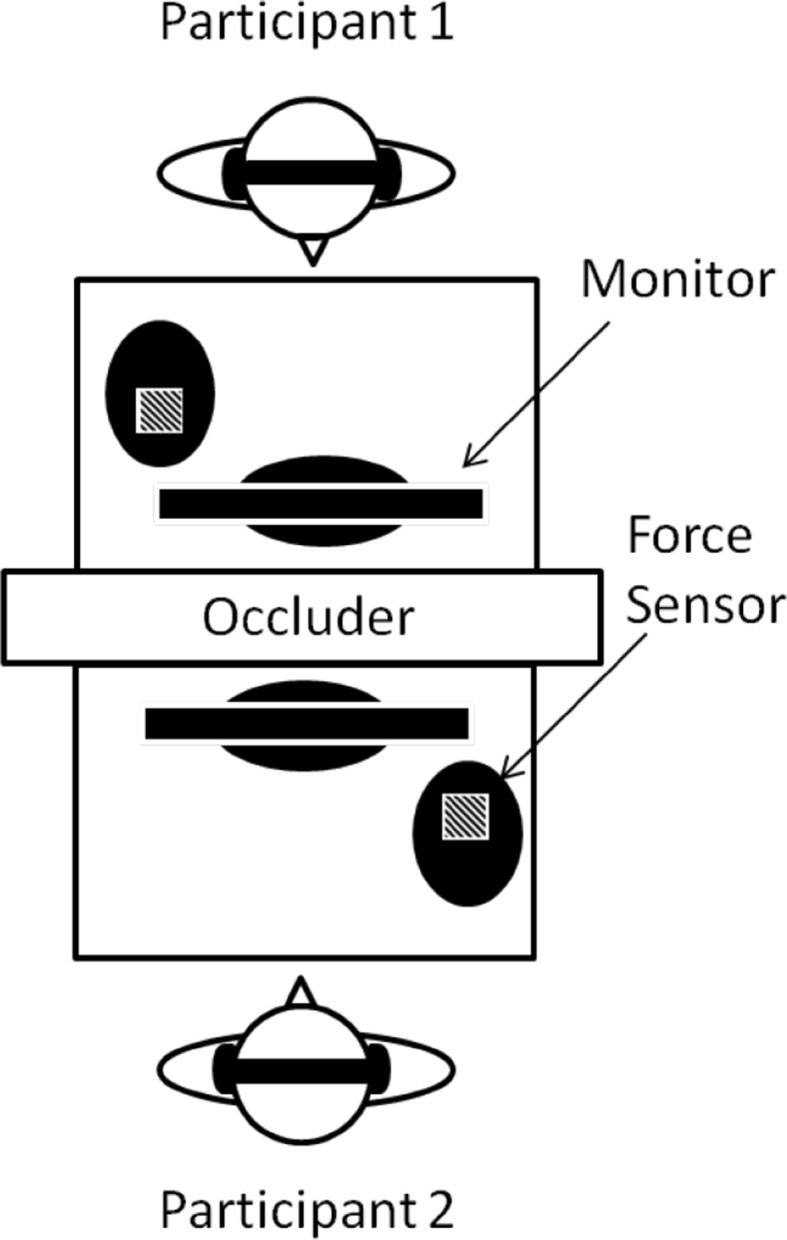
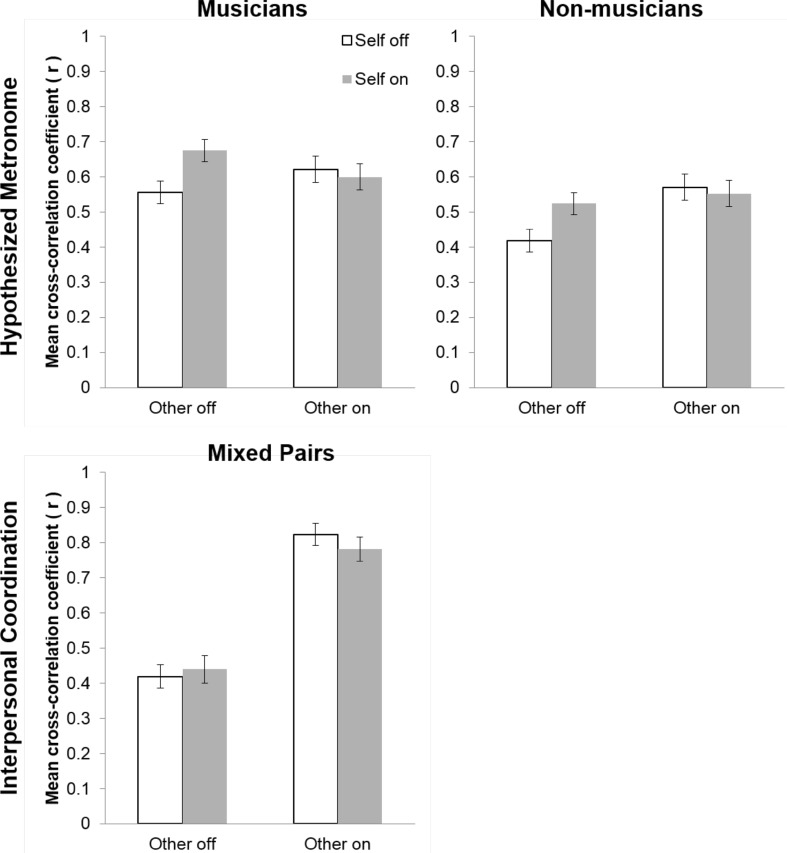
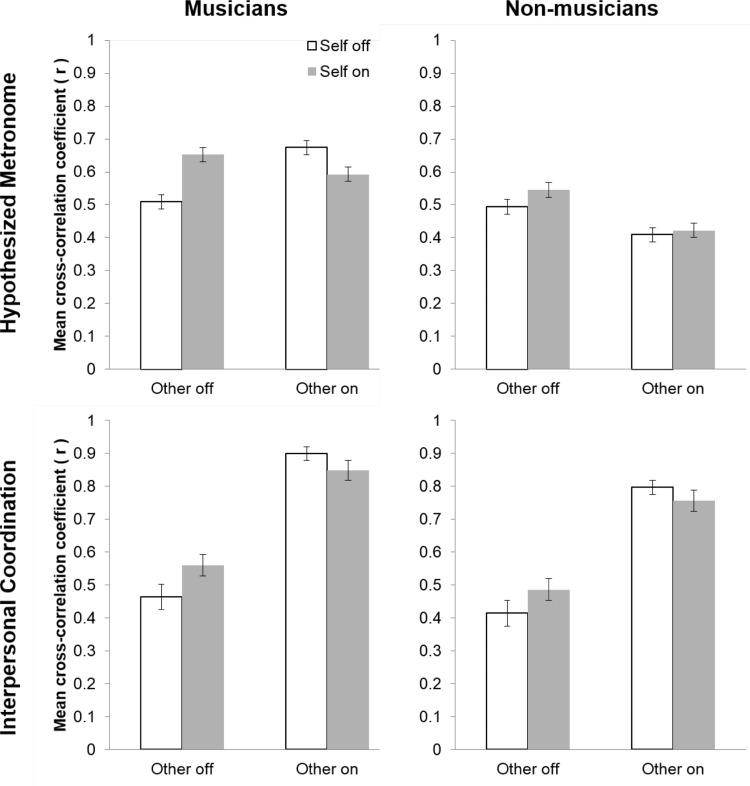
Auditory feedback of actions provides additional information about the timing of one's own actions and those of others. However, little is known about how musicians and nonmusicians integrate auditory feedback from multiple sources to regulate their own timing or to (intentionally or unintentionally) coordinate with a partner. We examined how musical expertise modulates the role of auditory feedback in a two-person synchronization-continuation tapping task. Pairs of individuals were instructed to tap at a rate indicated by an initial metronome cue in all four auditory feedback conditions: no feedback, self-feedback (cannot hear their partner), other feedback (cannot hear themselves), or full feedback (both self and other). Participants within a pair were either both musically trained (musicians), both untrained (nonmusicians), or one musically trained and one untrained (mixed). Results demonstrated that all three pair types spontaneously synchronized with their partner when receiving other or full feedback. Moreover, all pair types were better at maintaining the metronome rate with self-feedback than with no feedback. Musician pairs better maintained the metronome rate when receiving other feedback than when receiving no feedback; in contrast, nonmusician pairs were worse when receiving other or full feedback compared to no feedback. Both members of mixed pairs maintained the metronome rate better in the other and full feedback conditions than in the no feedback condition, similar to musician pairs. Overall, nonmusicians benefited from musicians' expertise without negatively influencing musicians' ability to maintain the tapping rate. One implication is that nonmusicians may improve their beat-keeping abilities by performing tasks with musically skilled individuals.
动作的听觉反馈提供了关于自身动作以及他人动作时间的额外信息。然而,对于音乐家和非音乐家如何整合来自多个来源的听觉反馈以调节自身节奏或(有意或无意地)与搭档进行协调,我们却知之甚少。我们研究了音乐专业技能如何在两人同步 - 持续敲击任务中调节听觉反馈的作用。在所有四种听觉反馈条件下,要求两人一组按照初始节拍器提示的速率进行敲击:无反馈、自我反馈(听不到搭档的敲击声)、他人反馈(听不到自己的敲击声)或完全反馈(能听到自己和搭档的敲击声)。每组中的参与者要么都接受过音乐训练(音乐家),要么都未接受过训练(非音乐家),要么一个接受过音乐训练而另一个未接受过训练(混合组)。结果表明,在接受他人反馈或完全反馈时,所有三种配对类型都能自发地与搭档同步。此外,与无反馈相比,所有配对类型在自我反馈时更能保持节拍器的速率。音乐家配对在接受他人反馈时比无反馈时更能保持节拍器的速率;相比之下,非音乐家配对在接受他人反馈或完全反馈时比无反馈时表现更差。混合组的两名成员在他人反馈和完全反馈条件下比无反馈条件下更能保持节拍器的速率,这与音乐家配对类似。总体而言,非音乐家受益于音乐家的专业技能,且不会对音乐家保持敲击速率的能力产生负面影响。一个启示是,非音乐家可以通过与有音乐技能的个体一起执行任务来提高他们的节拍保持能力。