Center for Computer Research in Music and Acoustics, Department of Music, Stanford University, Stanford, California, United States of America.
Department of Mathematics, University of California Davis, Davis, California, United States of America.
PLoS Comput Biol. 2023 Jun 7;19(6):e1011154. doi: 10.1371/journal.pcbi.1011154. eCollection 2023 Jun.
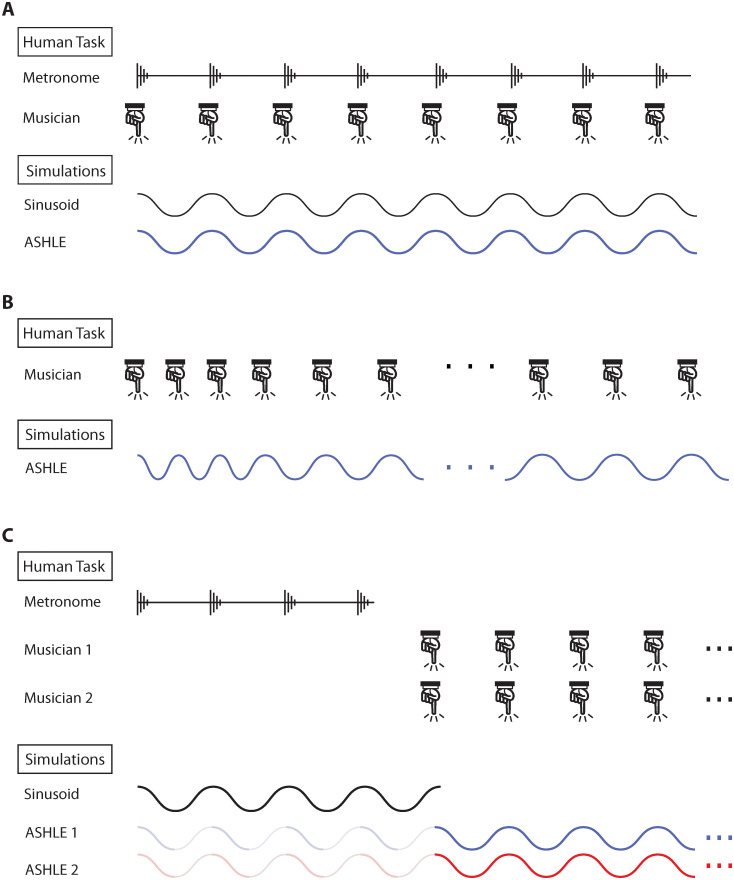
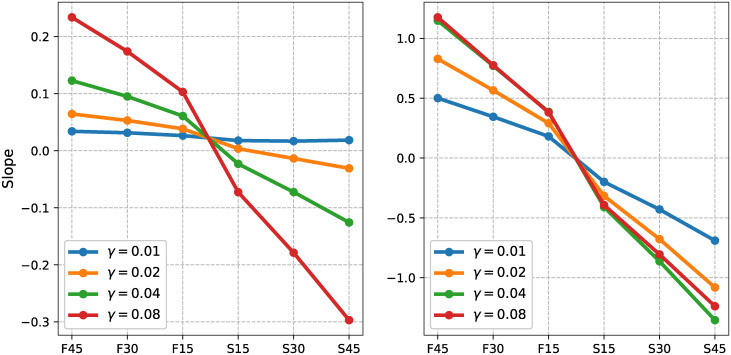
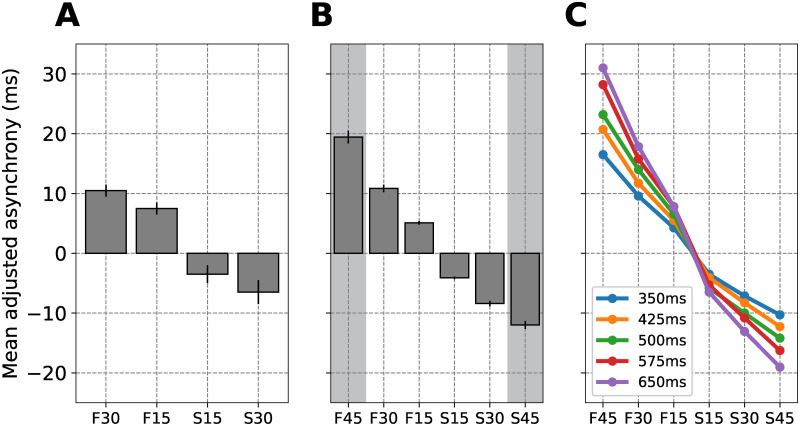
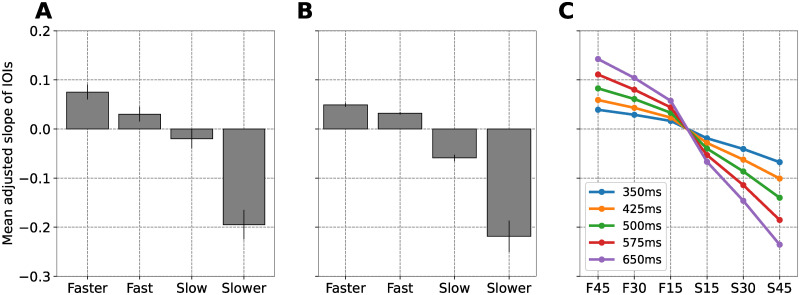
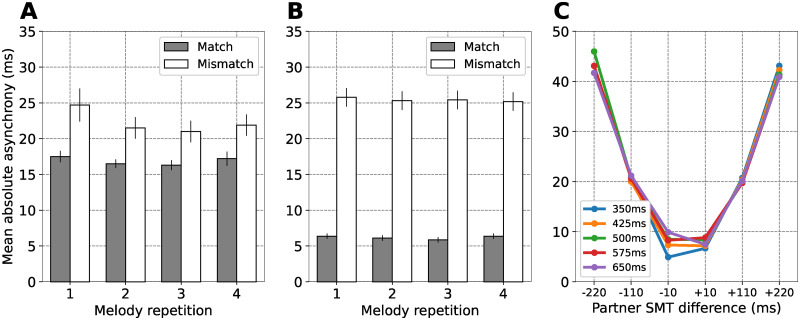
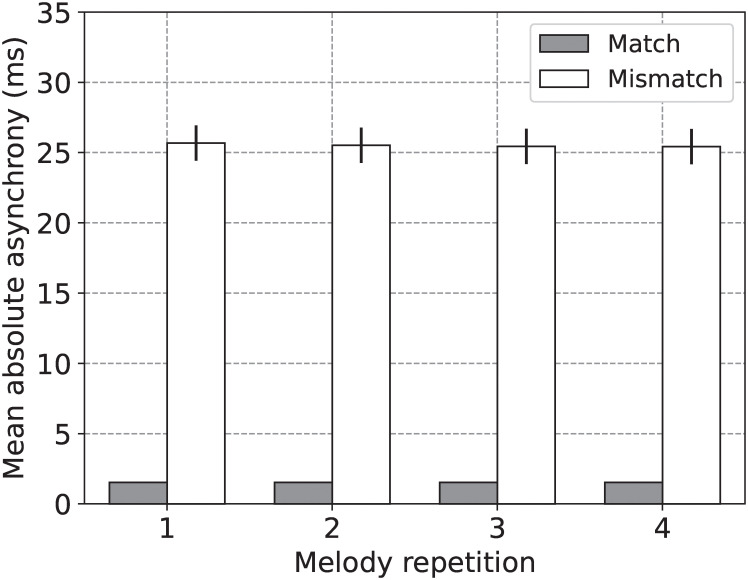
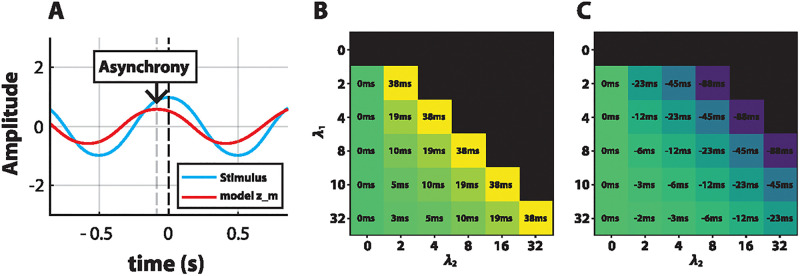
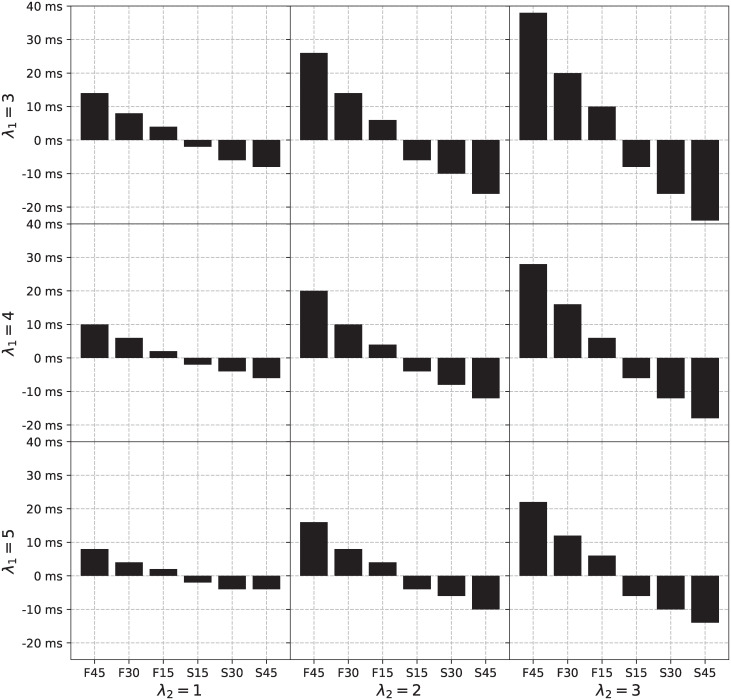
A musician's spontaneous rate of movement, called spontaneous motor tempo (SMT), can be measured while spontaneously playing a simple melody. Data shows that the SMT influences the musician's tempo and synchronization. In this study we present a model that captures these phenomena. We review the results from three previously-published studies: solo musical performance with a pacing metronome tempo that is different from the SMT, solo musical performance without a metronome at a tempo that is faster or slower than the SMT, and duet musical performance between musicians with matching or mismatching SMTs. These studies showed, respectively, that the asynchrony between the pacing metronome and the musician's tempo grew as a function of the difference between the metronome tempo and the musician's SMT, musicians drifted away from the initial tempo toward the SMT, and the absolute asynchronies were smaller if musicians had matching SMTs. We hypothesize that the SMT constantly acts as a pulling force affecting musical actions at a tempo different from a musician's SMT. To test our hypothesis, we developed a model consisting of a non-linear oscillator with Hebbian tempo learning and a pulling force to the model's spontaneous frequency. While the model's spontaneous frequency emulates the SMT, elastic Hebbian learning allows for frequency learning to match a stimulus' frequency. To test our hypothesis, we first fit model parameters to match the data in the first of the three studies and asked whether this same model would explain the data the remaining two studies without further tuning. Results showed that the model's dynamics allowed it to explain all three experiments with the same set of parameters. Our theory offers a dynamical-systems explanation of how an individual's SMT affects synchronization in realistic music performance settings, and the model also enables predictions about performance settings not yet tested.
一位音乐家的自发运动速度,称为自发运动节奏(SMT),可以在自发演奏简单旋律时进行测量。数据表明,SMT 会影响音乐家的节奏和同步。在这项研究中,我们提出了一个模型来捕捉这些现象。我们回顾了之前发表的三项研究的结果:使用与 SMT 不同的节拍器节奏进行的独奏音乐表演,没有节拍器的独奏音乐表演,其节奏比 SMT 快或慢,以及具有匹配或不匹配 SMT 的音乐家之间的二重奏音乐表演。这些研究分别表明,节拍器和音乐家节奏之间的异步随节拍器节奏与音乐家 SMT 之间的差异而增加,音乐家从初始节奏漂移到 SMT,并且如果音乐家具有匹配的 SMT,则绝对异步更小。我们假设 SMT 不断作为拉力作用于与音乐家 SMT 不同的节奏下的音乐动作。为了检验我们的假设,我们开发了一个由非线性振荡器组成的模型,该模型具有赫布式的节奏学习和对模型自发频率的拉力。虽然模型的自发频率模拟 SMT,但弹性赫布式学习允许频率学习与刺激的频率匹配。为了检验我们的假设,我们首先拟合模型参数以匹配三项研究中的第一项数据,并询问同一模型是否可以在不进一步调整的情况下解释其余两项研究的数据。结果表明,模型的动态使其能够用相同的参数集解释这三项实验。我们的理论提供了一种关于个体 SMT 如何影响现实音乐表演环境中同步的动力系统解释,并且该模型还可以对尚未测试的表演环境进行预测。