Department of Animal Science, University of California, Davis, Davis, CA, USA.
MRC Human Genetics Unit at the Institute of Genetics and Molecular Medicine, The University of Edinburgh, Edinburgh, EH4 2XU, UK.
Nat Commun. 2021 Oct 6;12(1):5848. doi: 10.1038/s41467-021-26153-7.
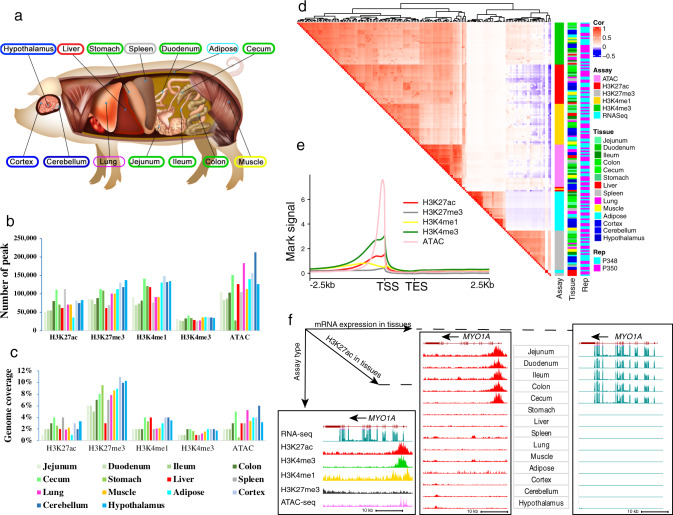
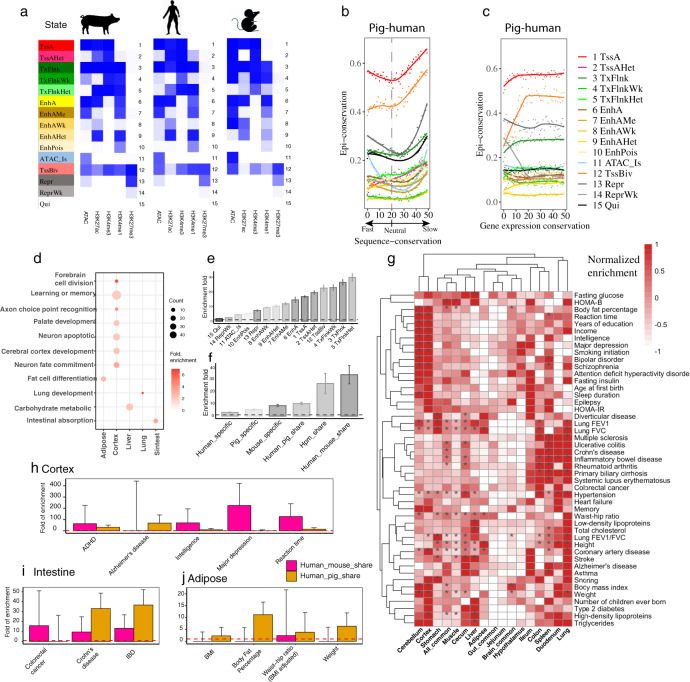
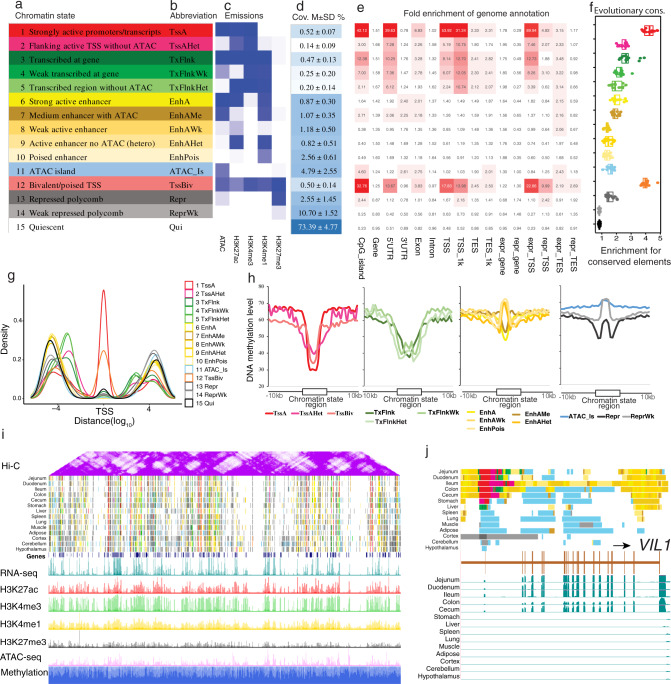
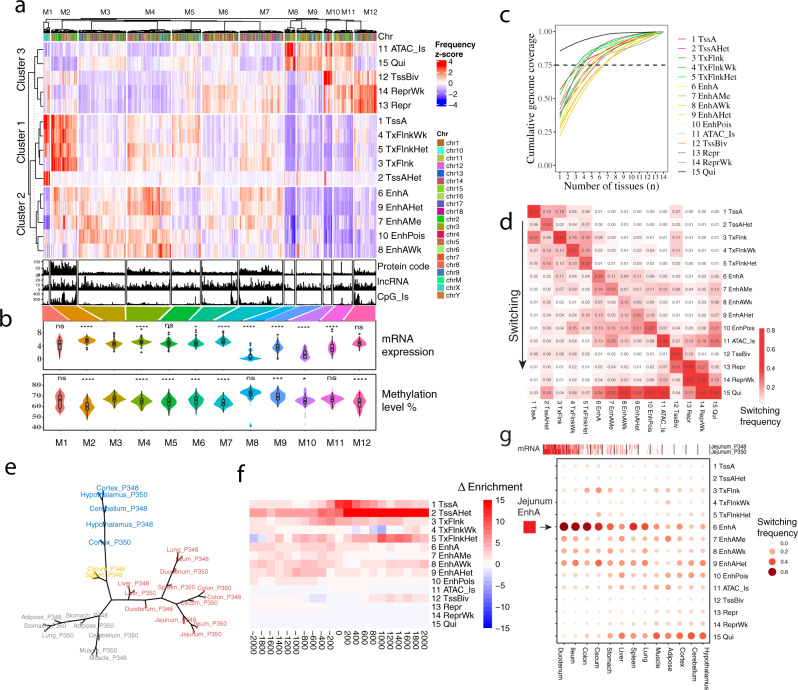
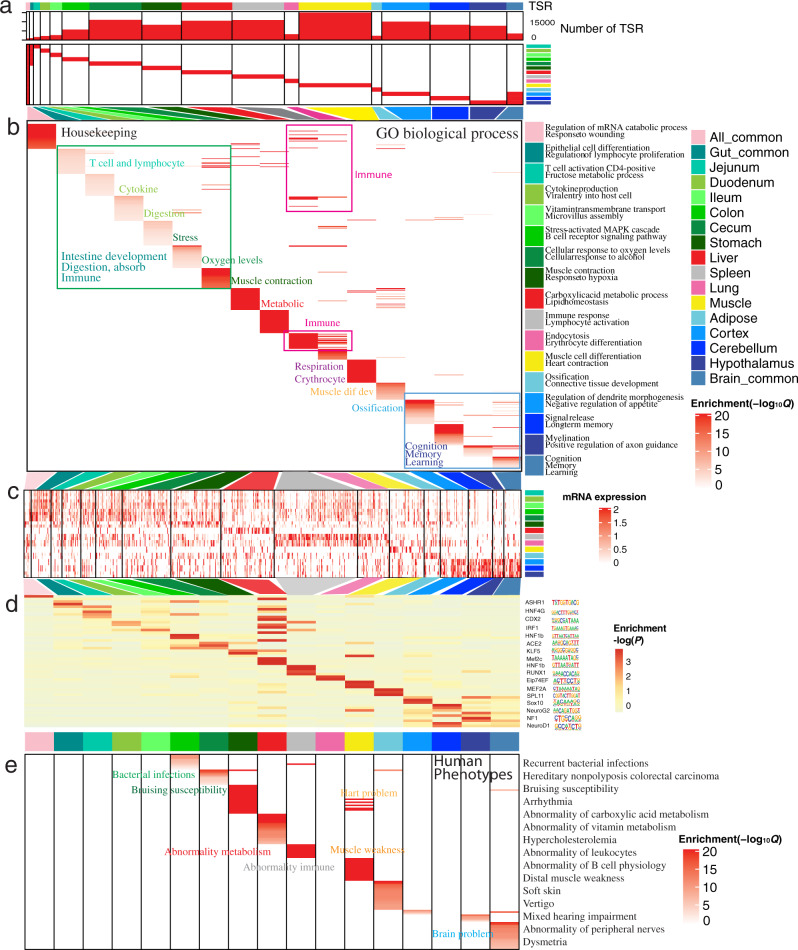
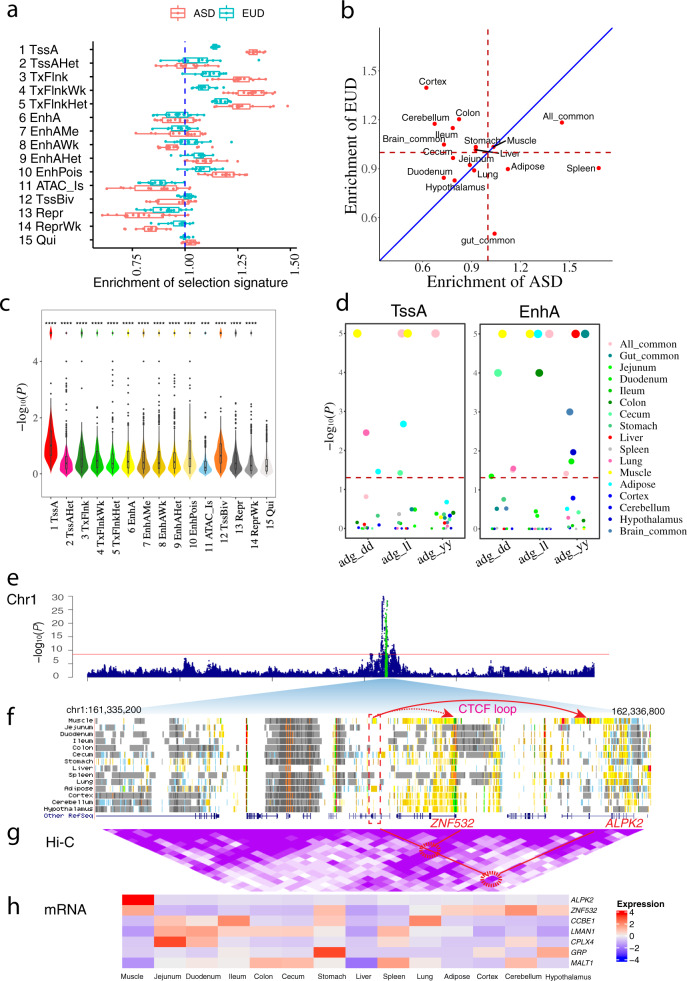
The functional annotation of livestock genomes is crucial for understanding the molecular mechanisms that underpin complex traits of economic importance, adaptive evolution and comparative genomics. Here, we provide the most comprehensive catalogue to date of regulatory elements in the pig (Sus scrofa) by integrating 223 epigenomic and transcriptomic data sets, representing 14 biologically important tissues. We systematically describe the dynamic epigenetic landscape across tissues by functionally annotating 15 different chromatin states and defining their tissue-specific regulatory activities. We demonstrate that genomic variants associated with complex traits and adaptive evolution in pig are significantly enriched in active promoters and enhancers. Furthermore, we reveal distinct tissue-specific regulatory selection between Asian and European pig domestication processes. Compared with human and mouse epigenomes, we show that porcine regulatory elements are more conserved in DNA sequence, under both rapid and slow evolution, than those under neutral evolution across pig, mouse, and human. Finally, we provide biological insights on tissue-specific regulatory conservation, and by integrating 47 human genome-wide association studies, we demonstrate that, depending on the traits, mouse or pig might be more appropriate biomedical models for different complex traits and diseases.
家畜基因组的功能注释对于理解经济重要性状、适应性进化和比较基因组学的分子机制至关重要。在这里,我们通过整合代表 14 种重要生物组织的 223 个表观基因组和转录组数据集,提供了迄今为止最全面的猪(Sus scrofa)调控元件目录。我们通过功能注释 15 种不同的染色质状态并定义其组织特异性的调控活性,系统地描述了整个组织的动态表观遗传景观。我们证明,与猪复杂性状和适应性进化相关的基因组变异在活性启动子和增强子中显著富集。此外,我们揭示了亚洲和欧洲猪驯化过程中存在明显的组织特异性调控选择。与人类和小鼠的表观基因组相比,我们表明猪的调控元件在快速和缓慢进化下,在 DNA 序列上比中性进化下更保守,无论是在猪、小鼠还是人类中都是如此。最后,我们提供了关于组织特异性调控保守性的生物学见解,并通过整合 47 个人类全基因组关联研究,证明取决于性状,小鼠或猪可能更适合作为不同复杂性状和疾病的生物医学模型。