Department of Pediatrics, Division of Infectious Diseases, Stanford University, Stanford, CA 94305, USA.
Department of Medicine, Division of Hematology, Stanford University, Stanford, CA 94305, USA.
Cell Rep. 2019 Feb 26;26(9):2509-2520.e4. doi: 10.1016/j.celrep.2019.01.108.
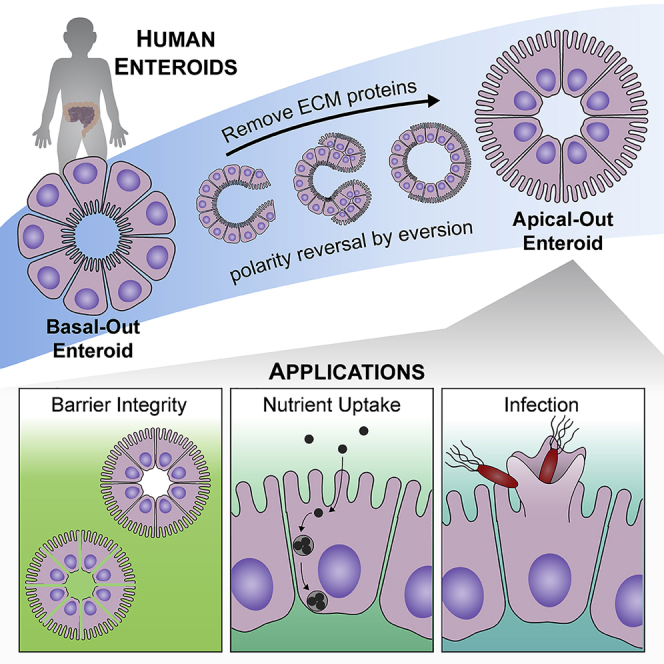
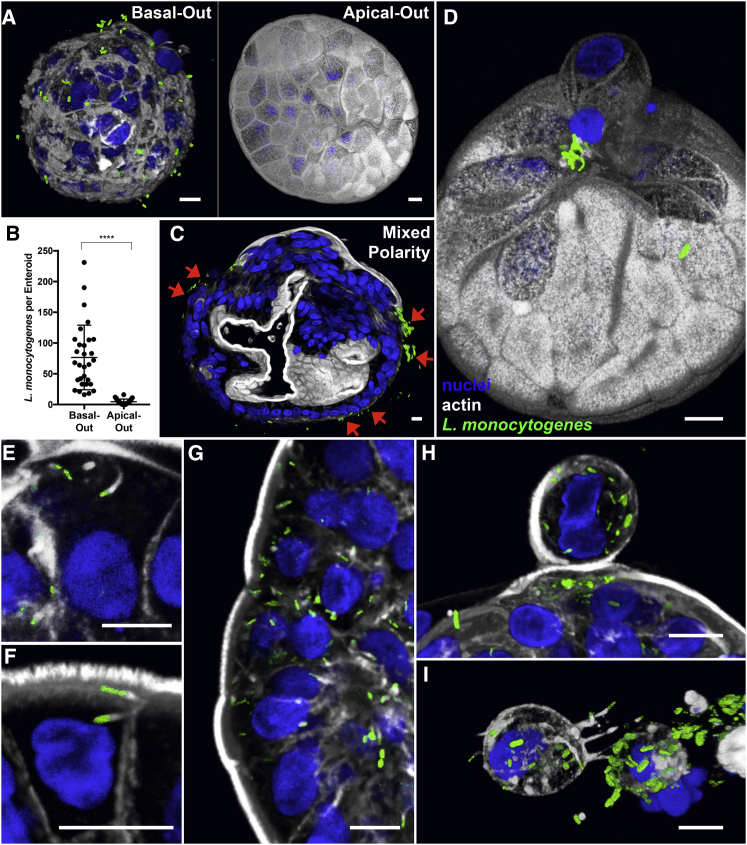
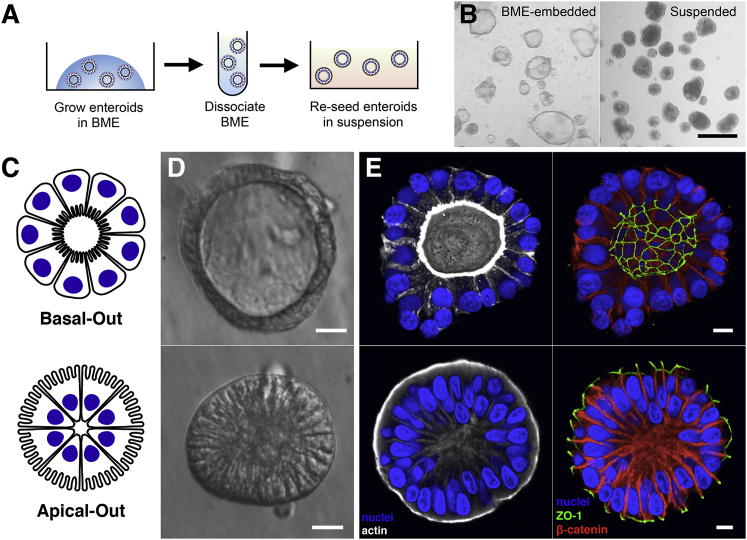
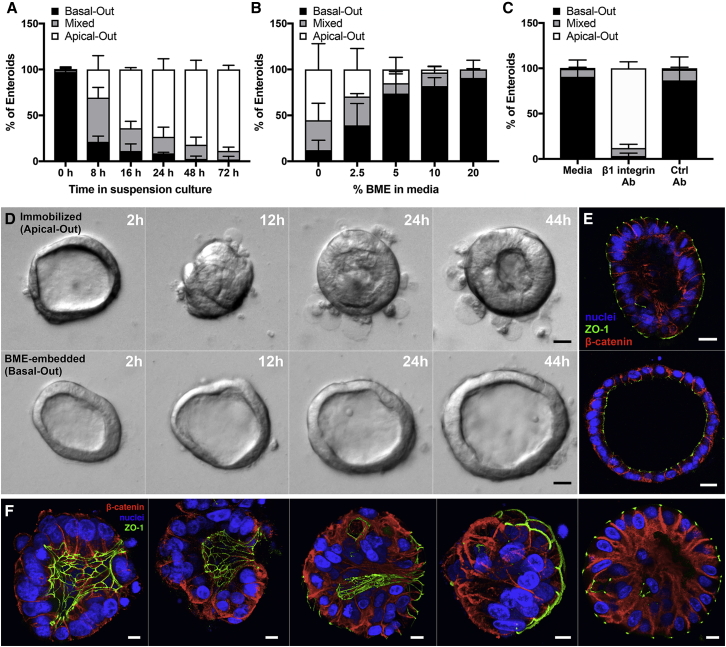
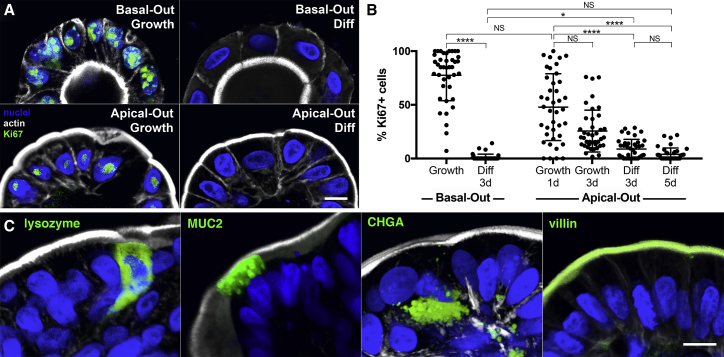
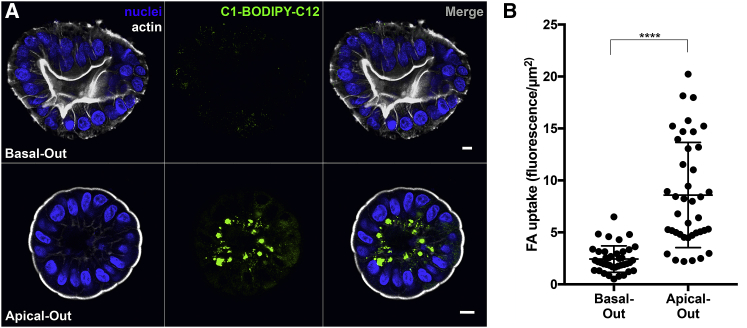
Human enteroids-epithelial spheroids derived from primary gastrointestinal tissue-are a promising model to study pathogen-epithelial interactions. However, accessing the apical enteroid surface is challenging because it is enclosed within the spheroid. We developed a technique to reverse enteroid polarity such that the apical surface everts to face the media. Apical-out enteroids maintain proper polarity and barrier function, differentiate into the major intestinal epithelial cell (IEC) types, and exhibit polarized absorption of nutrients. We used this model to study host-pathogen interactions and identified distinct polarity-specific patterns of infection by invasive enteropathogens. Salmonella enterica serovar Typhimurium targets IEC apical surfaces for invasion via cytoskeletal rearrangements, and Listeria monocytogenes, which binds to basolateral receptors, invade apical surfaces at sites of cell extrusion. Despite different modes of entry, both pathogens exit the epithelium within apically extruding enteroid cells. This model will enable further examination of IECs in health and disease.
人类类器官-源自胃肠道原发性组织的上皮球体-是研究病原体-上皮相互作用的有前途的模型。然而,由于类器官被球体包围,因此很难接触到顶端类器官表面。我们开发了一种技术来逆转类器官极性,使顶端表面向外翻转以面对培养基。顶端向外的类器官保持适当的极性和屏障功能,分化为主要的肠上皮细胞(IEC)类型,并表现出营养物质的极化吸收。我们使用该模型研究了宿主-病原体相互作用,并确定了侵袭性肠道病原体感染的独特极性特异性模式。肠炎沙门氏菌血清型 Typhimurium 通过细胞骨架重排靶向 IEC 的顶端表面进行入侵,而单核细胞增生李斯特菌结合基底外侧受体,在细胞外突部位入侵顶端表面。尽管进入方式不同,但两种病原体都在向外突出的顶端类器官细胞内离开上皮细胞。该模型将能够进一步研究健康和疾病状态下的 IEC。