Institute of Medical Microbiology, Jena University Hospital, 07747 Jena, Germany.
Center for Sepsis Control and Care (CSCC), Jena University Hospital, 07747 Jena, Germany.
Toxins (Basel). 2019 Mar 1;11(3):135. doi: 10.3390/toxins11030135.
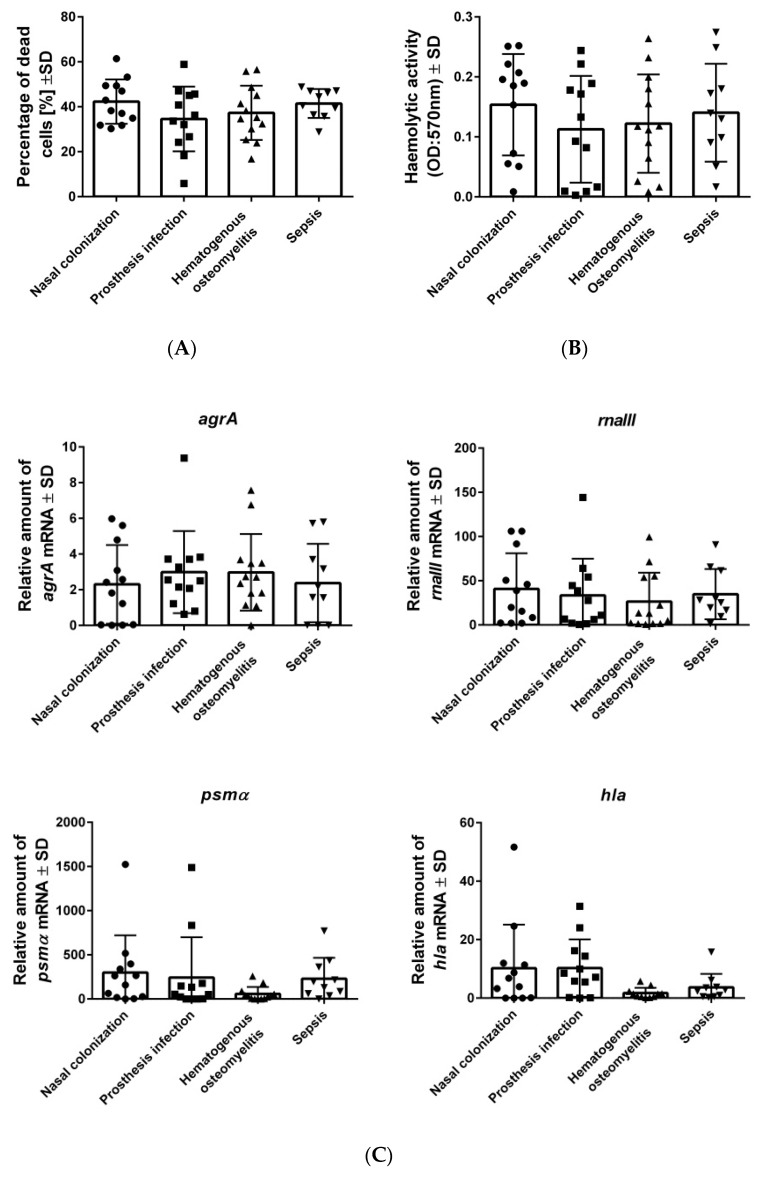
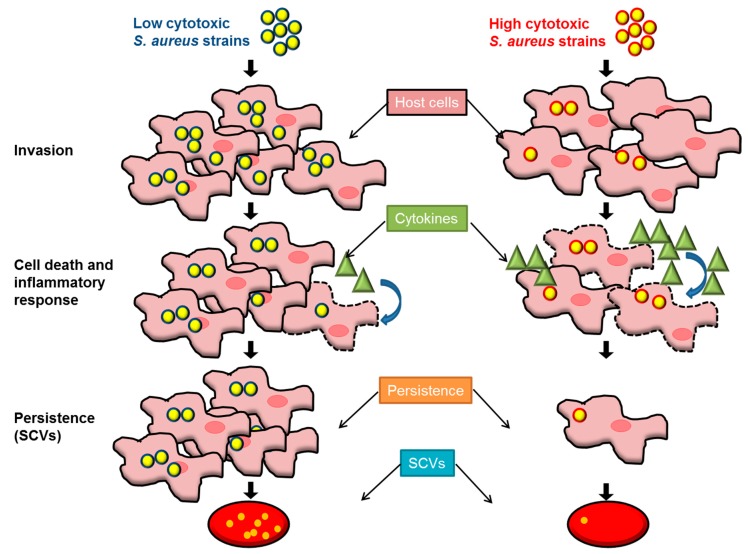
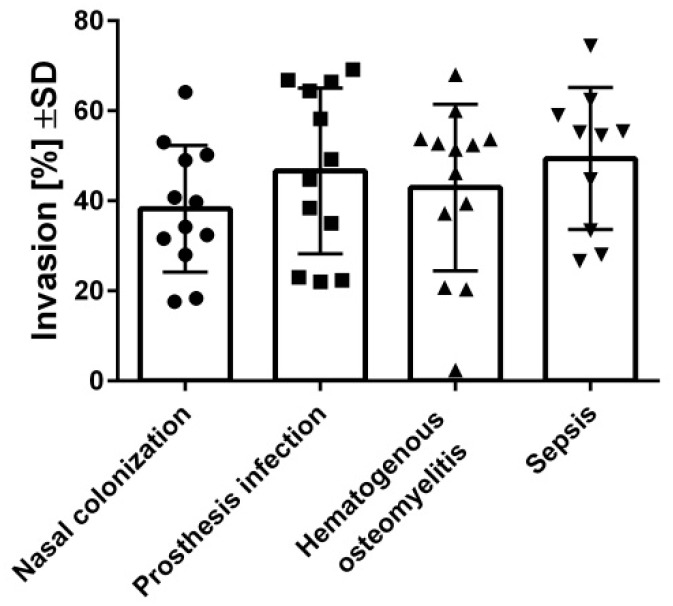
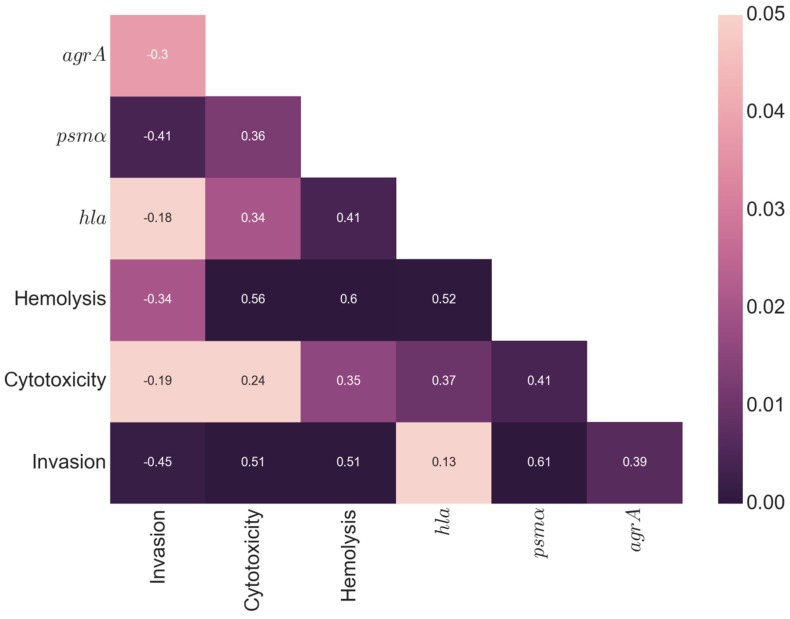
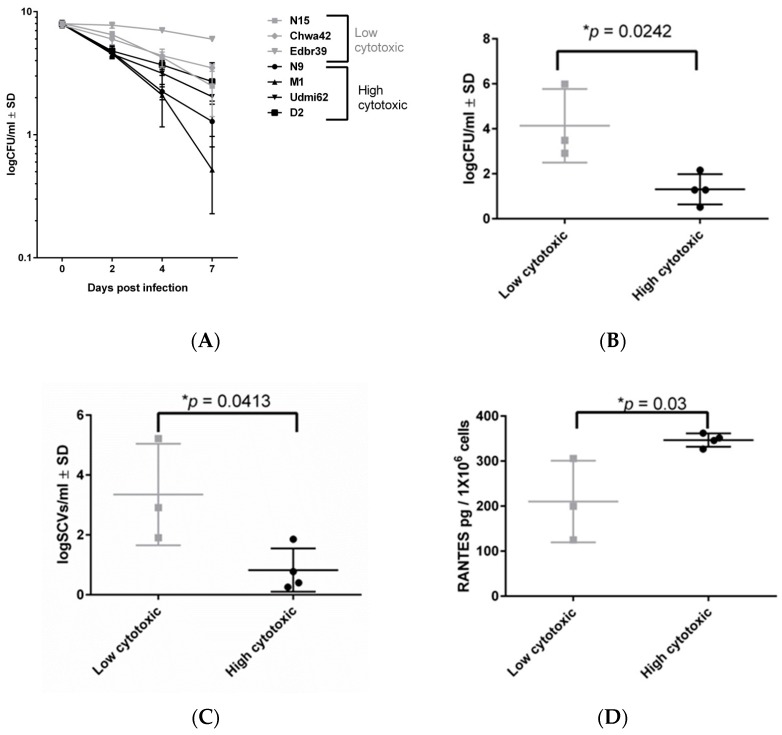
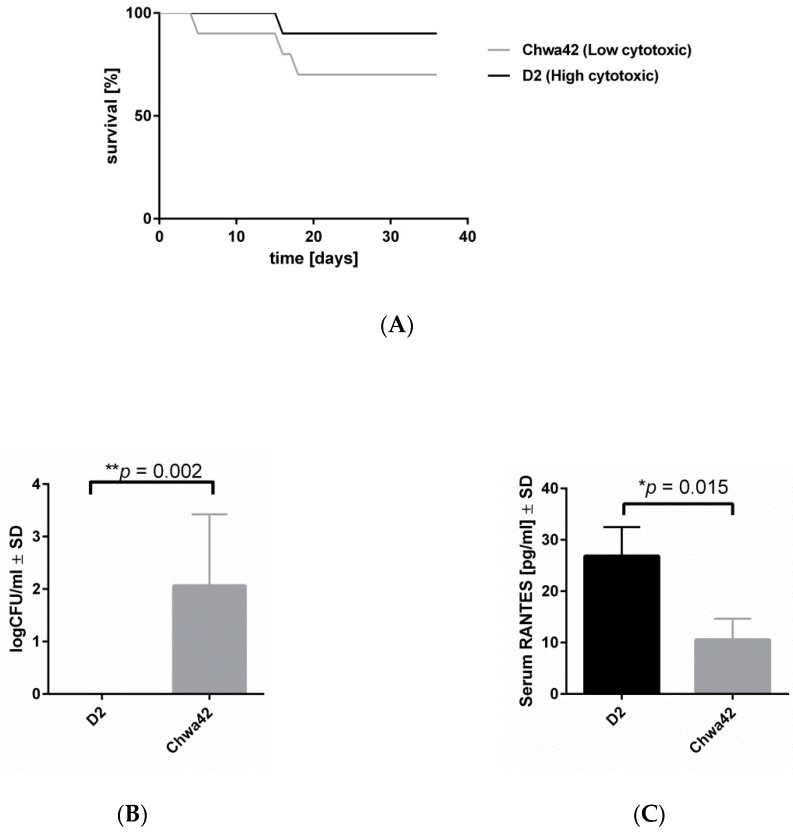
colonizes epithelial surfaces, but it can also cause severe infections. The aim of this work was to investigate whether bacterial virulence correlates with defined types of tissue infections. For this, we collected 10⁻12 clinical strains each from nasal colonization, and from patients with endoprosthesis infection, hematogenous osteomyelitis, and sepsis. All strains were characterized by genotypic analysis, and by the expression of virulence factors. The host⁻pathogen interaction was studied through several functional assays in osteoblast cultures. Additionally, selected strains were tested in a murine sepsis/osteomyelitis model. We did not find characteristic bacterial features for the defined infection types; rather, a wide range in all strain collections regarding cytotoxicity and invasiveness was observed. Interestingly, all strains were able to persist and to form small colony variants (SCVs). However, the low-cytotoxicity strains survived in higher numbers, and were less efficiently cleared by the host than the highly cytotoxic strains. In summary, our results indicate that not only destructive, but also low-cytotoxicity strains are able to induce infections. The low-cytotoxicity strains can successfully survive, and are less efficiently cleared from the host than the highly cytotoxic strains, which represent a source for chronic infections. The understanding of this interplay/evolution between the host and the pathogen during infection, with specific attention towards low-cytotoxicity isolates, will help to optimize treatment strategies for invasive and therapy-refractory infection courses.
定植于上皮表面,但也可导致严重感染。本研究旨在探讨细菌毒力是否与特定类型的组织感染相关。为此,我们分别从鼻腔定植、人工关节感染、血源性骨髓炎和败血症患者中收集了 10-12 株临床分离株。所有菌株均通过基因分析和毒力因子表达进行了特征分析。通过在成骨细胞培养物中进行几种功能测定研究了宿主-病原体相互作用。此外,还在小鼠脓毒症/骨髓炎模型中测试了选定的菌株。我们没有发现特定感染类型的特征性细菌特征,而是在所有菌株中观察到细胞毒性和侵袭性的广泛范围。有趣的是,所有菌株都能够存活并形成小菌落变种(SCV)。然而,低细胞毒性菌株的存活数量更多,并且宿主清除的效率低于高细胞毒性菌株。总之,我们的研究结果表明,不仅是具有破坏性的,而且低细胞毒性菌株也能够引起感染。低细胞毒性菌株能够成功存活,并且比高细胞毒性菌株更不容易被宿主清除,这是慢性感染的来源。了解感染过程中宿主与病原体之间的这种相互作用/进化,特别关注低细胞毒性分离株,将有助于优化侵袭性和治疗难治性感染过程的治疗策略。