Diabetes and Nutritional Sciences, Kings College London, London, UK.
Faculty of Health Sciences, University of Southamptom, Southamptom, UK.
BMJ Open. 2019 Mar 1;9(2):e023733. doi: 10.1136/bmjopen-2018-023733.
Black British communities are disproportionately burdened by type 2 diabetes (T2D) and its complications. Tackling these inequalities is a priority for healthcare providers and patients. Culturally tailored diabetes education provides long-term benefits superior to standard care, but to date, such programmes have only been developed in the USA. The current programme of research aims to develop the Healthy Eating and Active Lifestyles for Diabetes (HEAL-D) culturally tailored T2D self-management programme for black British communities and to evaluate its delivery, acceptability and the feasibility of conducting a future effectiveness trial of HEAL-D.
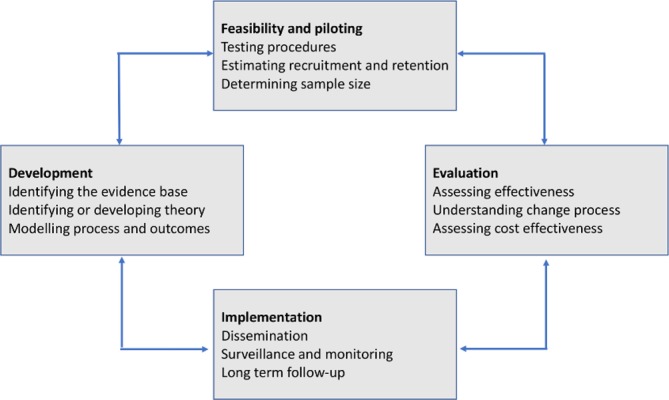
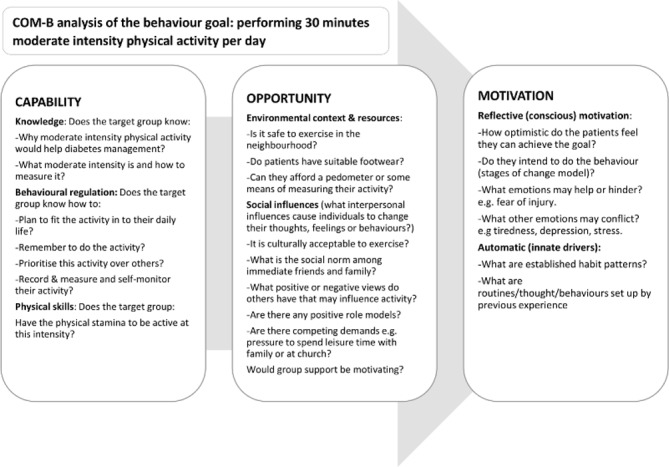
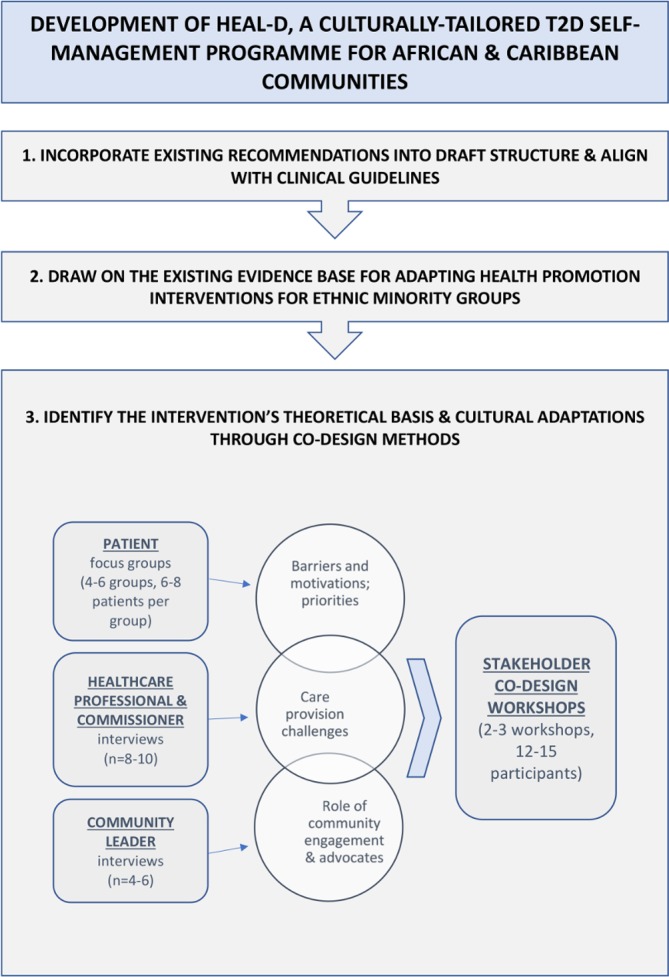
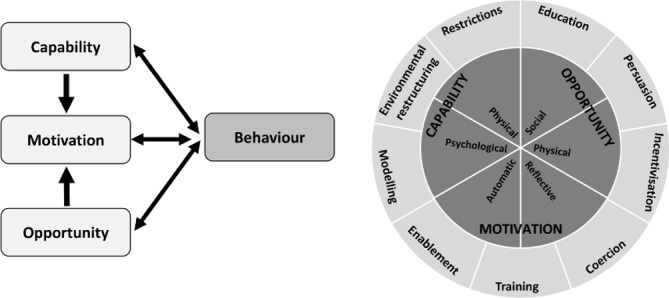
Informed by Medical Research Council Complex Interventions guidance, this research will rigorously develop and evaluate the implementation of the HEAL-D intervention to understand the feasibility of conducting a full-scale effectiveness trial. In phase 1, the intervention will be developed. The intervention curriculum will be based on existing evidence-based T2D guidelines for diet and lifestyle management; codesign methods will be used to foster community engagement, identify the intervention's underpinning theory, identify the optimal structure, format and delivery methods, ascertain adaptations that are needed to ensure cultural sensitivity and understand issues of implementation. In phase 2, the intervention will be delivered and compared with usual care in a feasibility trial. Process evaluation methods will evaluate the delivery and acceptability of HEAL-D. The effect size of potential primary outcomes, such as HbA1c and body weight, will be estimated. The feasibility of conducting a future effectiveness trial will also be evaluated, particularly feasibility of randomisation, recruitment, retention and contamination.
This study is funded by a National Institute of Health Research Fellowship (CDF-2015-08-006) and approved by National Health Service Research Ethics Committee (17-LO-1954). Dissemination will be through national and international conferences, peer-reviewed publications and local and national clinical diabetes networks.
NCT03531177; Pre-results.
黑人群体中 2 型糖尿病(T2D)及其并发症的负担不成比例。解决这些不平等问题是医疗保健提供者和患者的当务之急。针对特定文化的糖尿病教育提供了优于标准护理的长期益处,但迄今为止,此类计划仅在美国开发。目前的研究计划旨在为黑人群体开发针对特定文化的 T2D 自我管理计划“健康饮食和积极生活方式(HEAL-D)”,并评估其实施、可接受性以及开展未来 HEAL-D 有效性试验的可行性。
根据医学研究委员会复杂干预指南,本研究将严格开发和评估 HEAL-D 干预措施的实施情况,以了解开展全面有效性试验的可行性。在第 1 阶段,将开发干预措施。干预课程将基于现有的 T2D 饮食和生活方式管理循证指南;使用共同设计方法培养社区参与度,确定干预措施的基础理论,确定最佳结构、格式和交付方法,确定确保文化敏感性和了解实施问题所需的适应措施。在第 2 阶段,将在可行性试验中与常规护理比较来提供 HEAL-D。过程评估方法将评估 HEAL-D 的交付和可接受性。将估计潜在主要结果(如 HbA1c 和体重)的效应大小。还将评估开展未来有效性试验的可行性,特别是随机化、招募、保留和污染的可行性。
本研究由国家卫生研究院奖学金(CDF-2015-08-006)资助,并获得国家卫生服务伦理委员会(17-LO-1954)的批准。传播将通过全国和国际会议、同行评审出版物以及当地和国家临床糖尿病网络进行。
NCT03531177;预结果。