Instituto de Biología Molecular de Barcelona (IBMB), CSIC, 08028 Barcelona, Spain; Centro de Investigación Biomédica en Red de Enfermedades Raras (CIBERER), Barcelona, Spain.
Centro de Investigación Biomédica en Red de Enfermedades Raras (CIBERER), Barcelona, Spain; Centre for Genomic Regulation (CRG), The Barcelona Institute for Science and Technology (BIST), 08003 Barcelona, Spain.
Neurobiol Dis. 2019 Jul;127:210-222. doi: 10.1016/j.nbd.2019.02.022. Epub 2019 Mar 1.
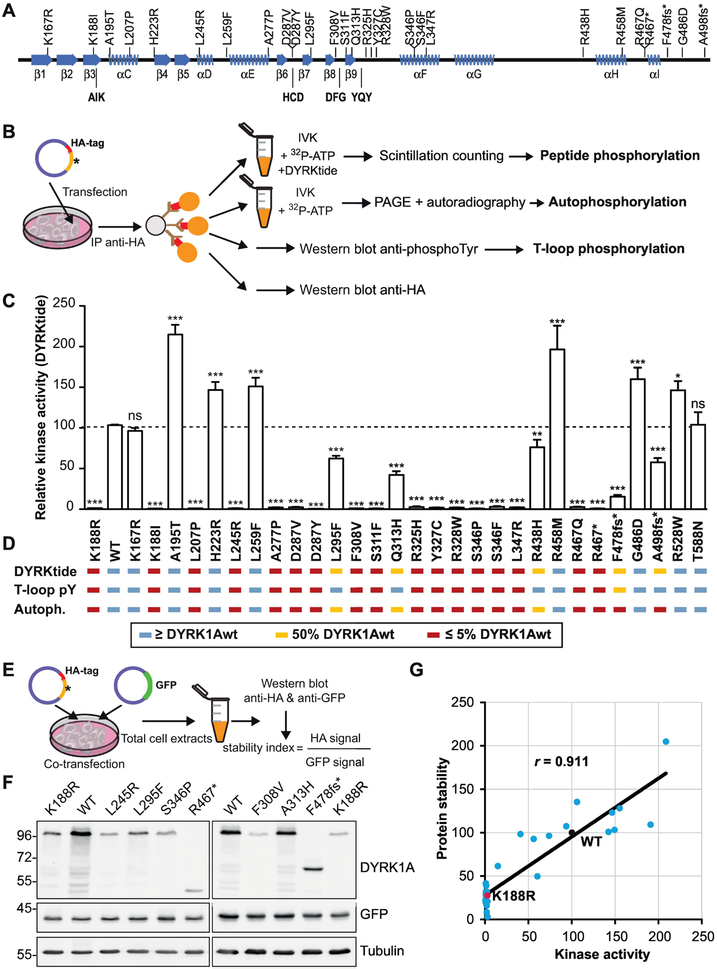
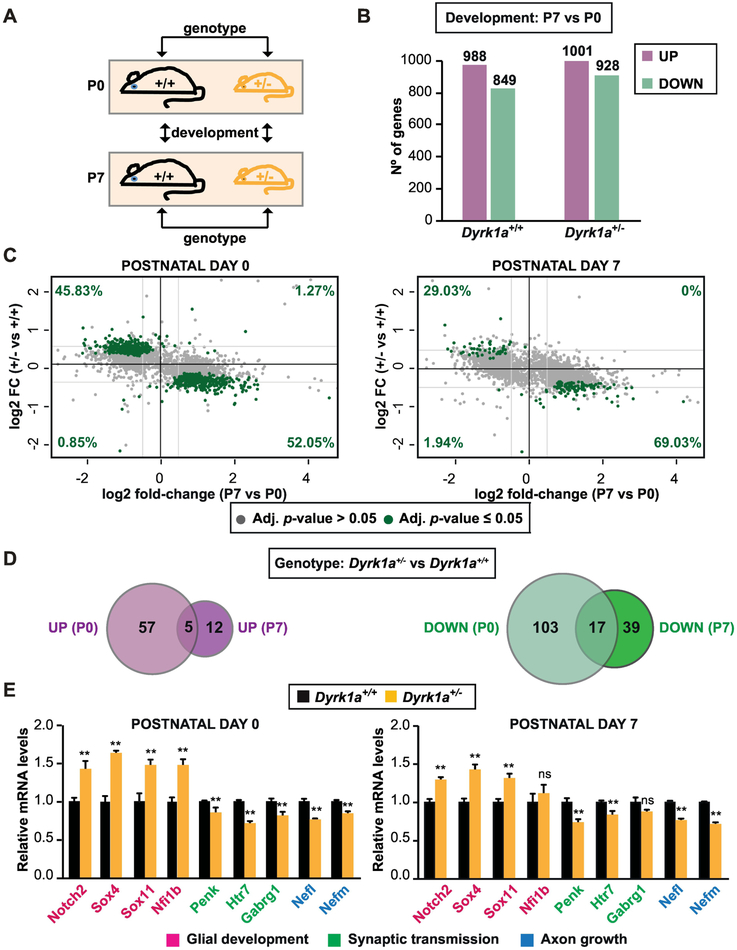
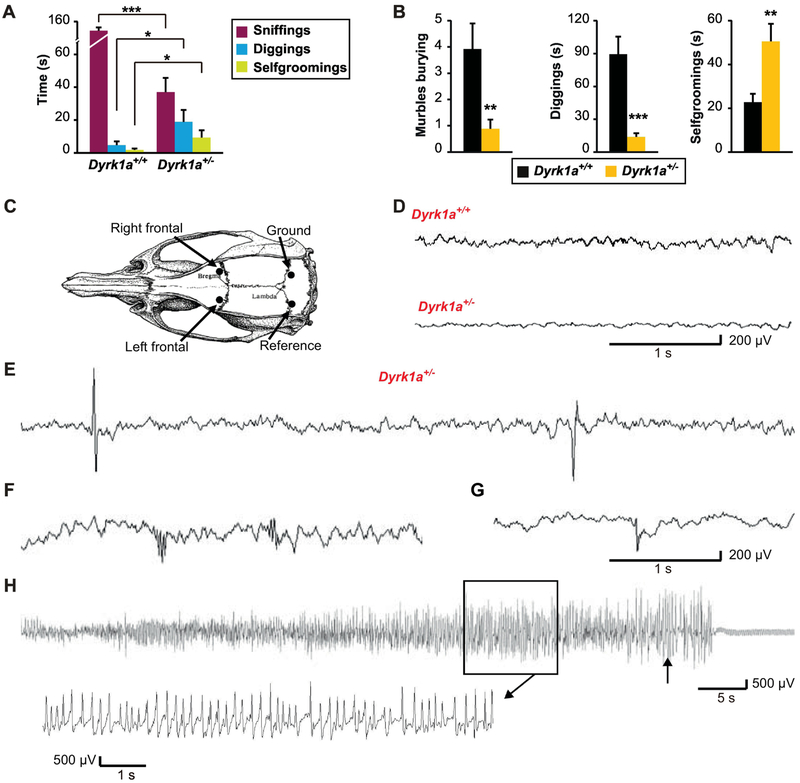
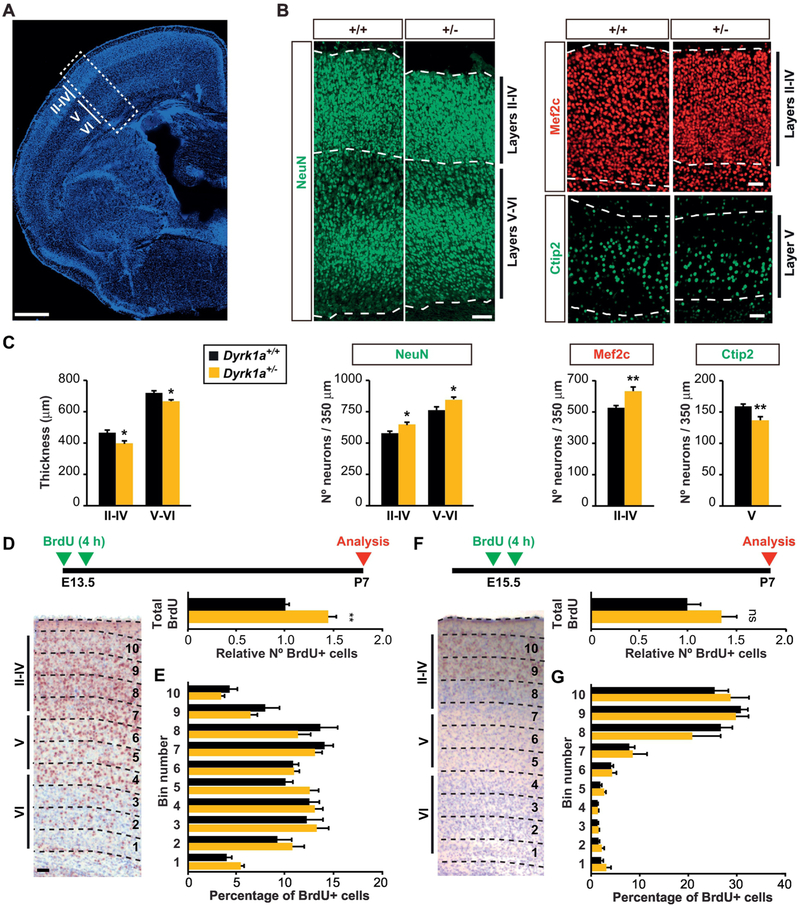
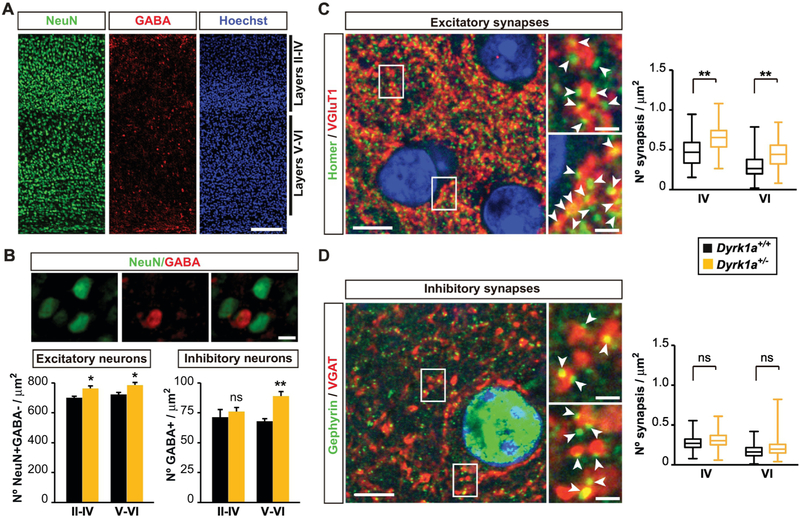
Autism spectrum disorders are early onset neurodevelopmental disorders characterized by deficits in social communication and restricted repetitive behaviors, yet they are quite heterogeneous in terms of their genetic basis and phenotypic manifestations. Recently, de novo pathogenic mutations in DYRK1A, a chromosome 21 gene associated to neuropathological traits of Down syndrome, have been identified in patients presenting a recognizable syndrome included in the autism spectrum. These mutations produce DYRK1A kinases with partial or complete absence of the catalytic domain, or they represent missense mutations located within this domain. Here, we undertook an extensive biochemical characterization of the DYRK1A missense mutations reported to date and show that most of them, but not all, result in enzymatically dead DYRK1A proteins. We also show that haploinsufficient Dyrk1a mutant mice mirror the neurological traits associated with the human pathology, such as defective social interactions, stereotypic behaviors and epileptic activity. These mutant mice present altered proportions of excitatory and inhibitory neocortical neurons and synapses. Moreover, we provide evidence that alterations in the production of cortical excitatory neurons are contributing to these defects. Indeed, by the end of the neurogenic period, the expression of developmental regulated genes involved in neuron differentiation and/or activity is altered. Therefore, our data indicate that altered neocortical neurogenesis could critically affect the formation of cortical circuits, thereby contributing to the neuropathological changes in DYRK1A haploinsufficiency syndrome.
自闭症谱系障碍是一种早期发生的神经发育障碍,其特征是社交沟通能力缺陷和受限的重复行为,但它们在遗传基础和表型表现方面存在很大的异质性。最近,在具有唐氏综合征神经病理学特征的 21 号染色体基因 DYRK1A 中发现了新的致病性突变,这些突变发生在具有可识别综合征的自闭症谱系障碍患者中。这些突变产生的 DYRK1A 激酶部分或完全缺失催化结构域,或者它们代表位于该结构域内的错义突变。在这里,我们对迄今为止报道的 DYRK1A 错义突变进行了广泛的生化特征分析,结果表明,大多数但不是全部突变导致酶失活的 DYRK1A 蛋白。我们还表明,半合子不足的 Dyrk1a 突变小鼠反映了与人类病理学相关的神经学特征,如社交互动缺陷、刻板行为和癫痫活动。这些突变小鼠表现出兴奋性和抑制性新皮层神经元和突触的比例改变。此外,我们提供的证据表明,皮质兴奋性神经元产生的改变可能导致这些缺陷。事实上,在神经发生期结束时,涉及神经元分化和/或活性的发育调节基因的表达发生改变。因此,我们的数据表明,皮质神经发生的改变可能会严重影响皮质回路的形成,从而导致 DYRK1A 半合子不足综合征的神经病理学变化。