Patrick Michael D, Stukus David R, Nuss Kathryn E
Nationwide Children's Hospital, Columbus, USA.
The Ohio State University College of Medicine, Columbus, USA.
Digit Health. 2019 Feb 26;5:2055207619834842. doi: 10.1177/2055207619834842. eCollection 2019 Jan-Dec.
Pediatricians have used podcasts to communicate with the public since 2006 and medical students since 2008. Previous work has established quality criteria for medical education podcasts and examined the benefit of offering continuing medical education (CME) credit for online activities. This is the first descriptive study to outline the development and reach of a pediatric podcast that targets post-graduate healthcare providers, enhances communication by incorporating quality criteria, and offers free accredited CME to listeners.
We produced 26 podcast episodes from March 2015 to May 2017. Episodes incorporated quality criteria for medical education podcasts and offered free CME credit. They were published on a website, available for listening on multiple digital platforms and promoted through several social media channels. Data were analyzed for frequency of downloads and geographic location of listeners.
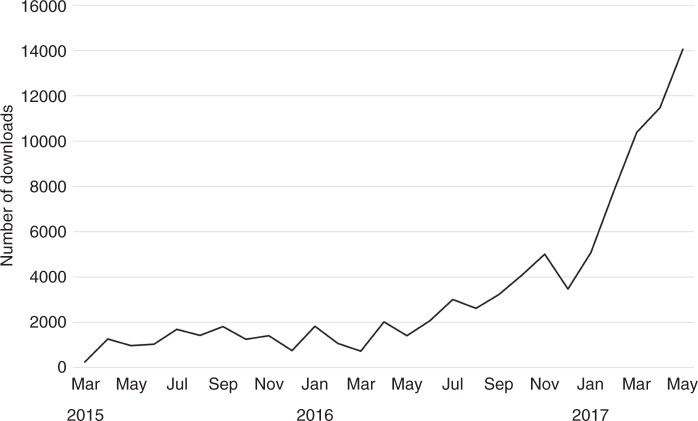
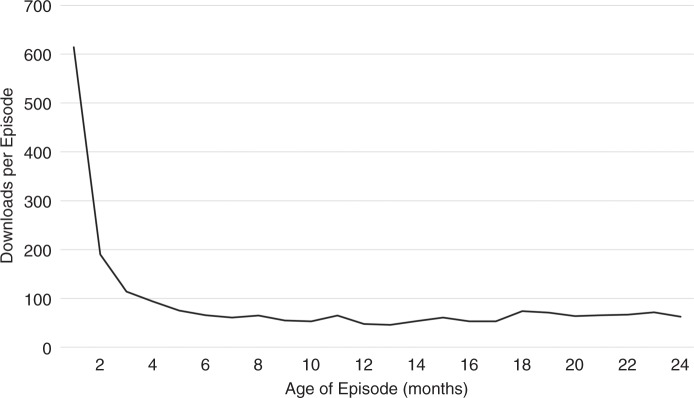
The cumulative total of episode downloads was 91,159 with listeners representing 50 U.S. states and 108 countries. Podcast listenership grew over time. Individual episodes had their largest number of downloads immediately following release, but continued recruiting new listeners longitudinally, suggesting use of the archive as an "on-demand" source of educational content.
Pediatric podcasts that incorporate quality criteria and offer free CME credit can be used to deliver educational content to a large global audience of post-graduate healthcare providers. Since podcast communication is rapidly growing, future work should focus on identifying the professional roles of listeners; exploring listener perceptions of quality, value and satisfaction; and examining podcast impact on knowledge transfer, clinical practice, public policy and health outcomes.
自2006年起儿科医生就开始利用播客与公众进行交流,自2008年起开始与医学生交流。此前的工作已经确立了医学教育播客的质量标准,并研究了为在线活动提供继续医学教育(CME)学分的益处。这是第一项描述性研究,概述了一档面向研究生医疗服务提供者的儿科播客的发展历程及影响力,该播客通过纳入质量标准加强了交流,并为听众提供免费的经认可的CME。
我们在2015年3月至2017年5月期间制作了26期播客节目。节目纳入了医学教育播客的质量标准,并提供免费的CME学分。这些节目发布在一个网站上,可在多个数字平台收听,并通过多个社交媒体渠道进行推广。对下载频率和听众地理位置的数据进行了分析。
节目下载总量累计达91,159次,听众来自美国50个州和108个国家。播客的听众数量随时间增长。单个节目在发布后立即获得了最多的下载量,但在纵向持续吸引新听众,这表明该存档被用作教育内容的“按需”来源。
纳入质量标准并提供免费CME学分的儿科播客可用于向全球大量的研究生医疗服务提供者受众提供教育内容。由于播客交流正在迅速发展,未来的工作应侧重于确定听众的专业角色;探索听众对质量、价值和满意度的看法;以及研究播客对知识传播、临床实践、公共政策和健康结果的影响。