Medical Research Council Integrative Epidemiology Unit, Department of Population Health Sciences, Bristol Medical School, University of Bristol, Bristol, BS8 2BN, UK.
Bristol Dental School, University of Bristol, Bristol, BS1 2LY, UK.
Nat Commun. 2019 Mar 5;10(1):1052. doi: 10.1038/s41467-019-08923-6.
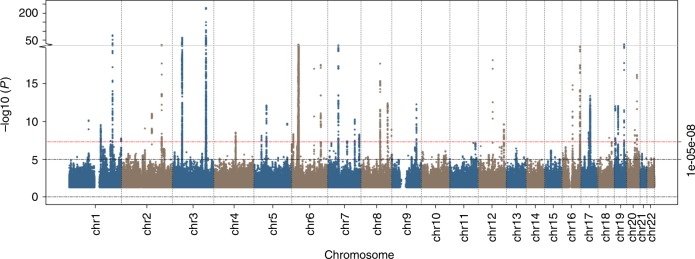
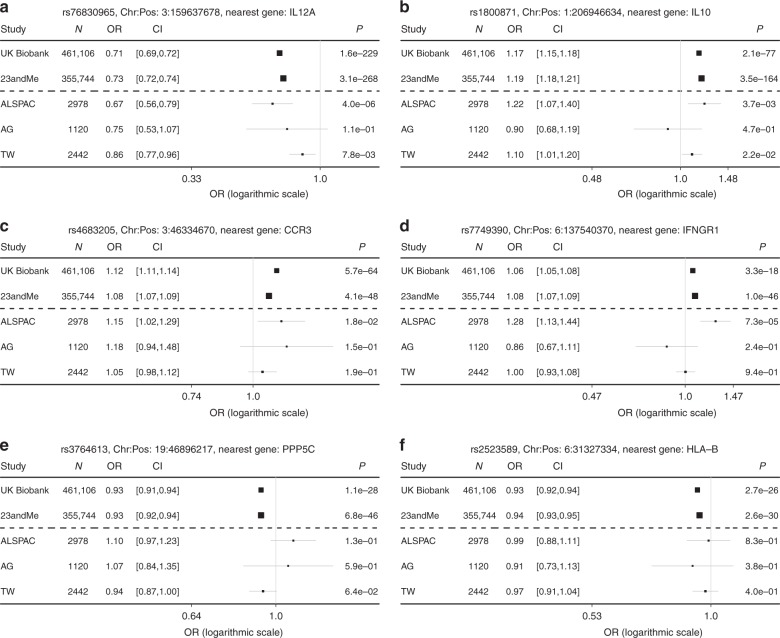
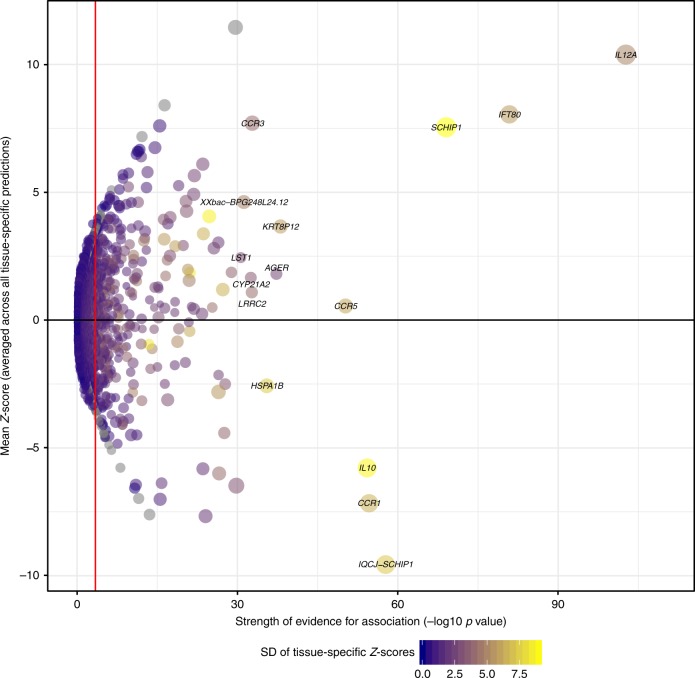
Mouth ulcers are the most common ulcerative condition and encompass several clinical diagnoses, including recurrent aphthous stomatitis (RAS). Despite previous evidence for heritability, it is not clear which specific genetic loci are implicated in RAS. In this genome-wide association study (n = 461,106) heritability is estimated at 8.2% (95% CI: 6.4%, 9.9%). This study finds 97 variants which alter the odds of developing non-specific mouth ulcers and replicate these in an independent cohort (n = 355,744) (lead variant after meta-analysis: rs76830965, near IL12A, OR 0.72 (95% CI: 0.71, 0.73); P = 4.4e-483). Additional effect estimates from three independent cohorts with more specific phenotyping and specific study characteristics support many of these findings. In silico functional analyses provide evidence for a role of T cell regulation in the aetiology of mouth ulcers. These results provide novel insight into the pathogenesis of a common, important condition.
口腔溃疡是最常见的溃疡病症,包括几种临床诊断,包括复发性阿弗他口炎(RAS)。尽管先前有遗传证据,但尚不清楚 RAS 涉及哪些特定的遗传位点。在这项全基因组关联研究(n=461106)中,遗传率估计为 8.2%(95%CI:6.4%,9.9%)。本研究发现了 97 种改变发生非特异性口腔溃疡几率的变异体,并在一个独立的队列中进行了复制(n=355744)(荟萃分析后的主要变异体:rs76830965,位于 IL12A 附近,OR 0.72(95%CI:0.71,0.73);P=4.4e-483)。来自具有更具体表型和特定研究特征的三个独立队列的额外效应估计支持了其中的许多发现。计算机模拟功能分析为 T 细胞调节在口腔溃疡发病机制中的作用提供了证据。这些结果为一种常见且重要疾病的发病机制提供了新的见解。