University of Oxford, Department of Biochemistry, Oxford, OX1 3QU, United Kingdom.
University of Warwick, Mathematical Institute, Coventry, CV4 7AL, United Kingdom.
Sci Rep. 2019 Mar 5;9(1):3526. doi: 10.1038/s41598-019-40294-2.
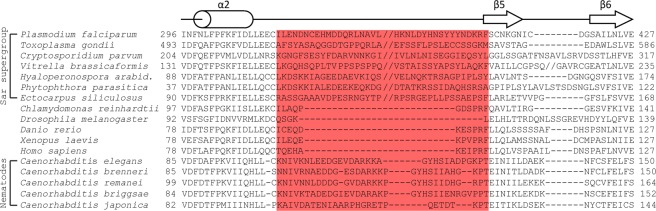
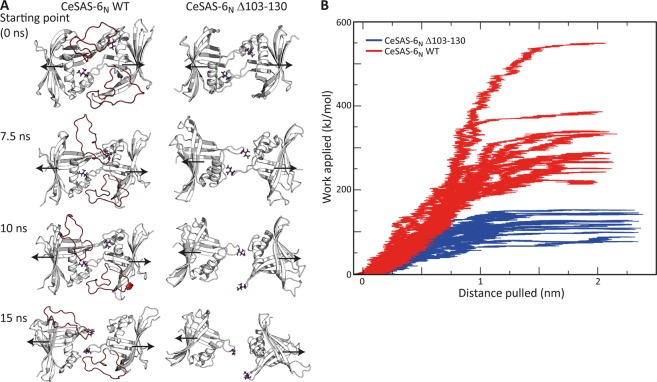
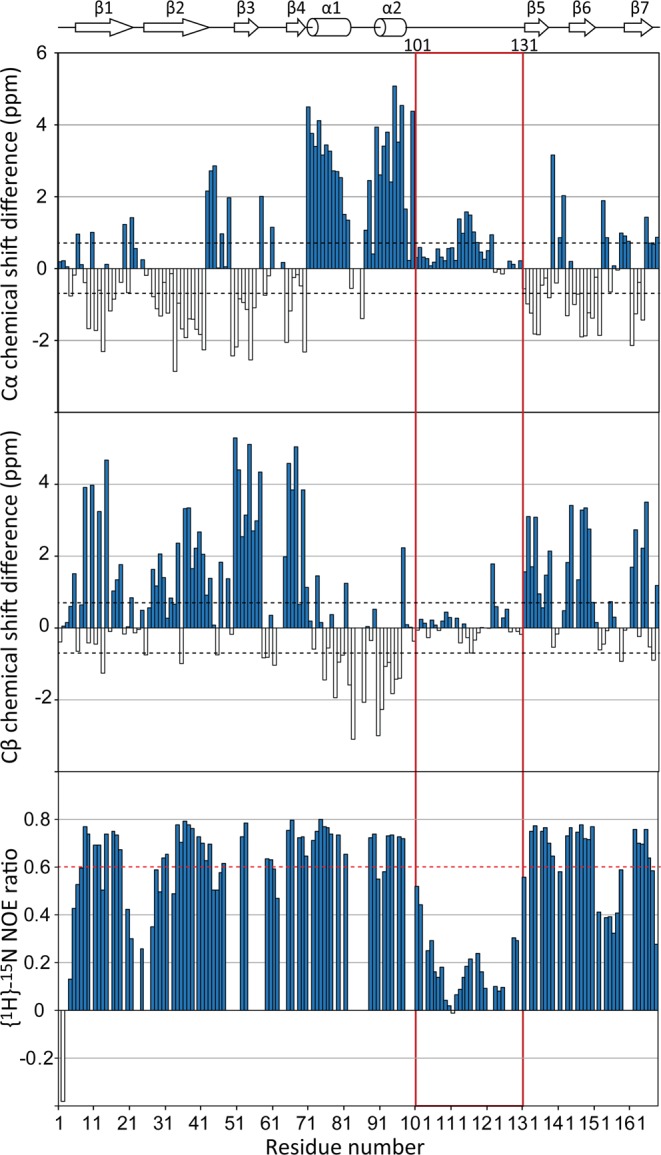
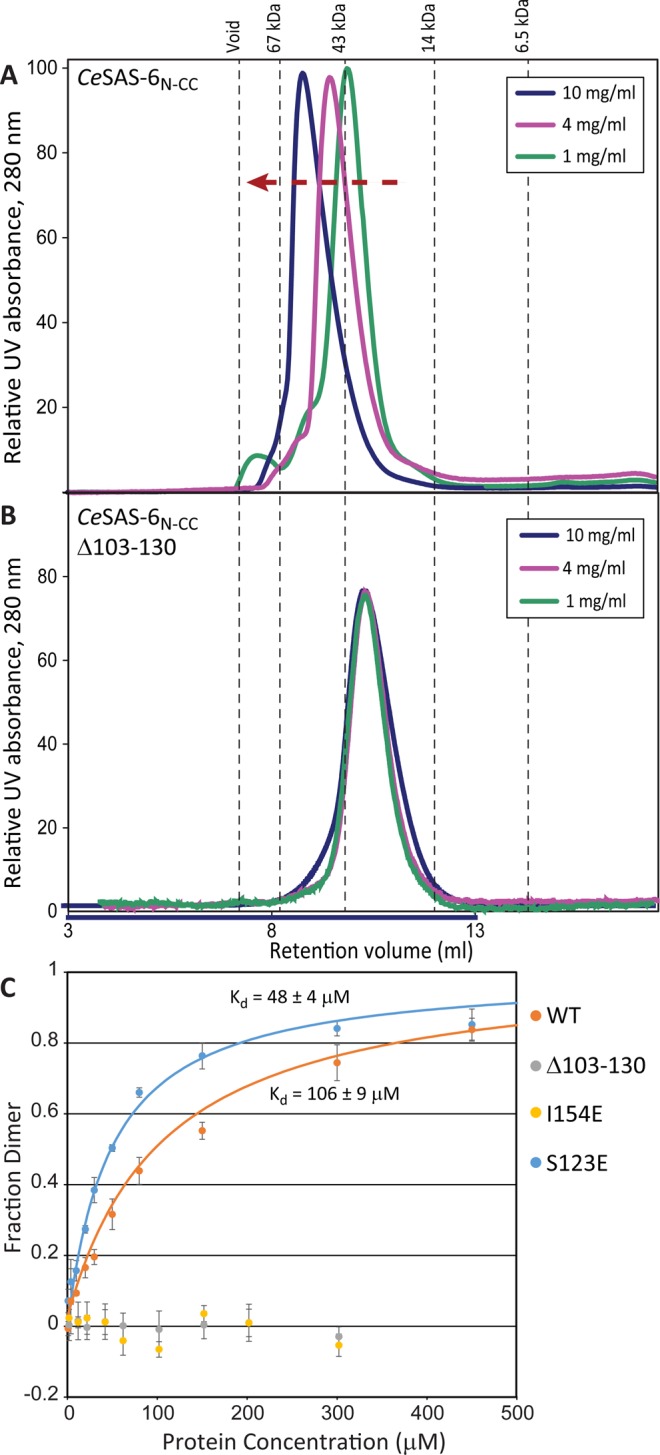
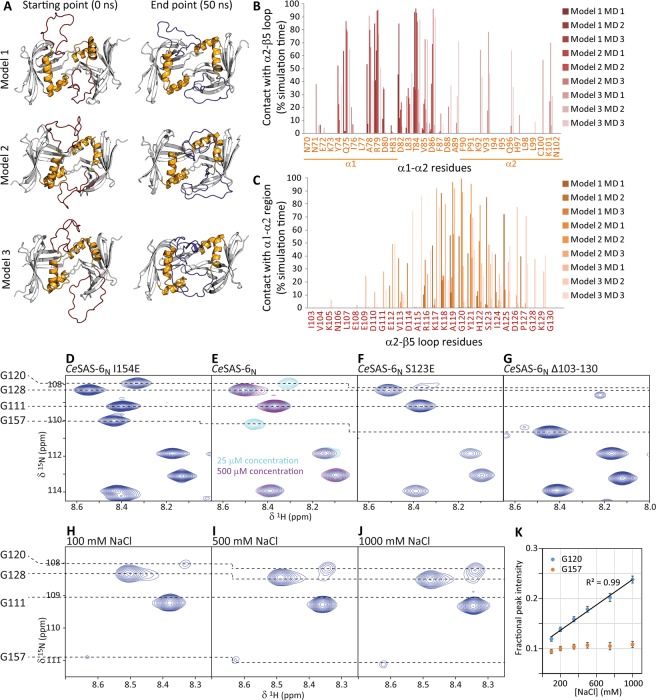
Centrioles are conserved organelles fundamental for the organisation of microtubules in animal cells. Oligomerisation of the spindle assembly abnormal protein 6 (SAS-6) is an essential step in the centriole assembly process and may act as trigger for the formation of these organelles. SAS-6 oligomerisation is driven by two independent interfaces, comprising an extended coiled coil and a dimeric N-terminal globular domain. However, how SAS-6 oligomerisation is controlled remains unclear. Here, we show that in the Caenorhabditis elegans SAS-6, a segment of the N-terminal globular domain, unresolved in crystallographic structures, comprises a flexible loop that assists SAS-6 oligomerisation. Atomistic molecular dynamics simulations and nuclear magnetic resonance experiments suggest that transient interactions of this loop across the N-terminal dimerisation interface stabilise the SAS-6 oligomer. We discuss the possibilities presented by such flexible SAS-6 segments for the control of centriole formation.
中心体是动物细胞中微管组织的基本保守细胞器。纺锤体组装异常蛋白 6(SAS-6)的寡聚化是中心体组装过程中的一个关键步骤,可能作为这些细胞器形成的触发因素。SAS-6 的寡聚化由两个独立的界面驱动,包括一个伸展的卷曲螺旋和一个二聚体的 N 端球状结构域。然而,SAS-6 寡聚化是如何被控制的仍然不清楚。在这里,我们表明在秀丽隐杆线虫 SAS-6 中,晶体结构中未解决的 N 端球状结构域的一个片段包含一个柔性环,有助于 SAS-6 的寡聚化。原子分子动力学模拟和核磁共振实验表明,该环在 N 端二聚化界面上的瞬时相互作用稳定了 SAS-6 寡聚体。我们讨论了这种柔性 SAS-6 片段对控制中心体形成的可能性。