Bielefeld Pascal, Schouten Marijn, Meijer Guido M, Breuk Marit J, Geijtenbeek Karlijne, Karayel Sedef, Tiaglik Alisa, Vuuregge Anna H, Willems Ruth A L, Witkamp Diede, Lucassen Paul J, Encinas Juan M, Fitzsimons Carlos P
Neuroscience Program, Swammerdam Institute for Life Sciences, Faculty of Sciences, University of Amsterdam, Amsterdam, Netherlands.
Achucarro Basque Center for Neuroscience, Bizkaia Science and Technology Park, Zamudio, Spain.
Front Mol Neurosci. 2019 Feb 19;12:31. doi: 10.3389/fnmol.2019.00031. eCollection 2019.
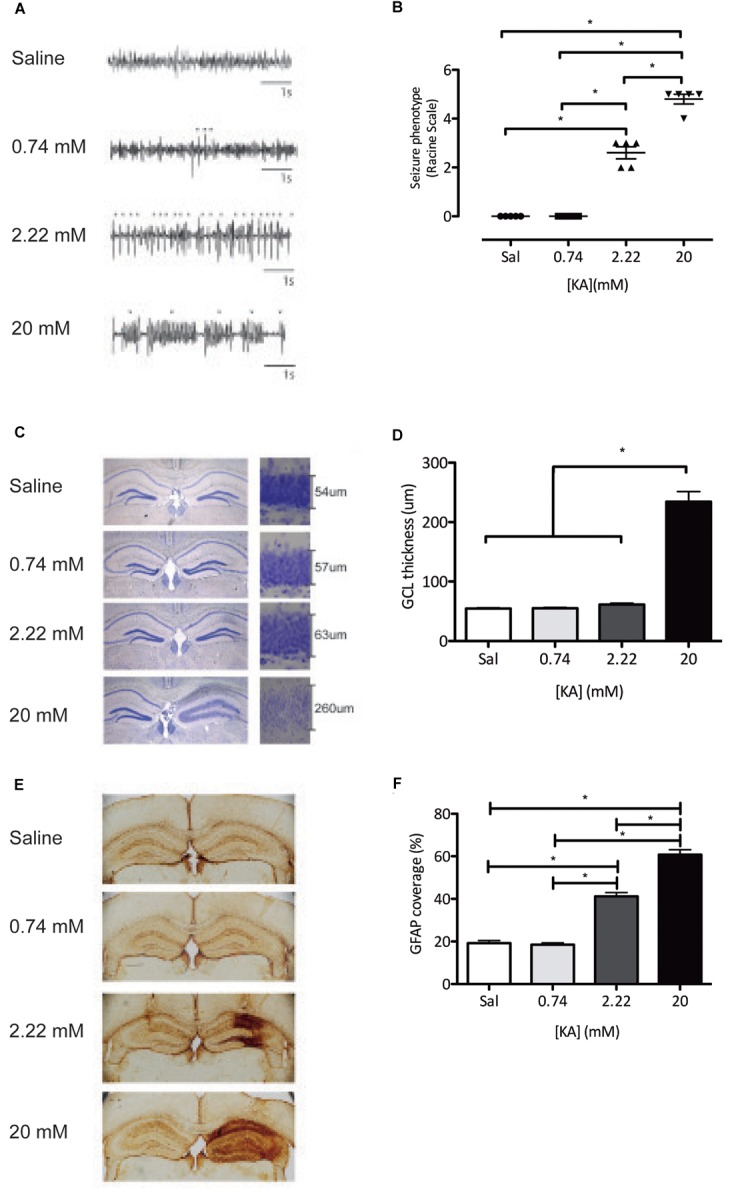
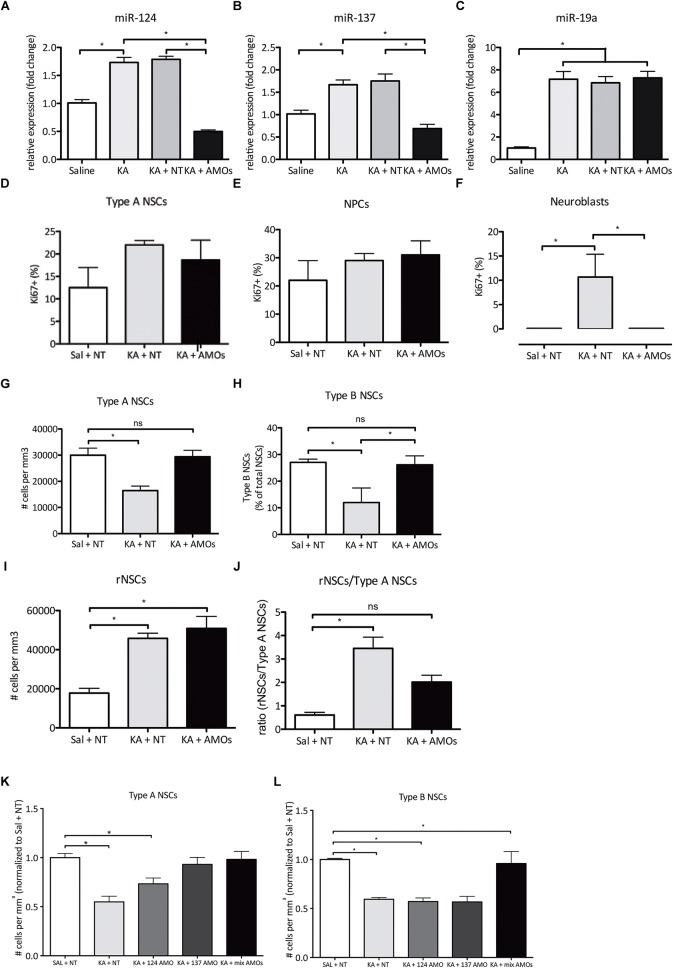
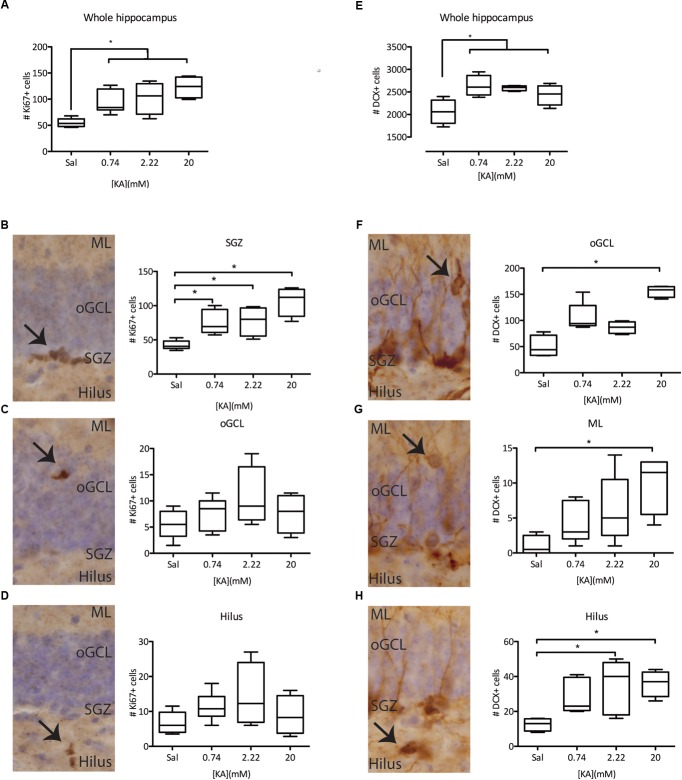
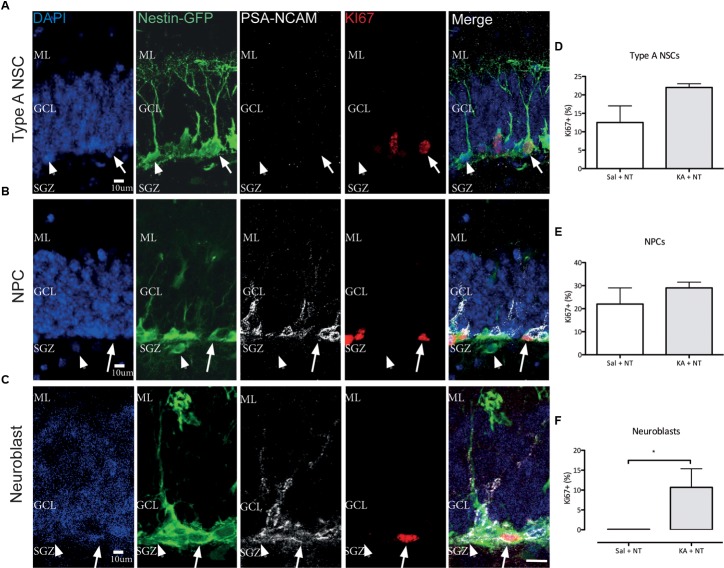
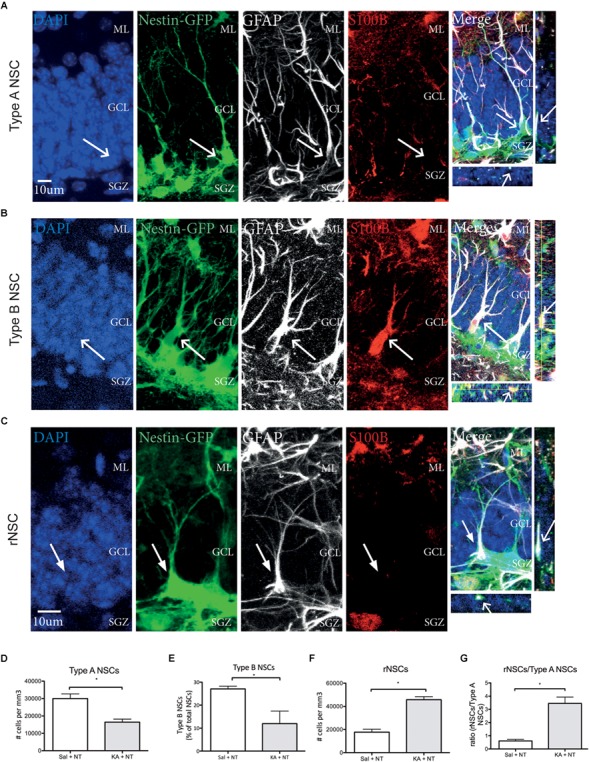
Convulsive seizures promote adult hippocampal neurogenesis (AHN) through a transient activation of neural stem/progenitor cells (NSPCs) in the subgranular zone (SGZ) of the dentate gyrus (DG). However, in a significant population of epilepsy patients, non-convulsive seizures (ncSZ) are observed. The response of NSPCs to non-convulsive seizure induction has not been characterized before. We here studied first the short-term effects of controlled seizure induction on NSPCs fate and identity. We induced seizures of controlled intensity by intrahippocampally injecting increasing doses of the chemoconvulsant kainic acid (KA) and analyzed their effect on subdural EEG recordings, hippocampal structure, NSPC proliferation and the number and location of immature neurons shortly after seizure onset. After establishing a KA dose that elicits ncSZ, we then analyzed the effects of ncSZ on NSPC proliferation and NSC identity in the hippocampus. ncSZ specifically triggered neuroblast proliferation, but did not induce proliferation of NSPCs in the SGZ, 3 days post seizure onset. However, ncSZ induced significant changes in NSPC composition in the hippocampus, including the generation of reactive NSCs. Interestingly, intrahippocampal injection of a combination of two anti microRNA oligonucleotides targeting microRNA-124 and -137 normalized neuroblast proliferation and prevented NSC loss in the DG upon ncSZ. Our results show for the first time that ncSZ induce significant changes in neuroblast proliferation and NSC composition. Simultaneous antagonism of both microRNA-124 and -137 rescued seizure-induced alterations in NSPC, supporting their coordinated action in the regulation of NSC fate and proliferation and their potential for future seizure therapies.
惊厥性癫痫发作通过短暂激活齿状回颗粒下区(SGZ)的神经干细胞/祖细胞(NSPCs)来促进成人海马神经发生(AHN)。然而,在相当一部分癫痫患者中,会观察到非惊厥性癫痫发作(ncSZ)。此前尚未明确NSPCs对非惊厥性癫痫发作诱导的反应。我们在此首先研究了可控性癫痫发作诱导对NSPCs命运和特性的短期影响。我们通过海马内注射递增剂量的化学惊厥剂 kainic acid(KA)诱导可控强度的癫痫发作,并在癫痫发作开始后不久分析其对硬膜下脑电图记录、海马结构、NSPC增殖以及未成熟神经元数量和位置的影响。在确定能引发ncSZ的KA剂量后,我们接着分析了ncSZ对海马中NSPC增殖和神经干细胞特性的影响。癫痫发作开始后3天,ncSZ特异性地触发了神经母细胞增殖,但未诱导SGZ中的NSPCs增殖。然而,ncSZ诱导了海马中NSPC组成的显著变化,包括反应性神经干细胞的产生。有趣的是,海马内注射靶向microRNA - 124和 - 137的两种抗微小RNA寡核苷酸组合可使神经母细胞增殖正常化,并防止ncSZ发作时齿状回中的神经干细胞丢失。我们的结果首次表明,ncSZ会诱导神经母细胞增殖和神经干细胞组成发生显著变化。同时拮抗microRNA - 124和 - 137可挽救癫痫发作诱导的NSPC改变,支持它们在调节神经干细胞命运和增殖中的协同作用以及它们在未来癫痫治疗中的潜力。