Department of Laboratory Medicine, Yonsei University College of Medicine, Seoul, Korea.
Brain Korea 21 PLUS Project for Medical Science, Yonsei University, Seoul, Korea.
PLoS One. 2019 Mar 6;14(3):e0212228. doi: 10.1371/journal.pone.0212228. eCollection 2019.
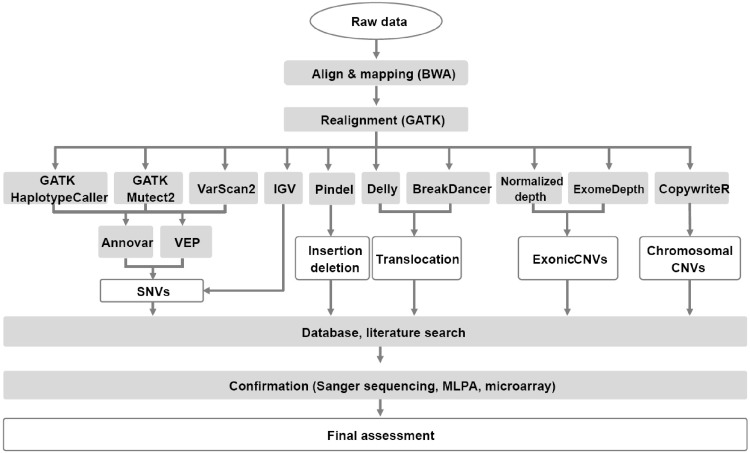
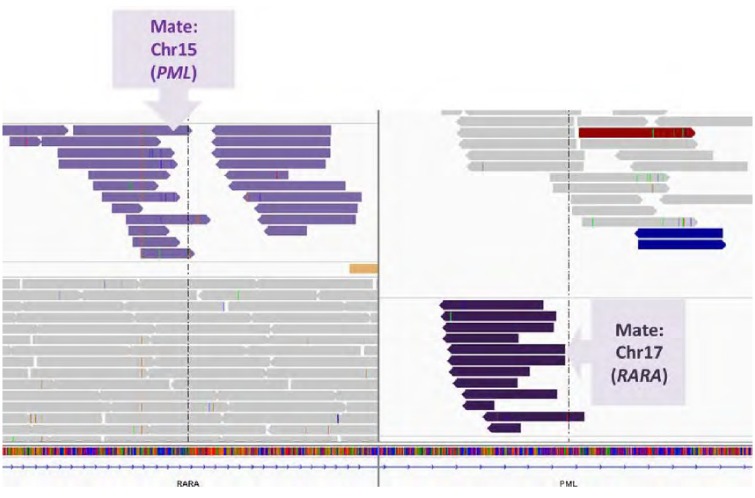
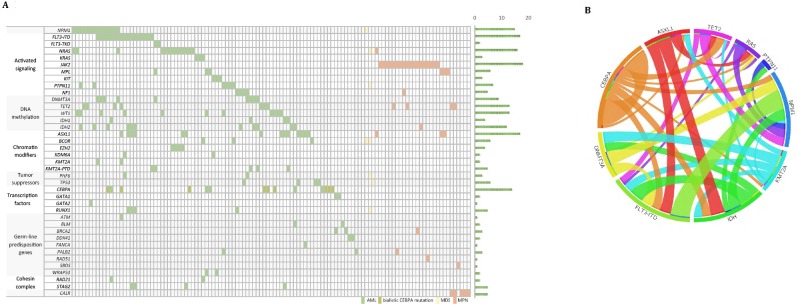
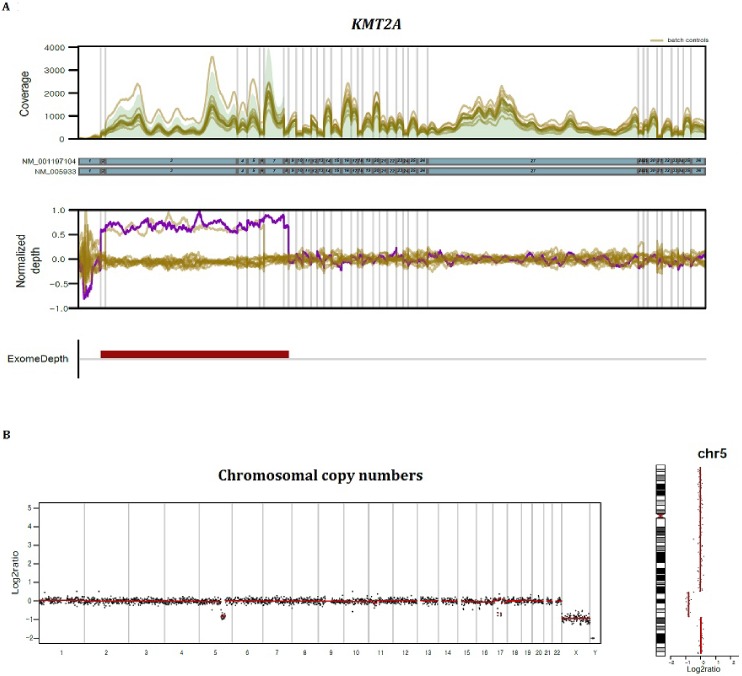
The 2016 World Health Organization classification introduced a number of genes with somatic mutations and a category for germline predisposition syndromes in myeloid neoplasms. We have designed a comprehensive next-generation sequencing assay to detect somatic mutations, translocations, and germline mutations in a single assay and have evaluated its clinical utility in patients with myeloid neoplasms. Extensive and specified bioinformatics analyses were undertaken to detect single nucleotide variations, FLT3 internal tandem duplication, genic copy number variations, and chromosomal copy number variations. This enabled us to maximize the clinical utility of the assay, and we concluded that, as a single assay, it can be a good supplement for many conventional tests, including Sanger sequencing, RT-PCR, and cytogenetics. Of note, we found that 8.4-11.6% of patients with acute myeloid leukemia and 12.9% of patients with myeloproliferative neoplasms had germline mutations, and most were heterozygous carriers for autosomal recessive marrow failure syndromes. These patients often did not respond to standard chemotherapy, suggesting that germline predisposition may have distinct and significant clinical implications.
2016 年世界卫生组织分类系统引入了一些体细胞突变基因和一个用于髓系肿瘤种系易感性综合征的类别。我们设计了一种全面的下一代测序检测方法,以在单个检测中检测体细胞突变、易位和种系突变,并评估其在髓系肿瘤患者中的临床应用。进行了广泛和特定的生物信息学分析,以检测单核苷酸变异、FLT3 内部串联重复、基因拷贝数变异和染色体拷贝数变异。这使我们能够最大程度地提高检测的临床应用价值,并得出结论,作为一种单一的检测方法,它可以作为许多常规检测方法(包括 Sanger 测序、RT-PCR 和细胞遗传学)的良好补充。值得注意的是,我们发现 8.4-11.6%的急性髓系白血病患者和 12.9%的骨髓增生性肿瘤患者存在种系突变,其中大多数是常染色体隐性骨髓衰竭综合征的杂合子携带者。这些患者通常对标准化疗无反应,这表明种系易感性可能具有独特且重要的临床意义。