Department of Laboratory Medicine, Seoul National University College of Medicine, 101 Daehak-ro, Jongno-gu, Seoul, 03080, Republic of Korea.
Department of Laboratory Medicine, Chung-Ang University Hospital, Seoul, Republic of Korea.
Hum Genomics. 2023 Feb 23;17(1):13. doi: 10.1186/s40246-023-00458-8.
Therapy-related myeloid neoplasm (T-MN) rarely occurs among cancer survivors, and was characterized by poor prognosis. T-MN has germline predisposition in a considerable proportion. Here, clinical characteristics and germline/somatic variant profiles in T-MN patients were investigated, and the findings were compared with those of previous studies.
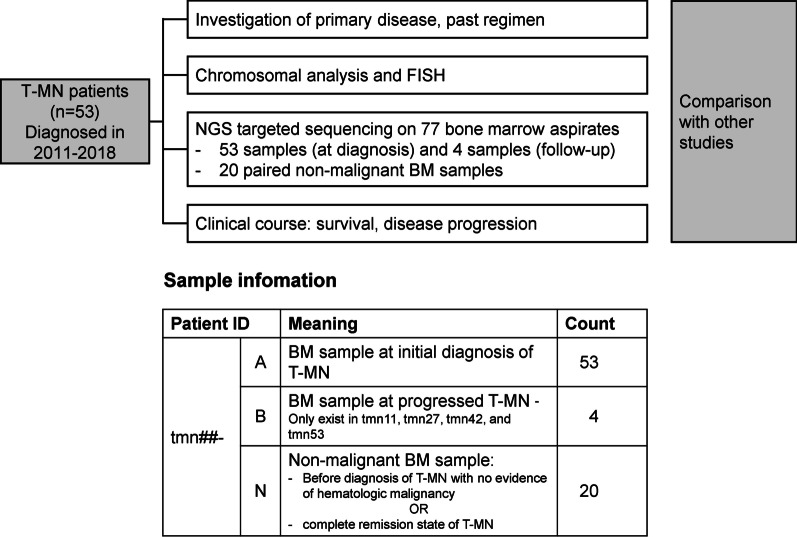
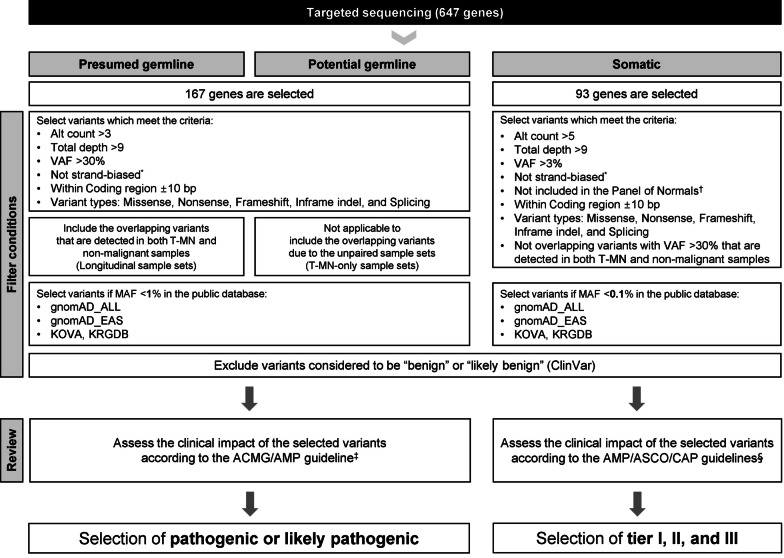
A review of medical records, cytogenetic study, targeted sequencing by next-generation sequencing, and survival analysis were performed on 53 patients with T-MN at a single institution in Korea.
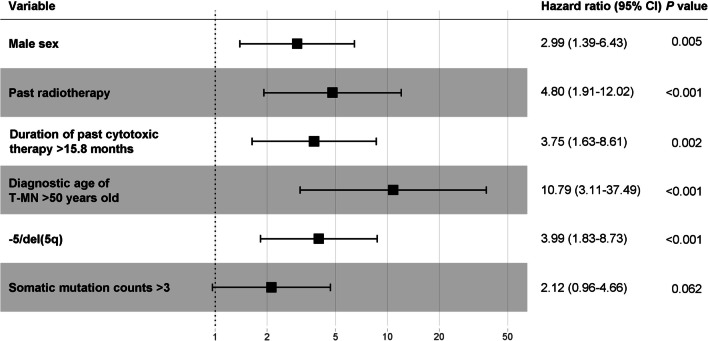
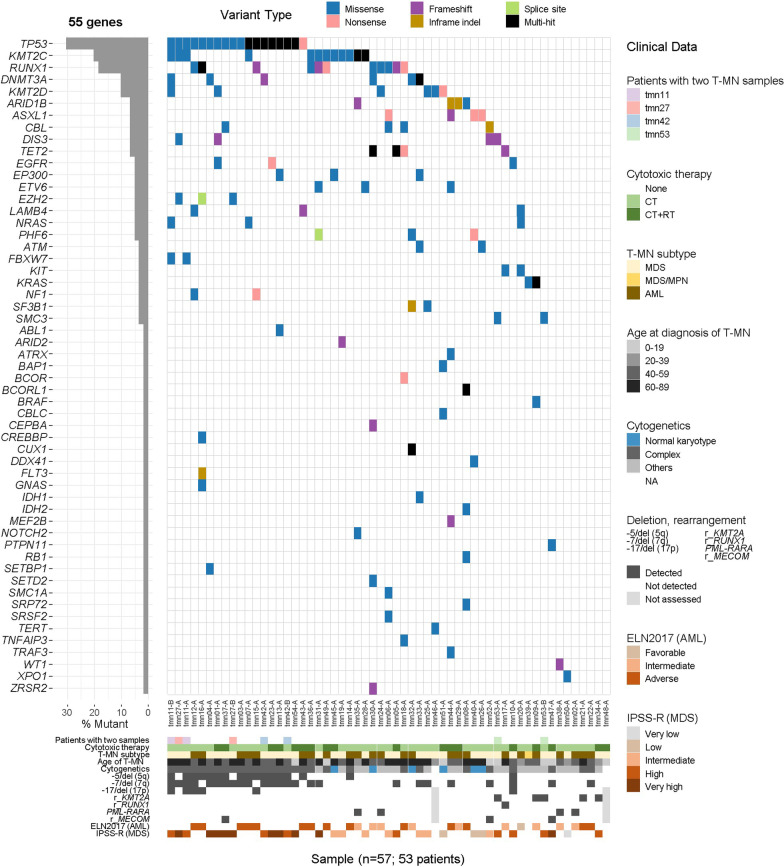
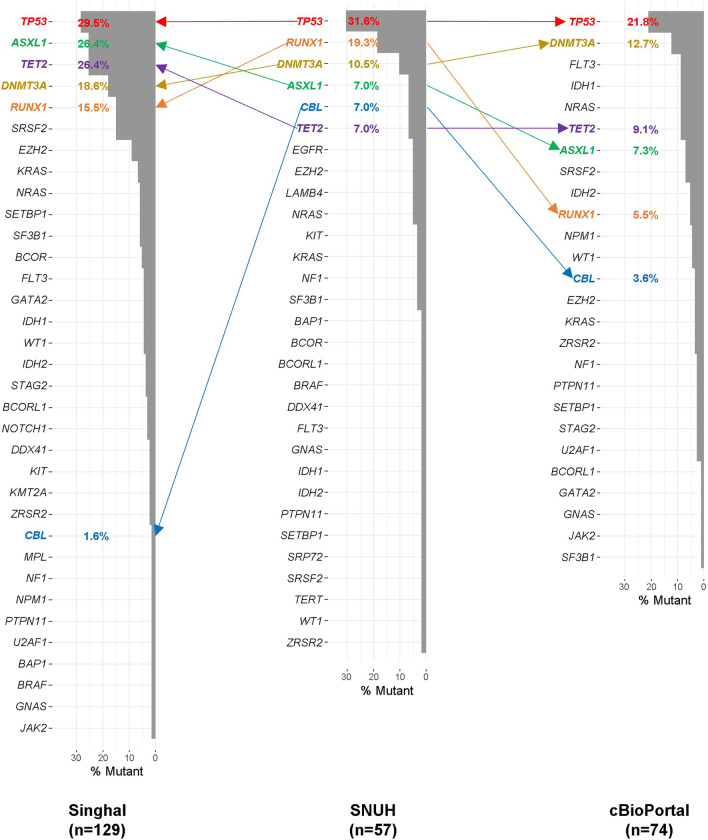
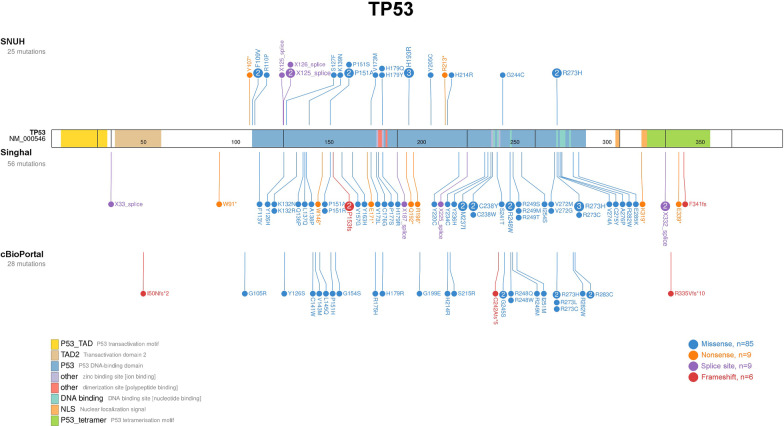
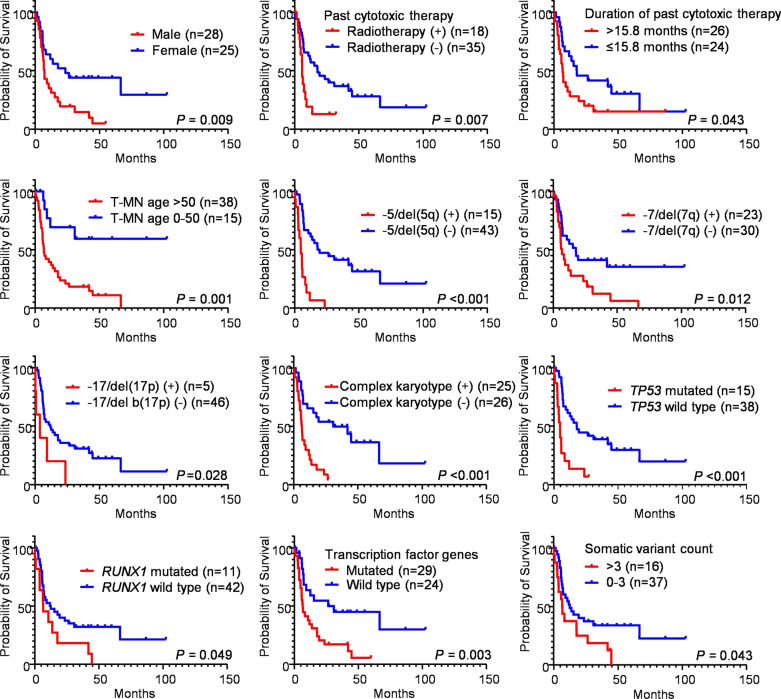
The patients were relatively younger compared to T-MN patients in other studies. Our T-MN patients showed a high frequency of complex karyotypes, -5/del(5q), and -7/del(7q), which was similar to the Japanese study group but higher than the Australian study group. The most common primary disease was non-Hodgkin lymphoma, followed by breast cancer. The detailed distributions of primary diseases were different across study groups. Seven patients (13.2%) harbored deleterious presumed/potential germline variants in cancer predisposition genes (CPG) such as BRIP1, CEBPA, DDX41, FANCM, NBN, NF1, and RUNX1. In the somatic variant profile, TP53 was the most frequently mutated gene, which was consistent with the previous studies about T-MN. However, the somatic variant frequency in our study group was lower than in other studies. Adverse factors for overall survival were male sex, older age, history of previous radiotherapy, previous longer cytotoxic therapy, and -5/del(5q).
The findings of our study corroborate important information about T-MN patients. As well as a considerable predisposition to CPG, the clinical characteristics and somatic variant profile showed distinctive patterns. Germline variant testing should be recommended for T-MN patients. If the T-MN patients harbor pathogenic germline variants, the family members for stem cell donation should be screened for carrier status through germline variant testing to avoid donor-derived myeloid neoplasm. For the prediction of the prognosis in T-MN patients, sex, age, past treatment history, and cytogenetic findings can be considered.
治疗相关髓系肿瘤(T-MN)在癌症幸存者中很少见,且预后较差。T-MN 在相当一部分患者中存在种系易感性。本研究旨在探讨 T-MN 患者的临床特征、种系/体细胞变异谱,并与既往研究进行比较。
回顾性分析韩国某单中心 53 例 T-MN 患者的临床资料、细胞遗传学研究、下一代测序靶向测序和生存分析。
与其他研究相比,本研究中的 T-MN 患者相对年轻。我们的 T-MN 患者具有较高的复杂核型、-5/del(5q)和-7/del(7q)频率,与日本研究组相似,但高于澳大利亚研究组。最常见的原发性疾病是非霍奇金淋巴瘤,其次是乳腺癌。不同研究组的原发性疾病分布存在差异。7 例(13.2%)患者携带 BRIP1、CEBPA、DDX41、FANCM、NBN、NF1 和 RUNX1 等癌症易感性基因(CPG)的有害种系变异。在体细胞变异谱中,TP53 是最常突变的基因,与以往关于 T-MN 的研究一致。然而,本研究组的体细胞变异频率低于其他研究。总生存的不良因素为男性、年龄较大、既往放疗史、既往较长时间细胞毒性治疗和-5/del(5q)。
本研究结果进一步证实了 T-MN 患者的重要信息。除了 CPG 存在较大的易感性外,临床特征和体细胞变异谱也呈现出独特的模式。应建议对 T-MN 患者进行种系变异检测。如果 T-MN 患者存在致病性种系变异,应通过种系变异检测对干细胞捐献者的家庭成员进行携带者筛查,以避免供者衍生的髓系肿瘤。对于 T-MN 患者的预后预测,可以考虑性别、年龄、既往治疗史和细胞遗传学发现。