Department of Biochemistry, Microbiology and Immunology, University of Ottawa, Ottawa, Ontario, Canada.
Department of Biochemistry, Microbiology and Immunology, University of Ottawa, Ottawa, Ontario, Canada
mSphere. 2019 Mar 6;4(2):e00102-19. doi: 10.1128/mSphere.00102-19.
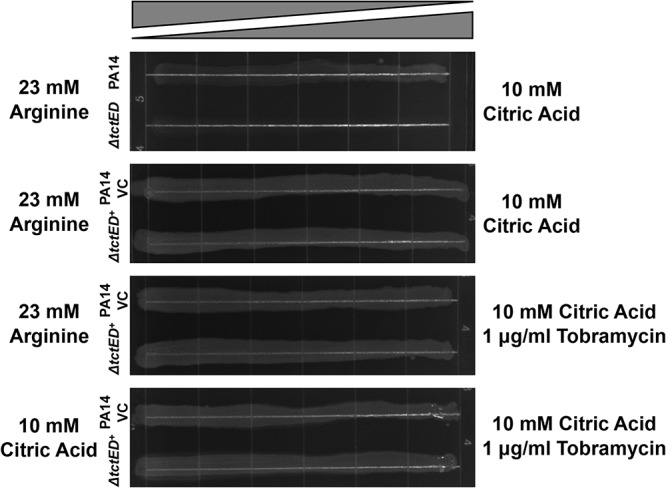
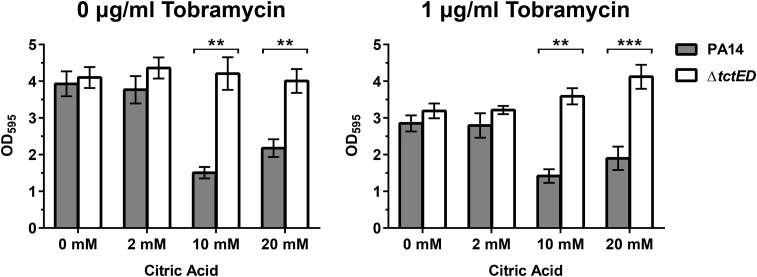
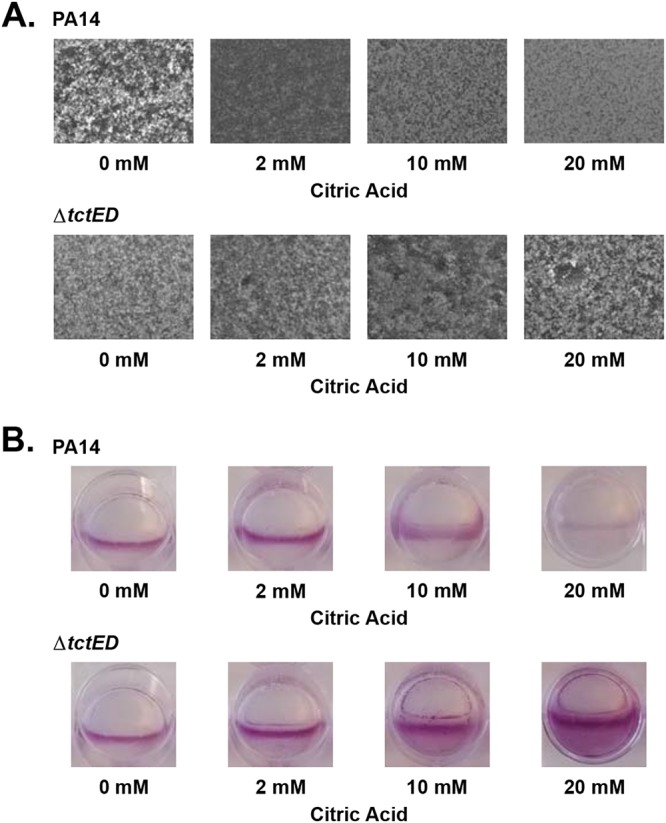
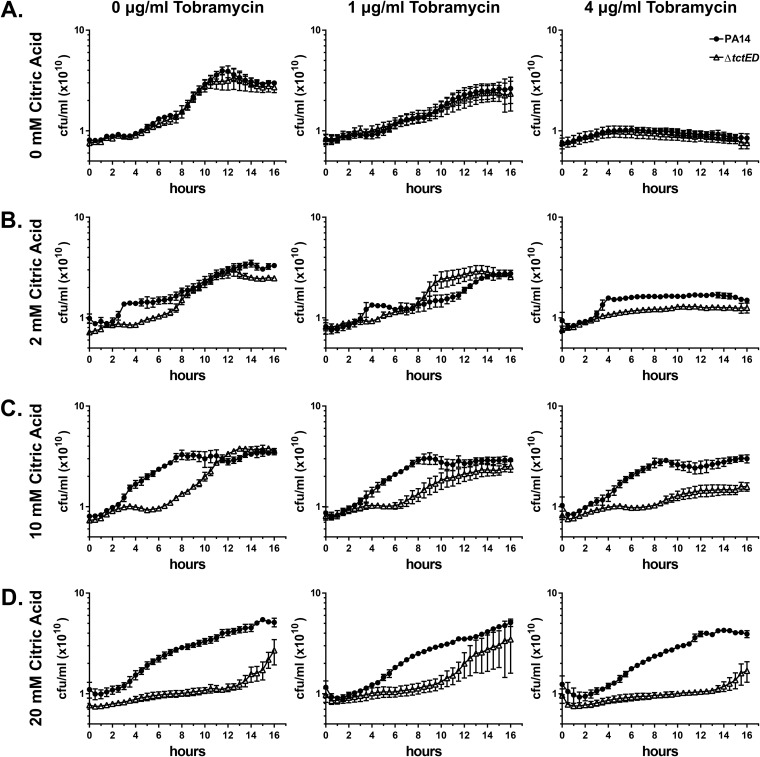
The two-component system TctD-TctE is important for regulating the uptake of tricarboxylic acids in TctD-TctE accomplishes this through derepression of the gene , which encodes a tricarboxylic acid-specific porin. Previous work from our lab revealed that TctD-TctE in also has a role in resistance to aminoglycoside antibiotics. The aim of this study was to further characterize the role of TctD-TctE in in the presence of citric acid. Here it was found that deletion of PA14 TctD-TctE (Δ) resulted in a 4-fold decrease in the biofilm bactericidal concentrations of the aminoglycosides tobramycin and gentamicin when citric acid was present in nutrient media. Tobramycin accumulation assays demonstrated that deletion of TctD-TctE resulted in an increase in the amount of tobramycin retained in biofilm cells. The PA14 wild type responded to increasing concentrations of citric acid by producing less biofilm. In contrast, the amount of Δ mutant biofilm formation remained constant or enhanced. Furthermore, the Δ strain was incapable of growing on citric acid as a sole carbon source and was highly reduced in its ability to grow in the presence of citric acid even when an additional carbon source was available. Use of phenotypic and genetic microarrays found that this growth deficiency of the Δ mutant is unique to citric acid and that multiple metabolic genes are dysregulated. This work demonstrates that TctD-TctE in has a role in biofilm development that is dependent on citric acid and that is separate from the previously characterized involvement in resistance to antibiotics. Nutrient availability is an important contributor to the ability of bacteria to establish successful infections in a host. is an opportunistic pathogen in humans causing infections that are difficult to treat. In part, its success is attributable to a high degree of metabolic versatility. is able to sense and respond to varied and limited nutrient stress in the host environment. Two-component systems are important sensors-regulators of cellular responses to environmental stresses, such as those encountered in the host. This work demonstrates that the response by the two-component system TctD-TctE to the presence of citric acid has a role in biofilm formation, aminoglycoside susceptibility, and growth in .
双组分系统 TctD-TctE 对于调节三羧酸的摄取很重要。TctD-TctE 通过去阻遏编码三羧酸特异性孔蛋白的基因来实现这一点。我们实验室的先前工作表明,TctD-TctE 在 中也与对抗氨基糖苷类抗生素的耐药性有关。本研究的目的是进一步研究 TctD-TctE 在柠檬酸存在下在 中的作用。结果发现,当柠檬酸存在于营养培养基中时,缺失 PA14 TctD-TctE(Δ)会导致氨基糖苷类抗生素妥布霉素和庆大霉素的生物膜杀菌浓度降低 4 倍。妥布霉素积累试验表明,缺失 TctD-TctE 会导致生物膜细胞中保留的妥布霉素量增加。PA14 野生型通过产生较少的生物膜来响应柠檬酸浓度的增加。相比之下,Δ 突变体生物膜形成的量保持不变或增强。此外,Δ 菌株不能以柠檬酸作为唯一碳源生长,即使有额外的碳源可用,其在柠檬酸存在下的生长能力也大大降低。使用表型和遗传微阵列发现,Δ 突变体的这种生长缺陷是柠檬酸特有的,并且多个代谢基因失调。这项工作表明, 中的 TctD-TctE 在依赖柠檬酸的生物膜发育中起作用,并且与先前表征的对抗生素的耐药性无关。营养物质的可用性是细菌在宿主中成功建立感染的能力的重要贡献者。 是人类的机会性病原体,引起难以治疗的感染。在某种程度上,它的成功归因于高度的代谢多功能性。 能够感知和响应宿主环境中各种有限的营养压力。双组分系统是细胞对环境压力(如宿主中遇到的压力)的感应和调节的重要传感器-调节剂。这项工作表明,双组分系统 TctD-TctE 对柠檬酸存在的反应在生物膜形成、氨基糖苷类敏感性和 中的生长中起作用。