Wagner Katharina, Krause Katrin, Gallegos-Monterrosa Ramses, Sammer Dominik, Kovács Ákos T, Kothe Erika
Microbial Communication, Institute of Microbiology, Friedrich Schiller University Jena, Jena, Germany.
Terrestrial Biofilms Group, Institute of Microbiology, Friedrich Schiller University Jena, Jena, Germany.
Front Microbiol. 2019 Feb 20;10:307. doi: 10.3389/fmicb.2019.00307. eCollection 2019.
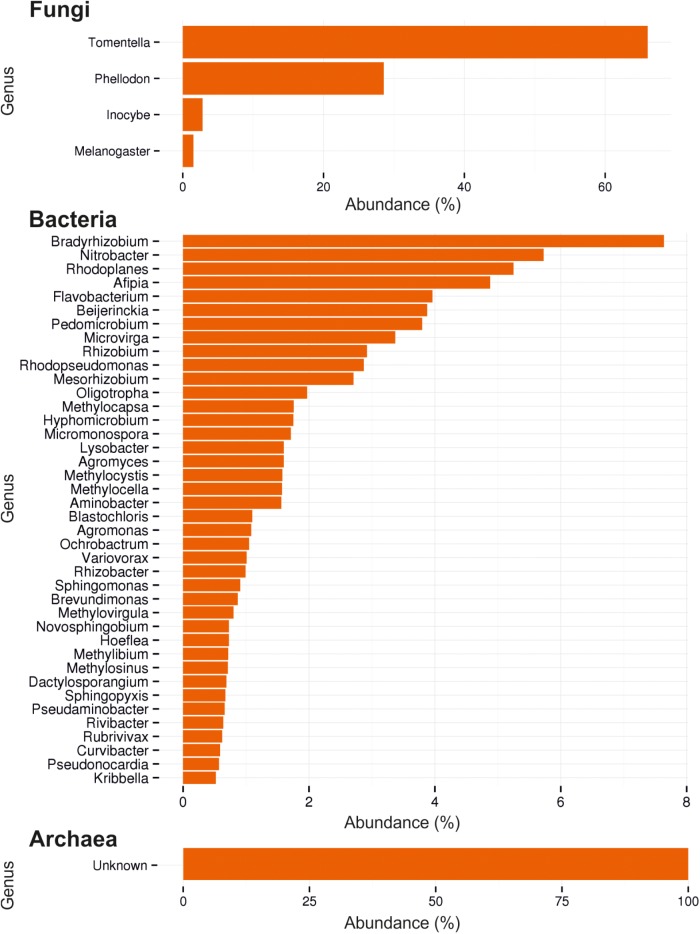
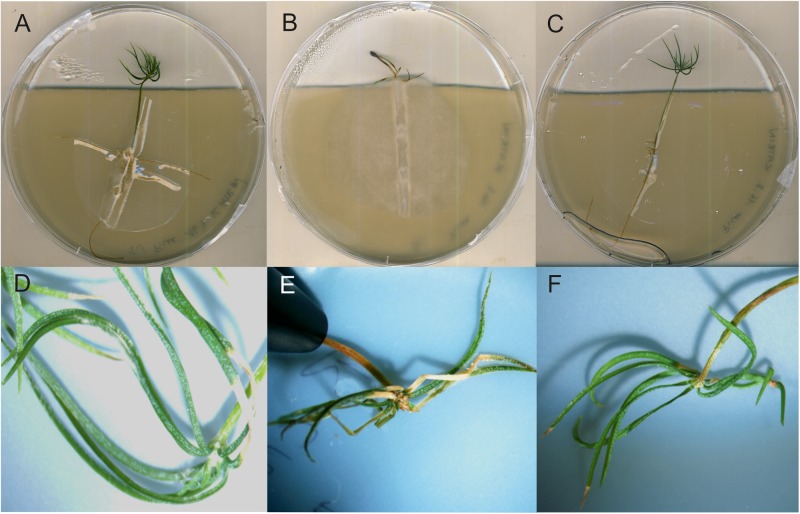
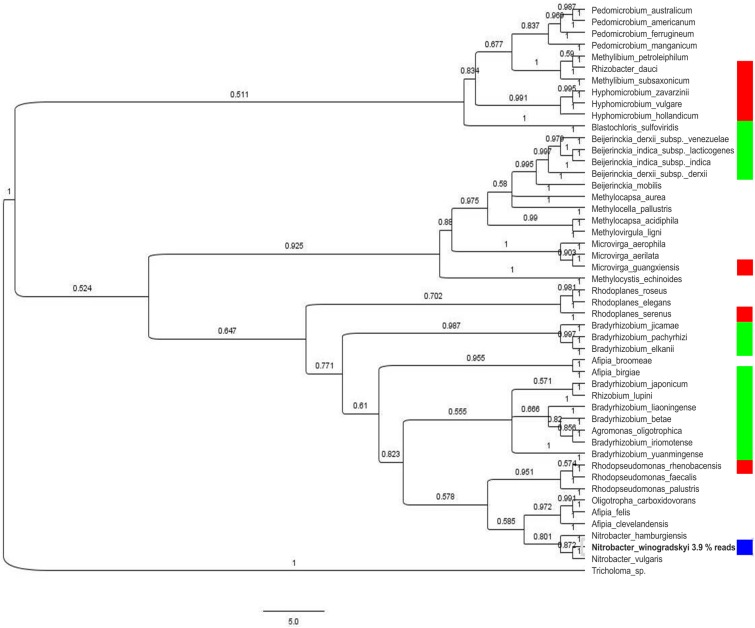
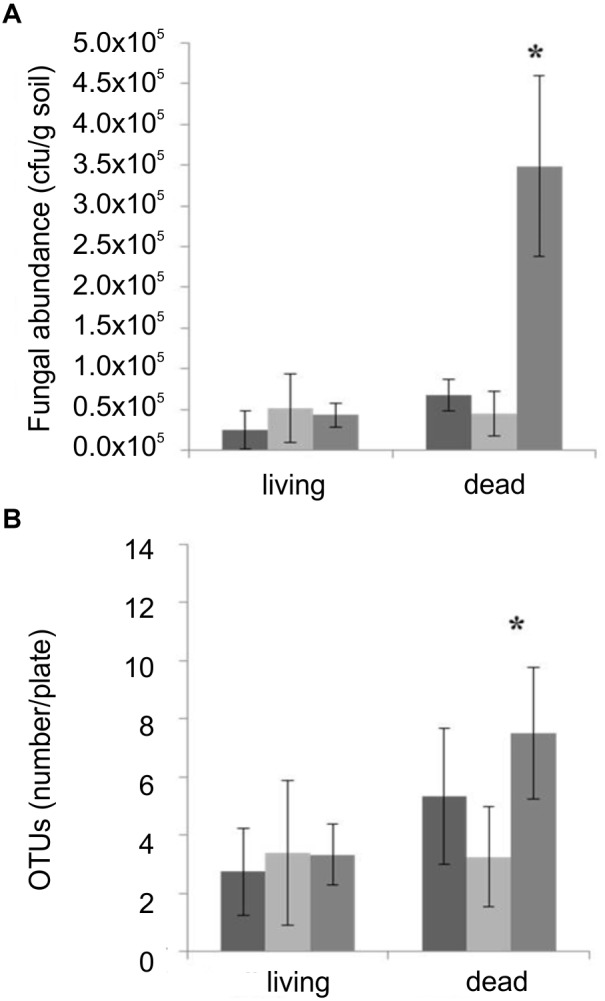
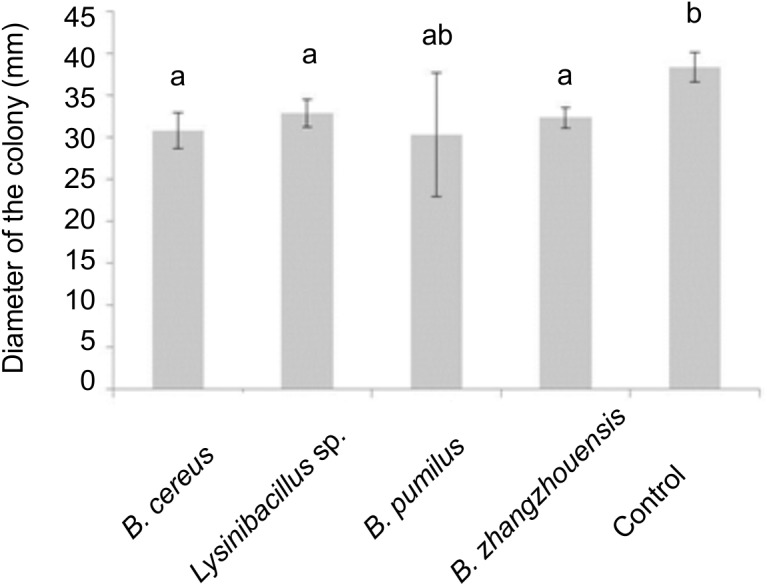
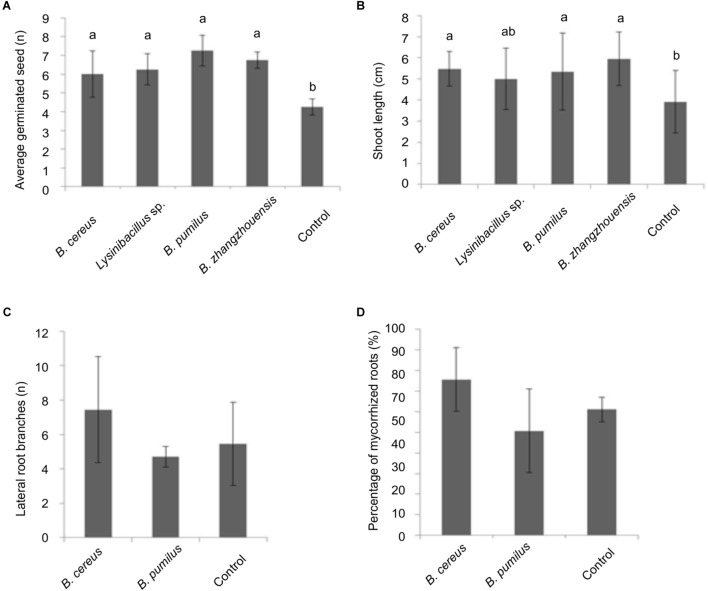
The contribution of the mycorrhizospheric microbes in a stand of ectomycorrhizal Norway spruce () featuring mycorrhiza with the basidiomycete was addressed by microbiome analysis and reconstruction of microbial as well as plant-microbe interactions. The protective role of the mycorrhizal fungus with respect to pathogen attack could be validated against and in co-cultures revealing reduced pathogen growth, higher survival rate of the spruce trees and reduced symptoms on needles upon symbiosis with The community structure was shown to yield a high diversity in ECM forming basidiomycetes of and associated with a rich bacterial diversity dominated by with the most abundant (3.9%). Isolated bacteria were then used to address plant growth promoting abilities, which included production of the phytohormone indole-3-acetic acid (performed by 74% of the bacterial isolates), siderophores (22%), and phosphate mobilization (23%). Among the isolates, mycorrhiza helper bacteria (MHB) were identified, with MRZ-1 inducing hyperbranching in , supporting tree germination, shoot elongation, and root formation as well as higher mycorrhization rates. Thus, a huge pool of potential MHB and fungal community with widely distributed auxin-production potential extended the ability of to form ectomycorrhiza. The forest community profited from the mycorrhizal fungus , with spruce survival enhanced by 33% in microcosms using soil from the native habitat. A higher fungal abundance and diversity in cases where the tree had died during the experiment, showing that decomposition of plant litter from a dead tree supported a different community. thus actively structured the community of microorganisms in its habitat.
通过微生物群落分析以及微生物和植物-微生物相互作用的重建,研究了外生菌根挪威云杉林中菌根际微生物对担子菌根菌的贡献。在共培养中,相对于病原菌攻击,菌根真菌的保护作用可针对[病原菌名称1]和[病原菌名称2]得到验证,结果显示病原菌生长减少、云杉树存活率提高以及与[菌根真菌名称]共生后针叶上的症状减轻。群落结构显示,在形成外生菌根的担子菌[担子菌名称1]和[担子菌名称2]中具有高度多样性,并与以[细菌属名称]为主导的丰富细菌多样性相关,其中最丰富的[细菌种名称]占3.9%。然后使用分离出的细菌研究促进植物生长的能力,包括植物激素吲哚-3-乙酸的产生(74%的细菌分离株可产生)、铁载体(22%)和磷素活化(23%)。在分离株中,鉴定出了菌根辅助细菌(MHB),其中MRZ-1在[植物名称]中诱导超分枝,支持树木发芽、枝条伸长和根系形成以及更高的菌根形成率。因此,大量潜在的MHB和具有广泛分布的生长素生产潜力的真菌群落扩展了[植物名称]形成外生菌根的能力。森林群落受益于菌根真菌[菌根真菌名称],在使用来自原生栖息地土壤的微观世界中,云杉存活率提高了33%。在实验过程中树木死亡的情况下,真菌丰度和多样性更高,表明死树植物凋落物的分解支持了不同的群落。因此,[菌根真菌名称]积极构建了其栖息地中的微生物群落。