Department of Neurosurgery, Charité-Universitaetsmedizin Berlin, Berlin, Germany
Brandenburg Medical School Theodor Fontane, Campus Bad Saarow, Bad Saarow, Germany
J Bone Joint Surg Am. 2019 Mar 6;101(5):400-411. doi: 10.2106/JBJS.18.00022.
Sacroiliac joint pain is increasingly recognized as a cause of low back pain. We compared the safety and effectiveness of minimally invasive sacroiliac joint arthrodesis using triangular titanium implants and conservative management in patients with chronic sacroiliac joint pain.
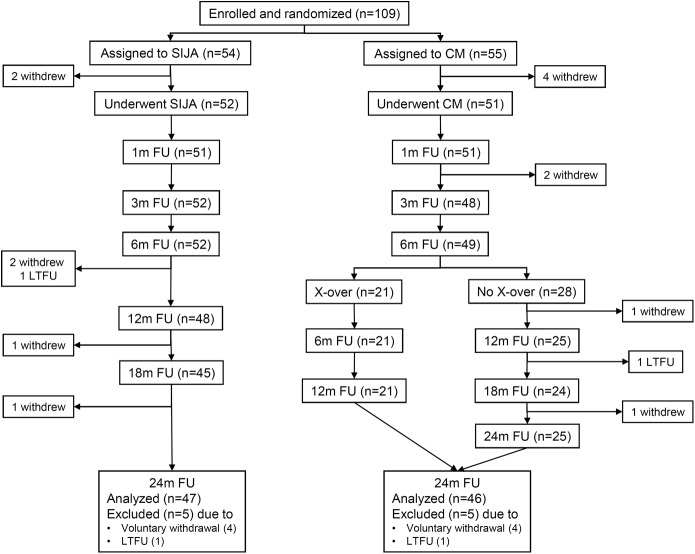
This study was a prospective, multicenter randomized controlled trial of adults with chronic sacroiliac joint pain assigned to either conservative management or sacroiliac joint arthrodesis with triangular titanium implants. The study end points included self-rated low back pain (visual analog scale [VAS]), back dysfunction (Oswestry Disability Index [ODI]), and quality of life. Ninety percent of subjects in both groups completed the study.
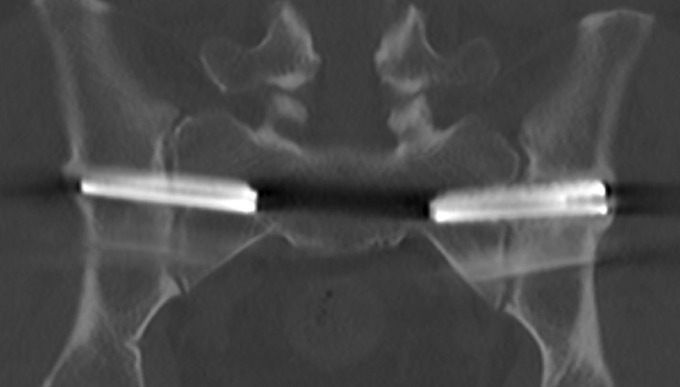
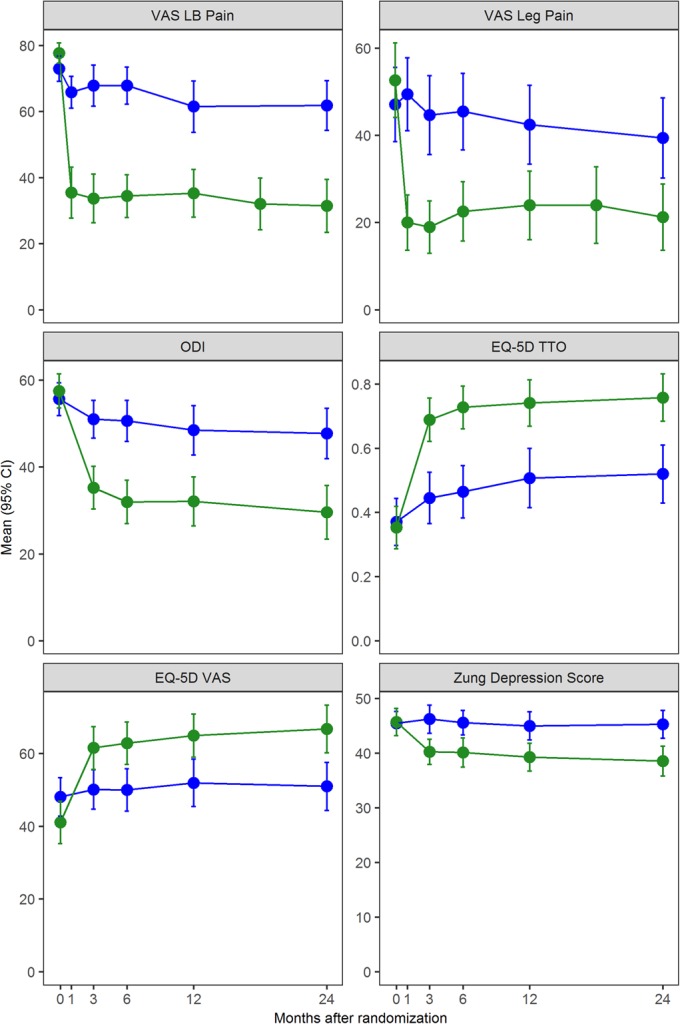
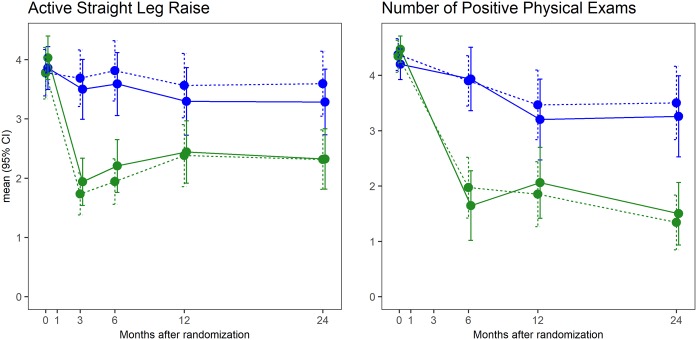
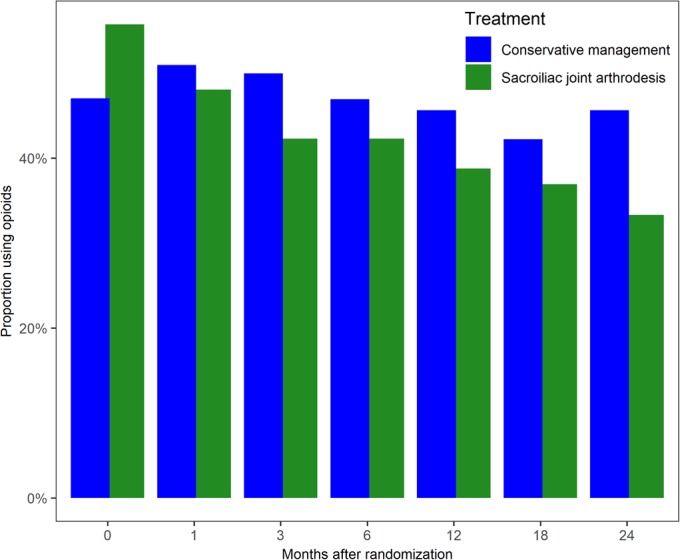
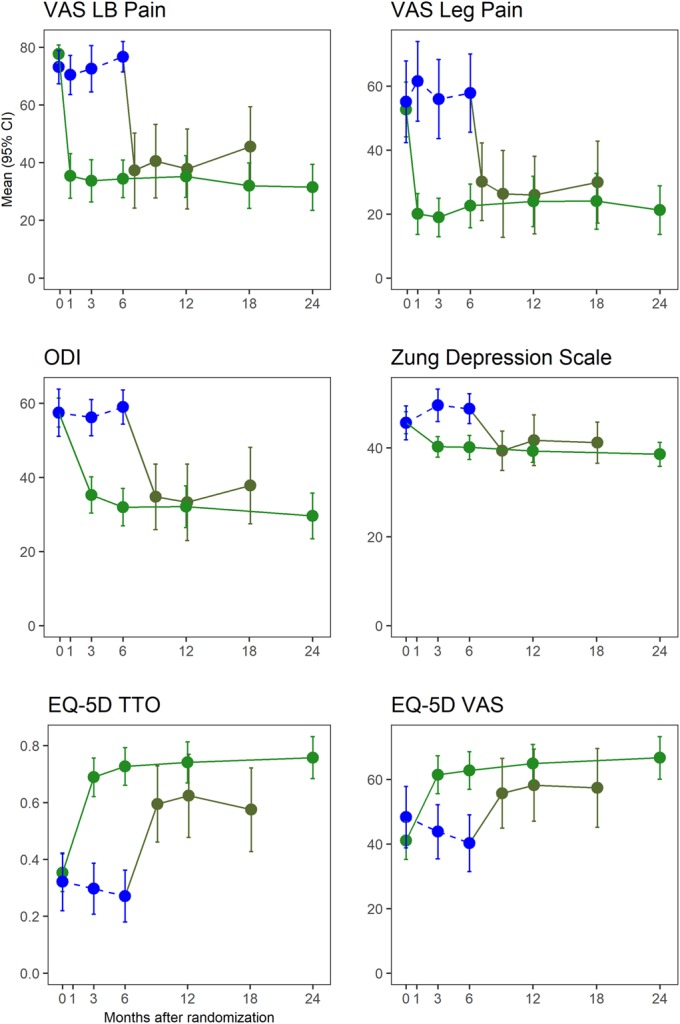
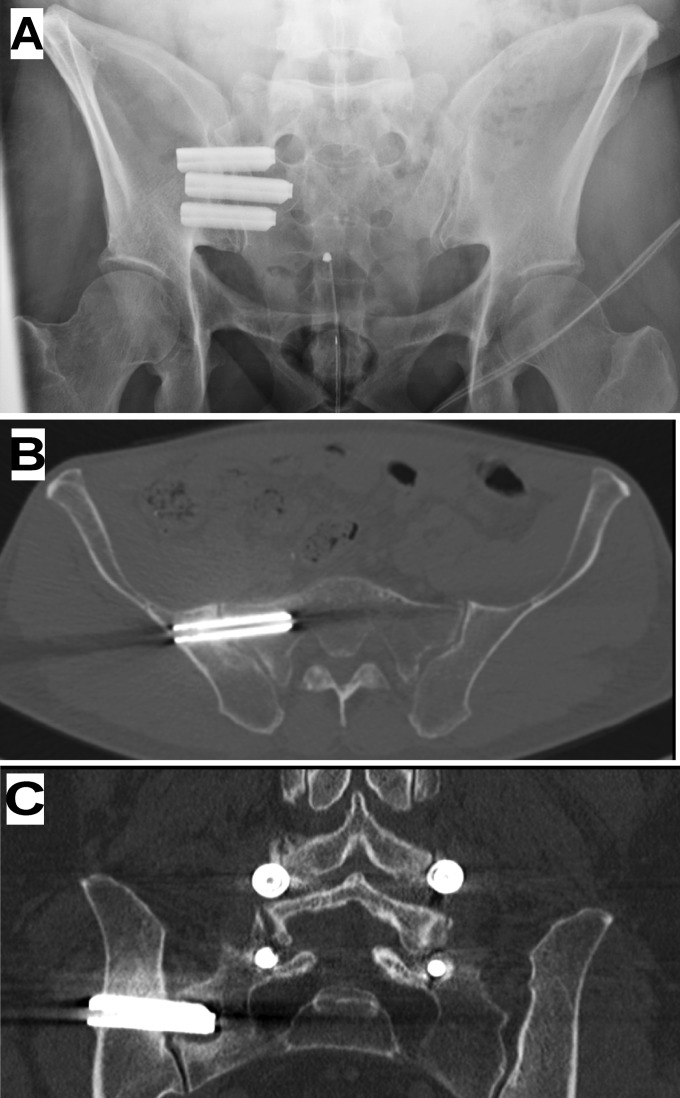
Between June 6, 2013, and May 15, 2015, 103 subjects were randomly assigned to conservative management (n = 51) or sacroiliac joint arthrodesis (n = 52). At 2 years, the mean low back pain improved by 45 points (95% confidence interval [CI], 37 to 54 points) after sacroiliac joint arthrodesis and 11 points (95% CI, 2 to 20 points) after conservative management, with a mean difference between groups of 34 points (p < 0.0001). The mean ODI improved by 26 points (95% CI, 21 to 32 points) after sacroiliac joint arthrodesis and 8 points (95% CI, 2 to 14 points) after conservative management, with a mean difference between groups of 18 points (p < 0.0001). Parallel improvements were seen in quality of life. In the sacroiliac joint arthrodesis group, the prevalence of opioid use decreased from 56% at baseline to 33% at 2 years (p = 0.009), and no significant change was observed in the conservative management group (47.1% at baseline and 45.7% at 2 years). Subjects in the conservative management group, after crossover to the surgical procedure, showed improvements in all measures similar to those originally assigned to sacroiliac joint arthrodesis. In the first 6 months, the frequency of adverse events did not differ between groups (p = 0.664). By month 24, we observed 39 severe adverse events after sacroiliac joint arthrodesis, including 2 cases of sacroiliac joint pain, 1 case of a postoperative gluteal hematoma, and 1 case of postoperative nerve impingement. The analysis of computed tomographic (CT) imaging at 12 months after sacroiliac joint arthrodesis showed radiolucencies adjacent to 8 implants (4.0% of all implants).
For patients with chronic sacroiliac joint pain due to joint degeneration or disruption, minimally invasive sacroiliac joint arthrodesis with triangular titanium implants was safe and more effective throughout 2 years in improving pain, disability, and quality of life compared with conservative management.
Therapeutic Level I. See Instructions for Authors for a complete description of levels of evidence.
骶髂关节疼痛越来越被认为是腰痛的一个原因。我们比较了微创骶髂关节融合术使用三角钛植入物和慢性骶髂关节疼痛患者的保守治疗的安全性和有效性。
这是一项前瞻性、多中心、随机对照试验,纳入了慢性骶髂关节疼痛的成年人,分为保守治疗或骶髂关节融合术加三角钛植入物。研究终点包括自评腰痛(视觉模拟评分[VAS])、腰背功能障碍(Oswestry 残疾指数[ODI])和生活质量。两组各有 90%的受试者完成了研究。
2013 年 6 月 6 日至 2015 年 5 月 15 日,103 名受试者被随机分配至保守治疗组(n=51)或骶髂关节融合术组(n=52)。2 年后,骶髂关节融合术后腰痛平均改善 45 分(95%置信区间[CI],37 至 54 分),保守治疗后改善 11 分(95%CI,2 至 20 分),两组间平均差异为 34 分(p<0.0001)。骶髂关节融合术后 ODI 平均改善 26 分(95%CI,21 至 32 分),保守治疗后改善 8 分(95%CI,2 至 14 分),两组间平均差异为 18 分(p<0.0001)。生活质量也出现了平行改善。在骶髂关节融合术组,阿片类药物的使用率从基线时的 56%下降到 2 年时的 33%(p=0.009),而保守治疗组则没有显著变化(基线时为 47.1%,2 年时为 45.7%)。保守治疗组的受试者在交叉到手术治疗后,所有指标的改善均与最初被分配到骶髂关节融合术的受试者相似。在最初的 6 个月中,两组间不良事件的发生频率无差异(p=0.664)。到第 24 个月,我们观察到骶髂关节融合术后 39 例严重不良事件,包括 2 例骶髂关节疼痛、1 例术后臀血肿和 1 例术后神经压迫。对骶髂关节融合术后 12 个月的 CT 影像学分析显示,8 个植入物(所有植入物的 4.0%)周围有透光区。
对于因关节退变或破裂导致慢性骶髂关节疼痛的患者,微创骶髂关节融合术使用三角钛植入物在 2 年内安全且更有效,可改善疼痛、残疾和生活质量,优于保守治疗。
治疗性 I 级。请参阅作者说明以获取完整的证据水平描述。