Cheng Yifan, Feng Guoping, Moraru Carmen I
Department of Food Science, Cornell University, Ithaca, NY, United States.
Front Microbiol. 2019 Feb 21;10:191. doi: 10.3389/fmicb.2019.00191. eCollection 2019.
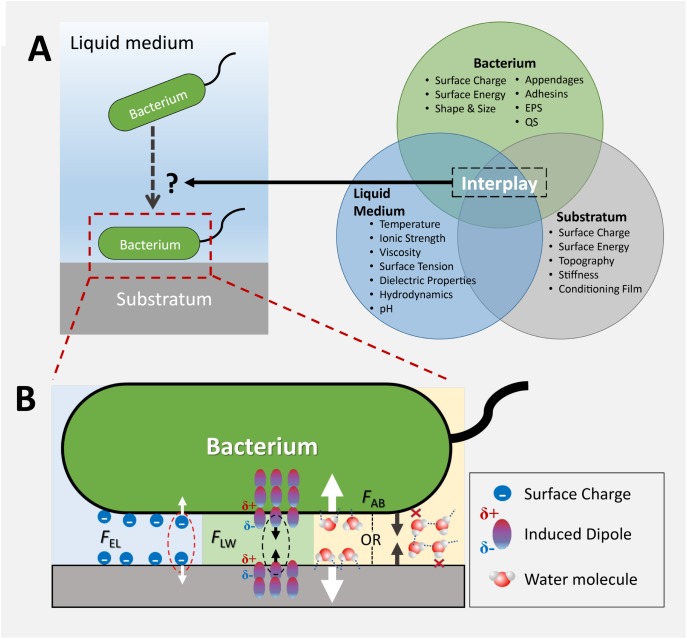
Bacterial attachment to material surfaces can lead to the development of biofilms that cause severe economic and health problems. The outcome of bacterial attachment is determined by a combination of bacterial sensing of material surfaces by the cell and the physicochemical factors in the near-surface environment. This paper offers a systematic review of the effects of surface topography on a range of antifouling mechanisms, with a focus on how topographical scale, from micro- to nanoscale, may influence bacterial sensing of and attachment to material surfaces. A good understanding of these mechanisms can facilitate the development of antifouling surfaces based on surface topography, with applications in various sectors of human life and activity including healthcare, food, and water treatment.
细菌附着于材料表面会导致生物膜的形成,进而引发严重的经济和健康问题。细菌附着的结果取决于细胞对材料表面的感知与近表面环境中的物理化学因素的综合作用。本文系统综述了表面形貌对一系列防污机制的影响,重点关注从微米级到纳米级的形貌尺度如何影响细菌对材料表面的感知和附着。深入了解这些机制有助于开发基于表面形貌的防污表面,并应用于人类生活和活动的各个领域,包括医疗保健、食品和水处理等。