The Miami Project To Cure Paralysis, Department of Neurological Surgery, University of Miami Miller School of Medicine, Miami, FL, USA.
Department of Neurobiology Research, Institute of Molecular Medicine, University of Southern Denmark, Odense, Denmark.
Acta Neuropathol. 2019 May;137(5):757-783. doi: 10.1007/s00401-019-01980-7. Epub 2019 Mar 7.
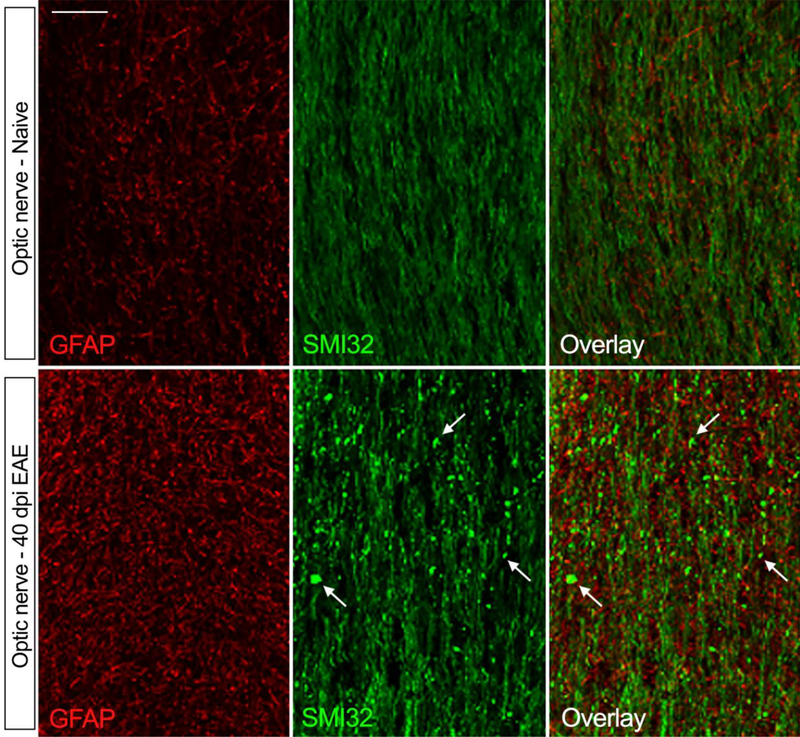
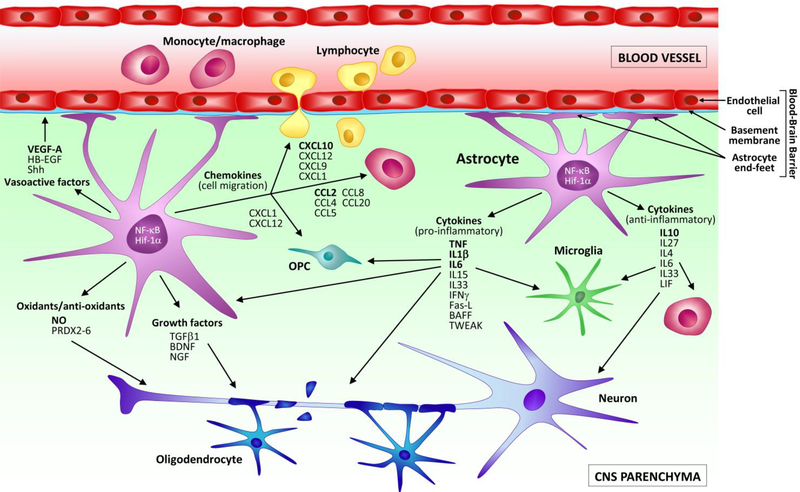
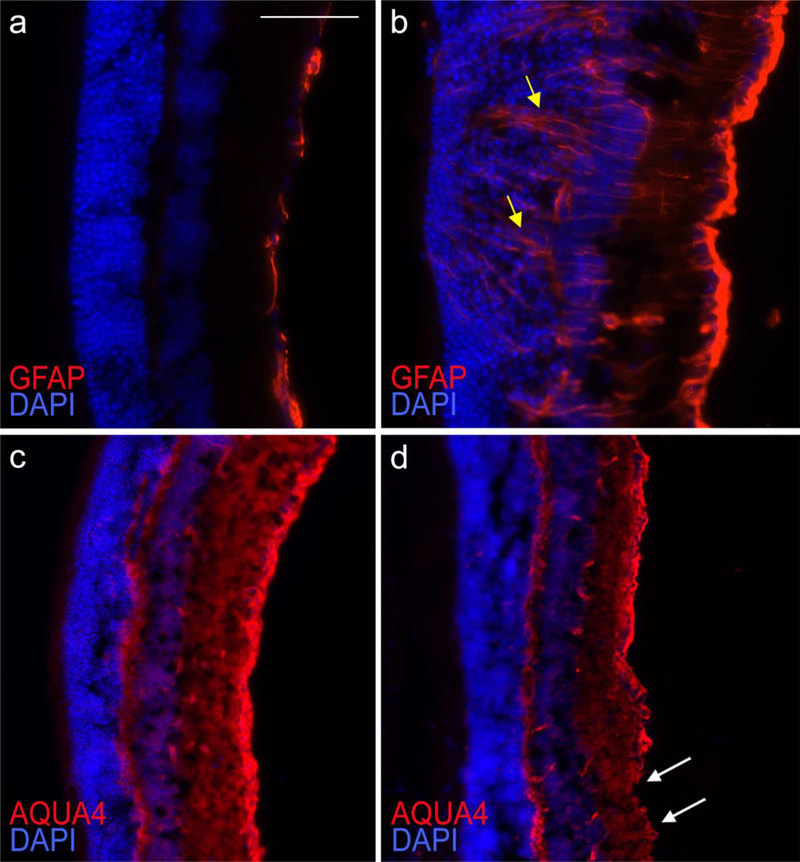
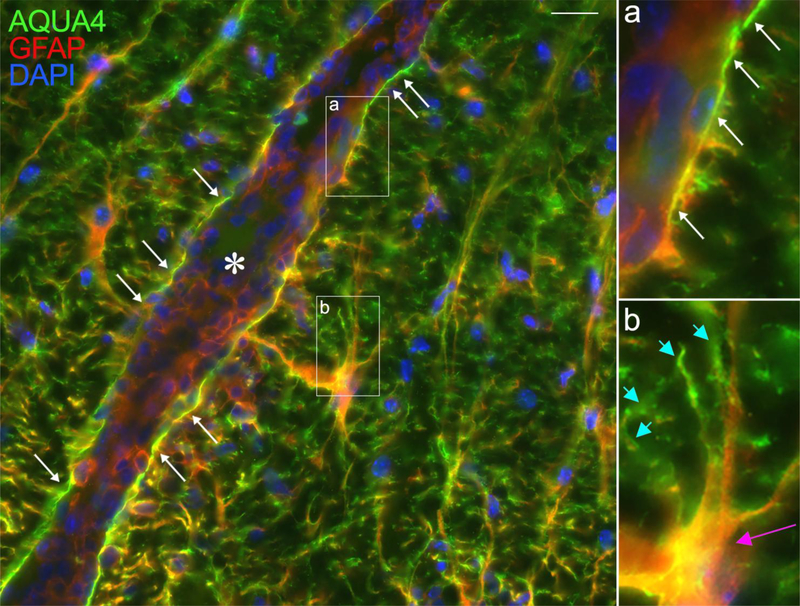
Neuroinflammation is the coordinated response of the central nervous system (CNS) to threats to its integrity posed by a variety of conditions, including autoimmunity, pathogens and trauma. Activated astrocytes, in concert with other cellular elements of the CNS and immune system, are important players in the modulation of the neuroinflammatory response. During neurological disease, they produce and respond to cellular signals that often lead to dichotomous processes, which can promote further damage or contribute to repair. This occurs also in multiple sclerosis (MS), where astrocytes are now recognized as key components of its immunopathology. Evidence supporting this role has emerged not only from studies in MS patients, but also from animal models, among which the experimental autoimmune encephalomyelitis (EAE) model has proved especially instrumental. Based on this premise, the purpose of the present review is to summarize the current knowledge of astrocyte behavior in MS and EAE. Following a brief description of the pathological characteristics of the two diseases and the main functional roles of astrocytes in CNS physiology, we will delve into the specific responses of this cell population, analyzing MS and EAE in parallel. We will define the temporal and anatomical profile of astroglial activation, then focus on key processes they participate in. These include: (1) production and response to soluble mediators (e.g., cytokines and chemokines), (2) regulation of oxidative stress, and (3) maintenance of BBB integrity and function. Finally, we will review the state of the art on the available methods to measure astroglial activation in vivo in MS patients, and how this could be exploited to optimize diagnosis, prognosis and treatment decisions. Ultimately, we believe that integrating the knowledge obtained from studies in MS and EAE may help not only better understand the pathophysiology of MS, but also uncover new signals to be targeted for therapeutic intervention.
神经炎症是中枢神经系统 (CNS) 对各种情况(包括自身免疫、病原体和创伤)对其完整性的威胁的协调反应。活化的星形胶质细胞与 CNS 和免疫系统的其他细胞成分一起,是调节神经炎症反应的重要参与者。在神经疾病中,它们产生和响应细胞信号,这些信号通常导致二分过程,这可能导致进一步的损伤或有助于修复。这种情况也发生在多发性硬化症 (MS) 中,星形胶质细胞现在被认为是其免疫病理学的关键组成部分。支持这一作用的证据不仅来自 MS 患者的研究,还来自动物模型,其中实验性自身免疫性脑脊髓炎 (EAE) 模型被证明特别有帮助。基于这一前提,本综述的目的是总结星形胶质细胞在 MS 和 EAE 中的行为的当前知识。在简要描述这两种疾病的病理特征和星形胶质细胞在 CNS 生理学中的主要功能作用之后,我们将深入研究该细胞群体的具体反应,并行分析 MS 和 EAE。我们将定义星形胶质细胞激活的时间和解剖特征,然后专注于它们参与的关键过程。这些包括:(1) 产生和响应可溶性介质(例如细胞因子和趋化因子),(2) 调节氧化应激,以及 (3) 维持 BBB 完整性和功能。最后,我们将回顾目前在 MS 患者中体内测量星形胶质细胞激活的可用方法的最新进展,以及如何利用这些方法优化诊断、预后和治疗决策。最终,我们相信整合从 MS 和 EAE 研究中获得的知识不仅有助于更好地理解 MS 的病理生理学,还可以发现新的信号以作为治疗干预的靶点。