Sangamo Therapeutics, Inc., 501 Canal Boulevard, Suite A100, Richmond, California, 94804, USA.
Nat Commun. 2019 Mar 8;10(1):1133. doi: 10.1038/s41467-019-08867-x.
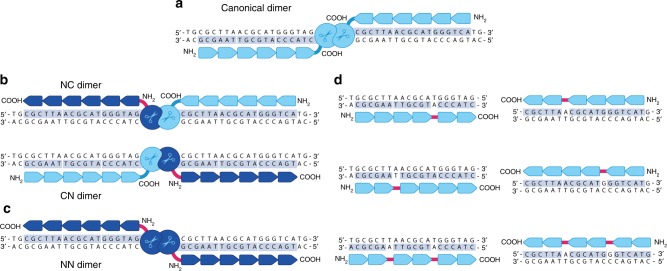
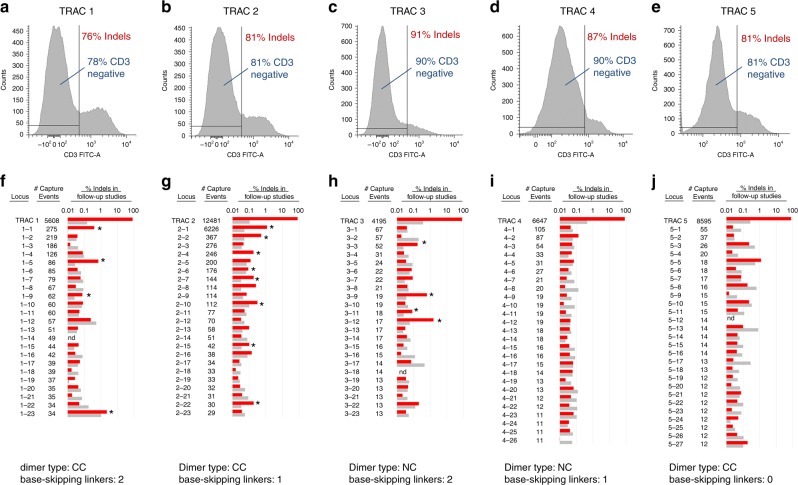
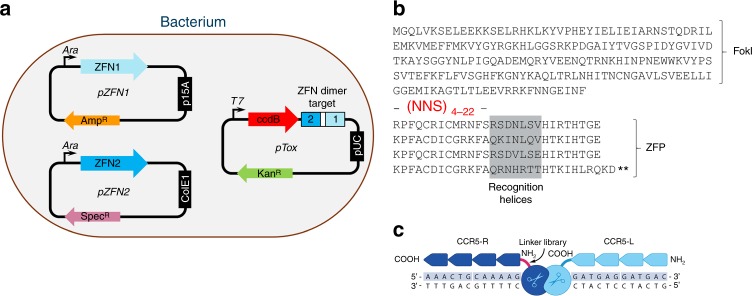
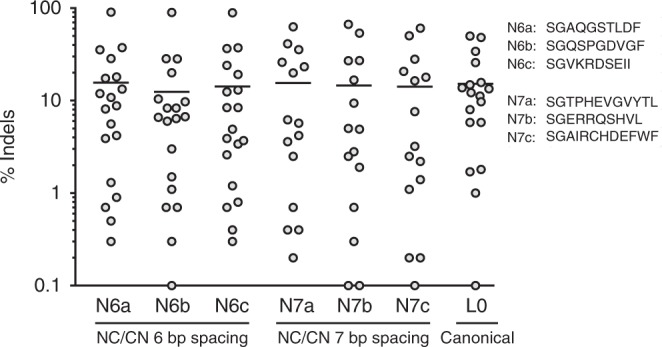
Genome editing for therapeutic applications often requires cleavage within a narrow sequence window. Here, to enable such high-precision targeting with zinc-finger nucleases (ZFNs), we have developed an expanded set of architectures that collectively increase the configurational options available for design by a factor of 64. These new architectures feature the functional attachment of the FokI cleavage domain to the amino terminus of one or both zinc-finger proteins (ZFPs) in the ZFN dimer, as well as the option to skip bases between the target triplets of otherwise adjacent fingers in each zinc-finger array. Using our new architectures, we demonstrate targeting of an arbitrarily chosen 28 bp genomic locus at a density that approaches 1.0 (i.e., efficient ZFNs available for targeting almost every base step). We show that these new architectures may be used for targeting three loci of therapeutic significance with a high degree of precision, efficiency, and specificity.
基因组编辑在治疗应用中通常需要在狭窄的序列窗口内进行切割。在这里,为了使锌指核酸酶 (ZFNs) 能够实现如此高精度的靶向,我们开发了一套扩展的结构,这些结构共同将设计的可用构型选项增加了 64 倍。这些新结构的特点是将 FokI 切割结构域功能性地连接到 ZFN 二聚体中一个或两个锌指蛋白 (ZFP) 的氨基末端,以及在每个锌指阵列中相邻手指的目标三联体之间跳过碱基的选项。使用我们的新结构,我们证明了在接近 1.0 的密度下对任意选择的 28bp 基因组位点进行靶向,(即几乎每一步都有有效的 ZFN 可供靶向)。我们表明,这些新结构可用于以高精度、高效率和特异性靶向三个具有治疗意义的基因座。