Faculty of Engineering and Natural Sciences, Tampere University, PO Box 527, Tampere, FI-33014, Finland.
Microb Cell Fact. 2019 Mar 11;18(1):48. doi: 10.1186/s12934-019-1097-x.
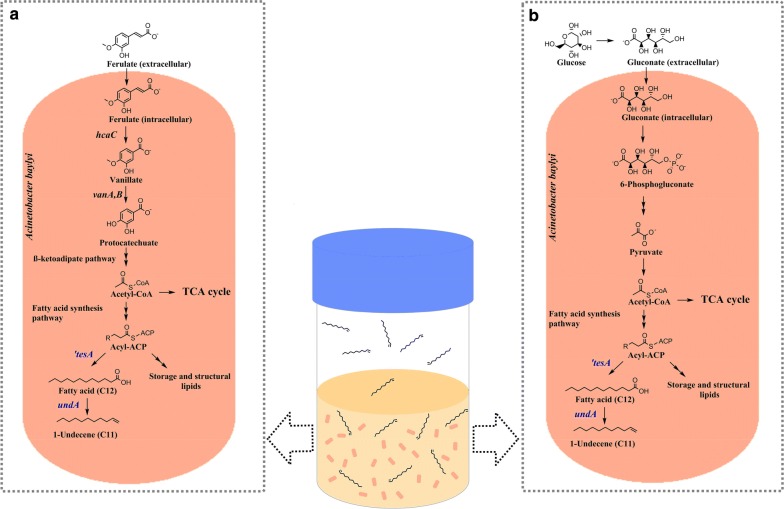
Integration of synthetic metabolic pathways to catabolically diverse chassis provides new opportunities for sustainable production. One attractive scenario is the use of abundant waste material to produce a readily collectable product, which can reduce the production costs. Towards that end, we established a cellular platform for the production of semivolatile medium-chain α-olefins from lignin-derived molecules: we constructed 1-undecene synthesis pathway in Acinetobacter baylyi ADP1 using ferulate, a lignin-derived model compound, as the sole carbon source for both cell growth and product synthesis.
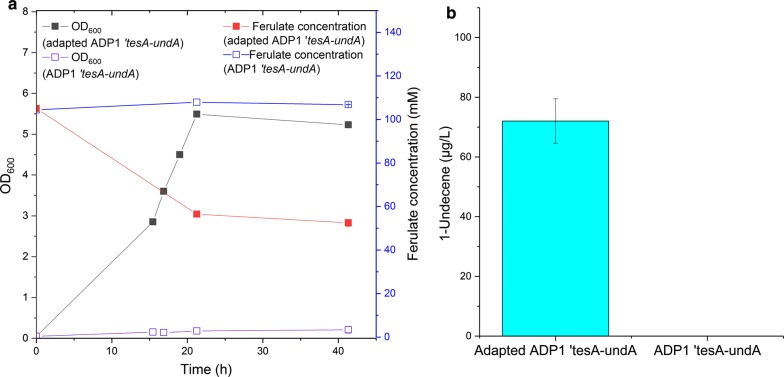
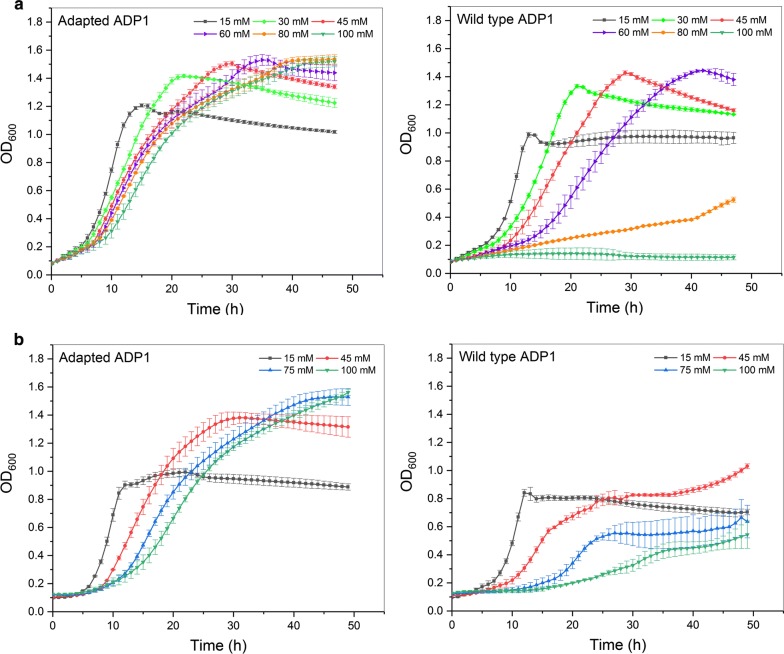
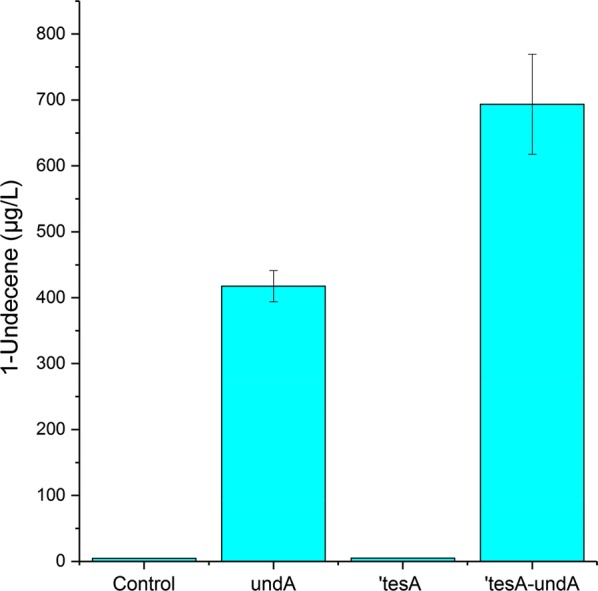
In order to overcome the toxicity of ferulate, we first applied adaptive laboratory evolution to A. baylyi ADP1, resulting in a highly ferulate-tolerant strain. The adapted strain exhibited robust growth in 100 mM ferulate while the growth of the wild type strain was completely inhibited. Next, we expressed two heterologous enzymes in the wild type strain to confer 1-undecene production from glucose: a fatty acid decarboxylase UndA from Pseudomonas putida, and a thioesterase 'TesA from Escherichia coli. Finally, we constructed the 1-undecene synthesis pathway in the ferulate-tolerant strain. The engineered cells were able to produce biomass and 1-undecene solely from ferulate, and excreted the product directly to the culture headspace.
In this study, we employed a bacterium Acinetobacter baylyi ADP1 to integrate a natural aromatics degrading pathway to a synthetic production route, allowing the upgradation of lignin derived molecules to value-added products. We developed a highly ferulate-tolerant strain and established the biosynthesis of an industrially relevant chemical, 1-undecene, solely from the lignin-derived model compound. This study reports the production of alkenes from lignin derived molecules for the first time and demonstrates the potential of lignin as a sustainable resource in the bio-based synthesis of valuable products.
将合成代谢途径整合到代谢多样化的底盘中为可持续生产提供了新的机会。一个有吸引力的方案是利用丰富的废物来生产易于收集的产品,从而降低生产成本。为此,我们在 Acinetobacter baylyi ADP1 中建立了一个从木质素衍生分子生产半挥发性中链 α-烯烃的细胞平台:我们使用阿魏酸(木质素衍生的模型化合物)作为细胞生长和产物合成的唯一碳源,在 Acinetobacter baylyi ADP1 中构建了 1-十一烯合成途径。
为了克服阿魏酸的毒性,我们首先对 A. baylyi ADP1 进行了适应性实验室进化,得到了一株高度耐受阿魏酸的菌株。适应株在 100 mM 阿魏酸中表现出强劲的生长,而野生型菌株的生长则完全受到抑制。接下来,我们在野生型菌株中表达了两种异源酶,使葡萄糖能够生产 1-十一烯:来自 Pseudomonas putida 的脂肪酸脱羧酶 UndA 和来自 Escherichia coli 的硫酯酶 'TesA。最后,我们在耐阿魏酸的菌株中构建了 1-十一烯合成途径。工程细胞仅能从阿魏酸中产生生物量和 1-十一烯,并将产物直接分泌到培养物的气相中。
在这项研究中,我们利用细菌 Acinetobacter baylyi ADP1 将天然芳香族化合物降解途径整合到合成生产途径中,使木质素衍生分子升级为附加值产品。我们开发了一株高度耐受阿魏酸的菌株,并建立了从木质素衍生模型化合物生物合成工业相关化学品 1-十一烯的方法。本研究首次报道了从木质素衍生分子生产烯烃,并证明了木质素作为生物基合成有价值产品的可持续资源的潜力。